
FEUILLETON Henry Kissinger, America, and Kosovo (10): Mistakes in NATO's actions and expansion
Writing for Kosovo Online: Dragan Bisenic
NATO marked its 50th anniversary during the Alliance's attack on Serbia at the summit in Washington from April 23 to 25, 1999. The entire Yugoslav crisis, culminating in Kosovo, had a catalytic effect on debates about the fate of NATO and its future, which had become highly uncertain after the end of the Cold War.
The salvation of NATO became one of the major tasks of all Western foreign policy experts, and the Yugoslav wars were a laboratory where the justification of one idea or another was proven. In the end, the idea that NATO not only should survive but that its expansion to former Soviet satellites and countries in Central and Eastern Europe was necessary prevailed. The first expansion of NATO occurred precisely amid the NATO attack on Serbia, marking the 50th anniversary of NATO's existence.
Kissinger's "transformation" of the NATO Pact
Kissinger was a strong advocate for NATO expansion and one of the first Westerners to call for changes in NATO during the Cold War. Thus, Kissinger's plan for the "transformation of NATO", published in Time in 1984, attracted significant attention, especially in Europe. Describing the then-unprecedented and disturbing controversies within NATO, Kissinger proposed some dramatic structural changes in the Alliance based on his persistent criticism of the Alliance's strategic premises and alleged European ambivalence in this regard. Kissinger called for a "serious and swift review of NATO's doctrine, deployment, and policies" and, like German Chancellor Helmut Schmidt, argued that the Alliance "must urgently develop a grand strategy for East-West problems and relations with the Third World that can be applied to the rest of this century".
In Kissinger's scheme, Europe should take on a more significant role within NATO by assuming the main responsibility for its conventional land defense and "Europeanizing" negotiations on arms control dealing with weapons stationed on European soil.
Structurally, he wanted a European officer to assume the traditionally American position of Supreme Allied Commander in Europe, making "the planning for the defense of Europe explicitly a European task". In his opinion, it would also make sense to have an American Secretary-General of NATO, with a greater emphasis on political coordination in the new structure. In this "reasonable division of responsibilities", Europe would focus on the conventional defense of the continent, while America would contribute to maintaining the global balance of power, emphasizing highly mobile conventional forces capable of supporting Europe and contributing to the defense of other regions such as the Middle East, Asia, or the Western Hemisphere. Kissinger's proposal, in line with his views from earlier years, on the division of responsibilities between European allies and the United States, would hardly help establish allies' involvement in maintaining the global balance of power – something that many other Americans consider very necessary.
Kissinger assumed again, as in his "Year of Europe" speech in 1973, that Europeans, disagreeing with America about the nature of interests involved in regions outside Europe, were "less inclined to see their immediate interests involved" in anything other than their region. Nevertheless, he explicitly called for a global grand strategy for the Alliance "as the ultimate guardian of the freedom of the West".
The division of responsibilities in the Alliance, as suggested by Kissinger, could undermine rather than enhance what he would like to see: an agreement on political objectives and a common approach to global security in the Alliance. Given his premise, his proposals may have less aim to give Europeans a voice in shaping policy than to maintain predominant American influence in it.
The debate on the future of NATO was, as Kissinger considered, produced a "debacle" in Bosnia. In the article "Expand NATO Now", published on December 14, 1994, in "The Washington Post", he emphasized that the level of bitter accusations over Bosnia within the Atlantic alliance was unparalleled since the Suez Crisis almost four decades ago. Kissinger assessed that the causes of the Bosnian debacle were twofold. First, it arose from conceptual failures within each of the allied governments, not from the structure of the alliance "which was never designed to deal with ethnic conflicts on its periphery".
On the contrary, Western democracies would think twice before recognizing the Bosnian state within borders that do not reflect any of the ethnic, linguistic, or historical unities traditionally associated with nationality. "What led these statesmen to think—if they really thought—that Croats, Serbs, and Muslims, whose mutual hatred caused the collapse of Yugoslavia, could coexist in a unitary state in much smaller Bosnia?" Kissinger asked.
Emphasizing that the allies, unable to define the challenge, could hardly deal with it adequately, individually or collectively. "Was the Bosnian conflict a civil war, or was it an aggression resembling the fascist attacks of the 1930s and the Iraqi invasion of Kuwait? The Bush administration and our European allies treated it as a civil conflict irrelevant to international stability. Ready to alleviate suffering, and in the case of Europeans, even to send troops, they recoiled from the victims associated with imposing a settlement", Kissinger concluded. For him, it was clearly a civil war.
In a very lengthy congressional hearing in 1997 on NATO expansion, he explained his opinion, which ranged from the geopolitical postulates of Halford Mackinder on the necessity of separating the Slavic and Germanic peoples into a Central European buffer zone under Western control, as well as the issue of control over Eurasia. In this, he differed even with one of the greatest diplomatic thinkers of the 20th century, George Kennan, who was decidedly against NATO expansion.
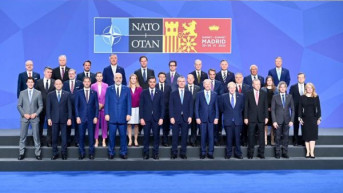
Kissinger attended the ceremonial dinner held on April 24. There were 42 delegations present, and each was allowed to include 10 people at the dinner. The remaining 300 guests were gathered from the offices, ministries for state and defense, and Congress, including several prominent figures. The White House did not release the guest list, but retired General Colin Powell, Henry Kissinger, Alexander Haig, Robert Gates, Elizabeth Dole, and Strom Thurmond were noticed in the crowd. "This is probably the greatest concentration of political power under one tent ever", Latvian Ambassador Ojars Kalnins noted.
"Now, critics of NATO expansion argue that the admission of Poland, the Czech Republic, and Hungary jeopardizes the prospects for democratic development in Russia, thereby increasing dangers rather than mitigating them. I have the opposite view. Russian Defense Minister Rodionov explained Russian opposition to NATO expansion by stating that it took away Russia's buffer zone in Central Europe. If NATO conceded this argument, it would perpetuate the injustice of the Soviet satellite orbit by condemning the recently liberated nations of Central Europe to institutionalized impotence, piling up endless future troubles".
Balancing two opposing views
Basing European and Atlantic security on no man's land between Germany and Russia contradicts all historical experiences, especially those from the interwar period. This would bring about two categories of borders in Europe, those that are potentially threatened but not guaranteed and those that are guaranteed but not threatened. If America were to act to defend the Oder but not the Vistula, 200 miles to the east, the credibility of all existing NATO guarantees would be seriously undermined, nor would the exclusion of traditional Central European nations from common defense achieve its purpose. If Russia succeeded in establishing a military buffer zone, demands for political consequences would logically follow, implying a veto on foreign policy.
If the eastern border of Germany is defined as the border of Western Europe, Germany will be forced to doubt American leadership and attempt to influence the security position of the buffer zone on a nationalistic basis. The failure of NATO expansion would, therefore, risk either collision or collusion between Germany and Russia. In any case, American abdication would produce a political earthquake that would jeopardize vital American interests.
Therefore, NATO expansion represents a balancing act between two opposing views: the fear of alienating Russia and the danger of creating a vacuum between Germany and Russia in Central Europe. The failure of NATO expansion is likely to prove irreversible. Russian opposition would only grow as its economy strengthens. The peoples of Central Europe would drift away from their connection to Europe. That is why I strongly urge the Senate to ratify NATO expansion", Kissinger argued.
Instead of attempting to include Russia in NATO, Kissinger stated in his 1994 Washington Post article that NATO expansion represented "balancing two opposing views: the fear of alienating Russia and the danger of creating a vacuum in Central Europe between Germany and Russia". According to Kissinger, a wise policy, instead of pretending that Russia has an option for NATO membership, would take two steps – continue membership for the Visegrad lands and reject the Russian veto. At the same time, it would propose a security agreement between the new NATO and Russia to make it clear that cooperation is the goal. Kissinger believed that such an agreement should stipulate that foreign troops should not be stationed in the territory of new NATO members, following the model of arrangements for East Germany, or, better yet, not closer than a fixed distance from the eastern border of Poland.
Simultaneously, such an agreement could provide consultations between NATO and Russia on matters of common interest. In such a structure, there would be no reason for concern about Russian security. Exceeding this would give Russia the right to create a vacuum around its borders, preserving options for historical Russian expansionism, Kissinger proposed. These suggestions were not considered when NATO expansion became worrisome for Russia, and Russia sought guarantees for its security. It began with the Yugoslav wars, where Kissinger sharply and uncompromisingly criticized NATO's intervention, and continued until the current Ukrainian crisis.
Continuation tomorrow: Turning the Serbs from friends into enemies



0 comments