
FEUILLETON Pogrom 2004 - first time on organizers and instigators (2): Weapons transported to attackers even in ambulance vehicles
The Security and Information Agency of Serbia has prepared a publication titled "March Pogrom of the Serbs in Kosovo and Metohija in 2004" on the occasion of the 20th anniversary of the pogrom against the Serbs in Kosovo. As stated in it, the data contained therein for the first time point to the real organizers and perpetrators of the pogrom. Kosovo Online is publishing integral parts of this publication.
The trigger for the largest ethnic cleansing of Serbs since 1999 was the drowning of three Albanian boys on March 16, 2004, from the village of Cabra, bordering the Serbian village of Zupce, near Zubin Potok. In Kosovo media, the Serbs were accused of allegedly chasing the unfortunate children into the river with the help of dogs. This false and orchestrated news was the trigger for the preconceived, staged, and precisely coordinated reaction of the Albanians on March 17, 18, and 19, 2004. Derek Chappell, the spokesperson for UNMIK police, later denied that the Albanian boys had been killed while fleeing from the Serbs. However, this did not stop the previously prepared attack by the Albanian extremists on the Serbs and everything Serbian in this province.
Propaganda began through the media claiming that the Serbs were allegedly responsible for the death of the children, and all Albanians were called to gather.
Halit Berani from Kosovska Mitrovica, an activist of the Committee for Human Rights Protection, played a significant role in creating this misinformation.
SMS messages were also used, systematically sent via providers, to massify gatherings, while fixed telephony was disabled on the orders of the then director of the post office, Ertrur Rustemi, and his assistant Demir Limaj, who incidentally is the brother of Fatmir Limaj. In Prizren, demonstrations were directed through the TV station "Besa," owned by the brothers Muamer and Irfan Fusha from Prizren.
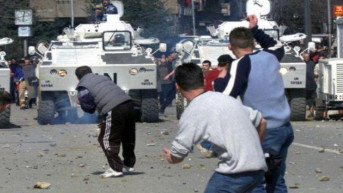
Thousands of Albanian extremists, at noon on March 17, crossed from the southern part to the northern part of Kosovska Mitrovica over the bridge on the Ibar River. They used automatic and sniper weapons and killed three Serbs, wounded over 200 Serbian nationals, and eleven members of the French KFOR contingent, who in the confrontation killed four Albanian extremists and showed very weak capabilities in preventing and stopping Albanian extremists in their murderous rampage towards the northern part of the city.
Albanian extremists managed to break through KFOR and UNMIK police barricades around 11 o'clock and enter the northern part of the city, while resistance was provided by around 150 Serbian nationals who arrived at the bridge where the largest concentration of Albanian extremists was around 11:15. Then the stoning of the Serbs and KFOR and UNMIK members by the Albanian extremists began. UNMIK police used tear gas, stun grenades, and rubber bullets, while around 11:30, the special unit of UNMIK police from Poland attempted to block access to the main bridge on the Ibar. The first shots from firearms at the Serbs in the northern part of the city were recorded around 12 o'clock, from the direction of the Three Towers, and Albanian extremists began throwing Molotov cocktails at UNMIK vehicles.
Around 1:00 PM, Albanian extremists managed to enter the northern part of the city through the bridge in the Bosniak Mahala neighborhood. At the same time, Albanian terrorists from buildings in the Three Towers neighborhood began throwing bombs and opening fire with automatic and sniper weapons at members of international forces and the Serbian population. They were supported by extremists who, from the direction of the city park near the Ibar Bridge, began shooting at the Serbs in the northern part of the city.
During this incident, Borivoje Spasojevic and Jana Tucev were killed, and Simeon Simeonov, a UNMIK police officer from Bulgaria, was wounded.
A curfew was imposed in Kosovska Mitrovica at 7:00 PM. According to UNMIK, KFOR, and media reports, eleven KFOR members were injured, at least seven people were killed, and over 200 were wounded in Kosovska Mitrovica.
In the early morning hours of March 18, from the Tamnik neighborhood in the southern part of Kosovska Mitrovica, Albanian extremists shelled the northern part of the city. Demonstrations by Albanian extremists continued, and a group of about a thousand gathered in front of the former Beobanka building, headed towards the northern part of the city.
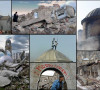
The Albanians attempted several times to destroy the Church of Saint Sava in the southern part of Mitrovica. Around 12:30 PM, the lodgings and auxiliary buildings in the churchyard were set on fire, and the church itself was set on fire around 6:00 PM.
The organizers of the attacks on the Serbs in the northern part of Kosovska Mitrovica were: Ismet Haxha, former commander of the KLA military police for the Vaganica settlement, municipality of Kosovska Mitrovica, his deputy Nexhat Cubreli, as well as Haki Mehmeti, Besim Citaku, Ahmet Hiseni, and Bekim Shuti, who supplied weapons to Albanian terrorists used against the Serbs from the southern part of Kosovska Mitrovica.
One of the most extreme individuals involved in violence against the Serbs and the destruction of their property was Jetulah Dibrani, a former KLA member and later one of the commanders of the Kosovo Protection Corps in Kosovska Mitrovica. He initiated and participated in the burning and destruction of Serbian houses in the village of Svinjare, municipality of Kosovska Mitrovica. Begjet Shefkiu and his son Begu also played an active role in the destructive activities in this village.
Muhamed Sahatcija, along with his sons Bujar and Flamur, participated in the burning of the Serbian Orthodox Church in Kosovska Mitrovica.
In the vicinity of Srbica, near Kosovska Mitrovica, which was ethnically cleansed of Serbs as early as 1999, the Devic Monastery was destroyed. Prior to that, KFOR soldiers evacuated all the nuns, and then at least a thousand extremists ransacked and set fire to the monastery.
In the village of Svinjare, municipality of Kosovska Mitrovica, Albanian extremists attacked Serbian residents on March 18, setting fire to a significant number of Serbian houses and outbuildings. With the assistance of UNMIK police officers, the villagers were relocated from the attack zone to another part of the village, and around 5:00 PM, women and children were evacuated from the village. The abandoned Serbian houses were systematically set on fire by the Albanians, and on March 20, the displaced Serbs were evacuated to Zvecan by French KFOR. Not a single Serbian resident remained in the village out of the total of 700 who were there at the end of 1999.
Albanian extremists synchronously initiated attacks on Serbs in Caglavica and surrounding Serbian villages, as well as in Pristina, Podujevo, Vucitrn, Istok, Djakovica, Prizren, Suva Reka, Lipljan, Urosevac, Vitina, Gnjilane, Kosovo Kamenica, and other places where remaining Serbs lived.
The attack on Caglavica unfolded according to a pre-arranged plan. With the involvement of a large number of armed members of the illegal Albanian security service - SHIK, Driton Goxhaj, an officer of the Republic of Albania Army, along with an armed group, began to penetrate from the left flank towards the Pristina–Skopje highway. They entered from the direction of the hospital settlement and penetrated the premises of the private company "Fortesa," where they attacked the first houses owned by the Serbs. On the right side, the armed group of extremists was led by Mahir Hasani, a former non-commissioned officer of the Yugoslav People’s Army.
Additionally, a group led by Zenel Binaku from Decani carried out an attack from the Emshir settlement, using not only automatic weapons but also hand grenades thrown at Serbian houses and civilians attempting to flee their homes, as well as at UNMIK and KFOR personnel and vehicles.
In the ensuing chaos, unarmed attackers were organized and provided with weapons delivered by an ambulance vehicle. Around 1:00 PM, several thousand Albanians departed from Pristina, and in the afternoon, they broke through the KFOR cordon and entered the northern part of the village, where they set fire to ten Serbian houses and several cars, as well as UNMIK vehicles, using Molotov cocktails.
Around 6:00 PM, US soldiers arrived in Caglavica from Urosevac (the KFOR base "Bondsteel"), with around 30 armored vehicles. International forces managed to evacuate women, children, and elderly to Gracanica and Laplje Selo, where around 1,500 Serbs and around 150 Roma people lived until March 1999.
Some of the most extreme participants in the attack on the Serbs and their property in Caglavica were: Sadik Ademi, Zumber Ademoviq, Isa Hiseni, Isa Bajrami, Emir Halimi, the brothers Muharem and Abaz Salihu, and the brothers Bekim and Blerim Fazliu.
Tomorrow: "The Serbs should be expelled"
comments