
FEUILLETON Rambouillet - ultimatum for the bombing (2): Diplomacy and the development of military action
Writing for Kosovo Online: Dragan Bisenic
"The Ethnic Relations Project" of Princeton University held the second round of talks in New York from April 7th to 9th, 1997, bringing together a large number of representatives from Serbian and Albanian parties as well as representatives from several countries and non-governmental organizations in an ambitious attempt to initiate a political process that would lead to a resolution of the Serbian-Albanian dispute.
This meeting took place during a period of significant political turmoil in Albania, which also led to a shift in US policy towards the Balkans. In the regime of Sali Berisha in Albania, the US no longer saw it as a "pillar of stability" or the cornerstone of its policy in the Balkans, but rather as a dangerous destabilizing factor.
American participants in New York did not hesitate to openly tell Kosovo Albanians that they could not expect US support for the creation of another Albanian state in the Balkans since they had undermined the institutions of the existing Albanian state. When the joint political declaration had already been agreed upon after extensive discussion, the representative of the Democratic League of Kosovo (LDK), Hydajet Hyseni, conditioned the Albanian side's signature on the return of the political status of Kosovo and Metohija to the status quo ante, i.e., to the state that existed before the changes in the constitutional law of the province in 1989. Only upon the insistence of the project leader, Professor Allen Kassof, that the absence of their agreement would primarily affect the Albanian population in Kosovo and Metohija, a joint statement was adopted which had the following three points:
- Kosovo is a serious problem that requires urgent resolution. Without international incentives and assistance, the existing lack of trust between the two sides cannot be overcome or a lasting solution achieved;
- The problem can only be resolved through mutual agreement via dialogue without prior conditions or prejudging the possible outcome;
- The agreement must be based on the principles of democratization, mutual respect, respect for individual and collective human rights, and the promotion of regional stability by respecting the Helsinki Principles regarding borders. A temporary solution requires a democratic Kosovo and a democratic Serbia.
On this occasion, a stance was accepted, which will be characteristic of all subsequent similar attempts, that the Serbian-Albanian dialogue must be conducted based on a "step-by-step" approach, i.e., that numerous open issues should be resolved "one by one" and that this should be done from simpler to more complex ones, thus building the necessary mutual trust and laying the foundations for a comprehensive political solution.
Although it was agreed in New York to continue the dialogue "on a regular basis in Belgrade, Pristina, or another appropriate location", it did not resume, and the "Ethnic Relations Project" no longer appeared as the mediator of the Serbian-Albanian dialogue.
Its role was taken over by the German Bertelsmann Foundation, which organized a conference on the "Albanian issue", actually on the crisis in Kosovo and Metohija, in Rhodes at the beginning of September 1996, which marked the beginning of a three-year project and perhaps the most serious attempt to find a solution to this problem. Although it is a foundation of a large company and the Mohn family, its owner, the international activities of the Bertelsmann Foundation were closely related to the German Auswartiges Amt (Foreign Ministry), so this conference was also a signal of this country's interest in the Kosovo problem.
As could be assumed, the initiative of the Bertelsmann Foundation was the prelude to the most serious European attempt to open the Serbian-Albanian dialogue and find a political solution to the Kosovo problem, from which, in the fall of 1997, political initiatives would emerge, contained in the joint letter of Klaus Kinkel and Hubert Vedrine to the authorities in Belgrade, which would ultimately fail at the Rambouillet conference.
The conference in Rhodes did not bring significant progress in the Serbian-Albanian dialogue as both the Serbian and Albanian sides mostly stuck to their well-known positions. Over the next two years, several meetings were held in Munich (January 1997), Athens (April 1997), the Greek island of Halki (1997), and finally in Thessaloniki (April 1998).
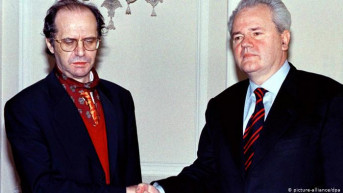
These discussions were aided by the fact that they coincided with the announcement of the agreement on the normalization of the educational system in Kosovo and Metohija, signed by Slobodan Milosevic and Ibrahim Rugova on September 1, 1996, which marked the biggest breakthrough in the tense Serbian-Albanian relations during the 1990s. However, this agreement would be undermined by opponents of Ibrahim Rugova and definitively buried by the student demonstrations in 1998 led by today's Kosovo leader Albin Kurti.
By early October 1997, the German Ministry of Foreign Affairs attempted to revive this initiative with a proposal for then-political director at the German Ministry of Foreign Affairs, Wolfgang Ischinger, and the US envoy for Yugoslavia, Ambassador Robert Gelbard, to visit Belgrade with a proposal that had only four points: first, the agreement between Milosevic and Rugova on education must be implemented without delay; second, an EU representation office should be opened in Pristina (earlier, a similar USIS representation had already been opened in the capital of Kosovo and Metohija); third, the return of the so-called long-term OSCE mission to Kosovo and Metohija should be facilitated; fourth, the Serbian-Albanian political dialogue should be initiated without delay with the international community serving as observers.
The visit, initially scheduled for October 21 of the same year, was first postponed for a week at the request of the US side due to the elections in Montenegro, and then it was completely canceled. By early November, the identical proposal was sent to Belgrade by German Foreign Minister Klaus Kinkel and his French counterpart Hubert Vedrine, signaling substantial differences in approach between Europeans and Americans to the Kosovo crisis, which would become evident the following year, including at the Rambouillet conference in February 1999.
At the next meeting of the International Contact Group, held during the British presidency of the Union at the end of April, the EU decided to issue an ultimatum to Yugoslavia, giving Belgrade until May 9 to accept its demands or face new economic sanctions. Since Belgrade did not accept the demands by this deadline, British Secretary of State Robin Cook announced that the EU would adopt a decision to impose sanctions at the next ministerial meeting. However, on the same day, US envoys Robert Gelbard and Richard Holbrooke arrived in Belgrade, stating at a press conference that they "were not aware of any sanctions" and that they had come to Yugoslavia to "listen and learn".
The European Union abandoned the planned sanctions the following Monday, while Gelbard and Holbrooke announced two days later that they had arranged a meeting between Slobodan Milosevic and Ibrahim Rugova and the Albanian delegation. The meeting between Milosevic and Rugova and his associates brought temporary hope that the Kosovo crisis might enter a calmer phase, which, under the guidance of Richard Holbrooke, would bring a political solution to the armed conflict. This meeting led to divisions among the Kosovo Albanians, as many radicalized their stance and favored armed action, believing that it would achieve their goals by forcing NATO to militarily intervene on their behalf.
Immediately after the meeting in Belgrade, Ibrahim Rugova and the Albanian delegation were invited to Washington, where he met with US President Bill Clinton, which was intended to bolster his faltering influence among the Kosovo Albanians. However, while Rugova's delegation was in Washington, the most intense fighting between the Serbian Police and the KLA erupted in the Drenica, Decani, and Djakovica areas, leading to the collapse of the US diplomatic initiative. The failure of the US initiative and the escalation in Kosovo and Metohija were met with sharp criticism from European countries, along with demands for the UN Security Council to take coercive measures provided for in Chapter VII of the United Nations Charter, namely, to intervene in Kosovo and Metohija.
Despite threats of military intervention, it did not occur, and the Serbian Police and Yugoslav Army continued their offensive against the KLA until September of the same year. However, there were clear indications that the United States was preparing a shift in its policy. During a new visit to Kosovo and Metohija, Richard Holbrooke met and was photographed with a member of the KLA, Ljum Haxhiu, while the then Secretary-General of NATO, Javier Solana, announced the imminent completion of plans for military intervention against Yugoslavia, after which, according to him, "the decision would solely be within the competence of politicians and their assessment of the further development of the situation" in the southern Serbian province.
The intense preparations for military intervention in June 1998 were confirmed by a statement from the UN Envoy for Bosnia and Herzegovina, Elisabeth Rehn, that "NATO military intervention in Kosovo is necessary to stop violence and human rights violations and to prevent a repetition of the kind of destruction that devastated Bosnia".
During the summer of 1998, Russian diplomacy was also active in Kosovo and Metohija, where Richard Holbrooke was closely followed by Russian Deputy Foreign Minister Nikolai Afanasyev, while another Deputy Foreign Minister, Aleksandr Avdeyev, was in Tirana on a similar mission.
The Russian role in the Balkans was actively encouraged by Belgrade, as evidenced by Slobodan Milosevic's visit to Moscow and meeting with Boris Yeltsin on June 16, 1998, when a joint statement was signed. In such circumstances, the traditionally cautious Secretary-General of the United Nations, Kofi Annan, issued a warning that any military operation in Kosovo and Metohija undertaken without the mandate of the United Nations Security Council would be "a dangerous precedent". Annan added that "the United Nations must sanction any use of military force by regional groups" and that intervention without Security Council decisions would be "a license for military anarchy".
To be continued tomorrow: NATO generals and readiness exercises

0 comments