
The impact of Chapter 35: Brussels permanently ties Serbia and Kosovo but outside the European Union
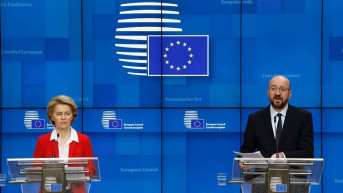
"The announced inclusion of the Franco-German plan in Chapter 35 of Serbia's negotiations for entry into the European Union would mean the formal end of the Brussels Agreement, which opened the Serbian European path a decade ago. Ironically, EU leaders will now, instead of accelerating expansion, effectively permanently close the doors to Brussels for Serbia and, consequently, for Kosovo".
Edited by: Milos Garic
Ursula von der Leyen, the President of the European Commission, has been declared the most powerful woman on the planet by global magazines for the second year in a row. However, it is a big question whether she sees herself that way and how much power the European Union actually has today under her leadership. They are stuck in Ukraine, they don’t have a say in the Israeli-Palestinian war horror, and even less in the Far East. The EU cannot even get the job done in its own backyard, the Balkans. They have returned Bosnia and Herzegovina to pre-Dayton chaos, and the dialogue between Belgrade and Pristina has been dragging on for 12 years, leading it into a complete deadlock.
It is no longer clear to anyone what is relevant, how agreements are reached, and why the EU does not respect its own signature but expects to have authority.
They renounced the Brussels Agreement in Brussels, and now they insist on a new Brussels deal - from Ohrid.
While the Albanian authorities in Kosovo have no intention of enabling a normal life and local self-government for the Serbs, Brussels is pushing new obligations for Belgrade in Chapter 35. They calculate that a good way to achieve "normalization" is to demand that Serbia agree to enable Pristina's membership in international institutions, and German Ambassador Rohde, as a certainty, already records the recognition of Kosovo by the remaining five EU countries in his notebook.
Somewhere in the whole story, elementary logic has been lost. The narrative about international law in Kosovo remains in the field of bare pressure, blackmail, and double standards. UN Security Council Resolution 1244, as a fundamental document, does not matter for the United States and the EU, and in the coming days, we will find out what we already know. Chapter 35 will become an impossible mission for Serbia "on the road to Europe".
"What I have noticed in recent years is that you Serbs constantly experience provocations. This is a provocation", these words of the Hungarian Prime Minister Viktor Orban regarding the new conditions that the EU plans to impose on Serbia, very precisely explain what is at stake here.
Amid various comparisons with this situation, perhaps the most vivid one is that when you invite someone to dinner, you don't ask them to bring the keys to their house and leave them as collateral. It simply goes against etiquette. However, on this planet, traditional rules have not been applied for some time. In the resulting chaos, those who still believe in justice, law, and truth are paying the price.
Regarding the potential consequences of the latest "plan" of the EU for Serbia, respected journalists and well-informed experts in foreign policy processes - Ljiljana Smajlovic and Miroslav Stojanovic - expressed their opinion for Kosovo Online.
Much unclear, coercive, and ultimatum-like
Former long-time correspondent of Politika in Germany, Miroslav Stojanovic, notes at the beginning that this text is written in the "media and political fog created after, the unexpected initiative to insert, more precisely and explicitly, the final stance of official Belgrade toward the unsolvable Kosovo square of the circle into the infamous negotiation Chapter 35".
Nothing yet, emphasizes Stojanovic, is clear about this problematic undertaking, "from its intentions and the moment when this idea was put into circulation, shortly before the parliamentary elections in Serbia, to its final outcome and goal".
The situation, he says, should become somewhat clearer after the meeting of ministers for European affairs within the session of the General Affairs Council on December 12, and definitively, and finally, clear after the summit of EU leaders on December 14 and 15. Leaders are expected to express their views on the proposal prepared by the ministers.
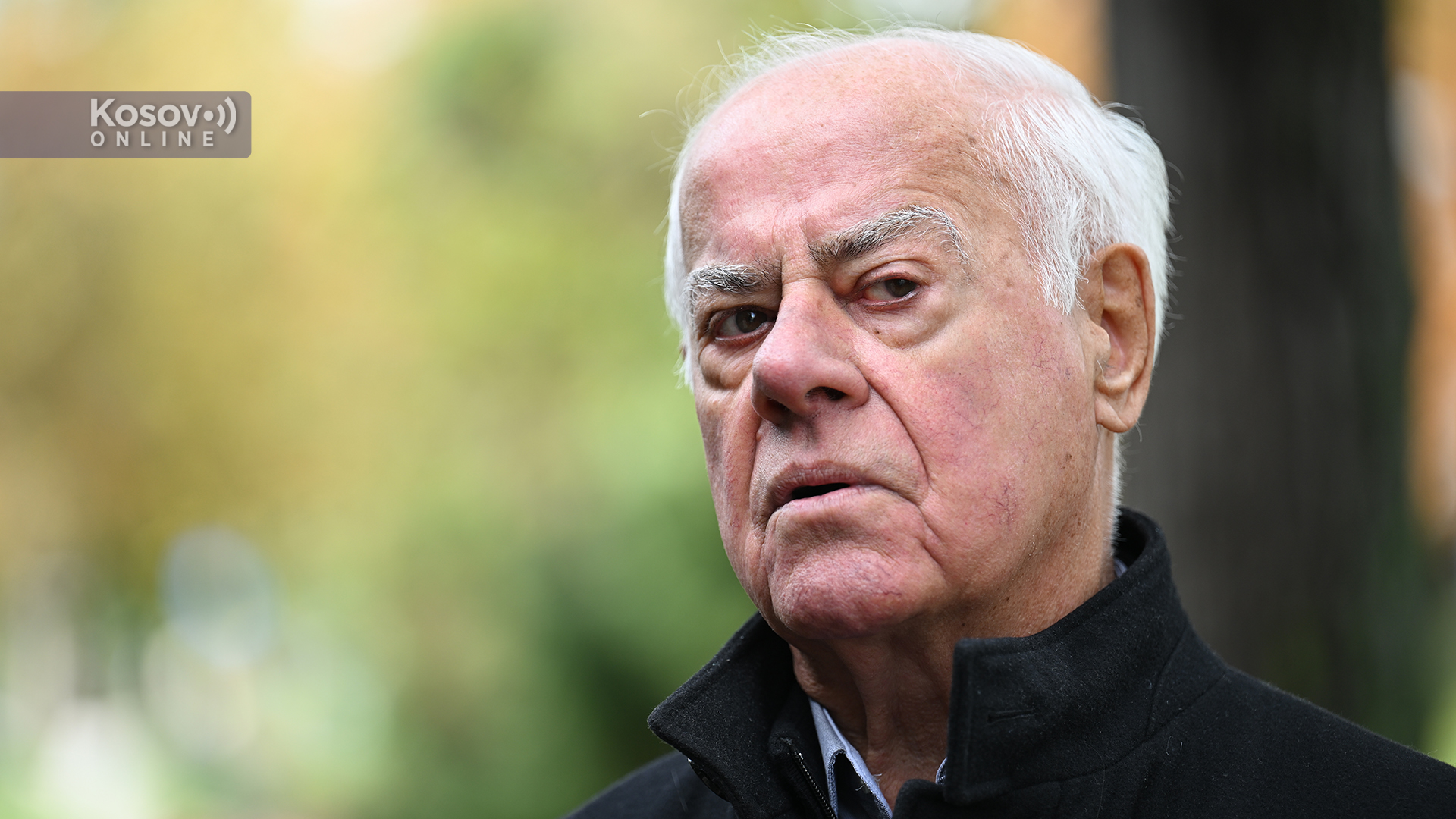
"This will also be a kind of test for the summit participants, whose decisions are made by consensus. It will be important to find out how the leaders of countries that verbally always say, and emphasize, that they 'provide full support' to Serbia on its path to the European Union will express themselves and decide. Especially, what leaders of those (five) countries that have not recognized, and claim they will not recognize, Kosovo as an independent state will say and do. And whether, in a substantive sense, the Franco-German paper will be improved and formalized as European. This document, practically made according to the agreement between the two German states, the German Democratic Republic (East) and the Federal Republic of Germany (West), in 1973, is explicitly a substantive recognition of Kosovo as a state even when official recognition by Belgrade is absent. The two German states never officially recognized each other. Among other things, I am assured by the fact that the most important provisions in the Franco-German (officially never disclosed) document are (almost) literally copied from the inter-German agreement, in very different times (the Cold War) and international relations. Only in this case, the names of the two German states are not mentioned in the 'European proposal'", Stojanovic says.
He provides examples to support this claim.
"In Article 1 of the 1973 agreement, it is specified: the Federal Republic of Germany and the German Democratic Republic will develop normal, good neighborly relations based on equality. Article 1 of the 'European proposal' reads: The two sides (meaning Serbia and Kosovo) will develop normal, good neighborly relations based on equal rights. Now, the more direct, binding formulations. In the inter-German agreement, it is written: FRG and GDR will be guided by the principles of the United Nations Charter, especially the principles of sovereign equality of states, respect for independence, autonomy, and territorial integrity, the right to self-determination, preservation of human rights, and nondiscrimination. Article 2 of the European proposal on the normalization of relations between Kosovo and Serbia (not, therefore, Belgrade and Pristina): Both sides will be guided by the goals and principles set out in the United Nations Charter, especially those of the sovereign equality of all states, respect for their independence, autonomy, and territorial integrity, the right to self-determination, the protection of human rights, and nondiscrimination", Stojanovic explains.
He also points out another important detail, Article 4 in both documents.
"With the Germans: FRG and GDR proceed on the assumption that neither of them will represent the other in international relations or act on behalf of the other. In our case, Article 4, similarly and even more directly: The parties proceed on the assumption that neither of them can represent the other in the international sphere or act on its behalf. And now, the direct and explicit statement in the same article of the document that concerns us: Serbia will not oppose Kosovo's membership in any international organization. Therefore, not in the most important one, which verifies statehood - the United Nations", Stojanovic emphasizes.
He adds that Chapter 35 is formulated, apparently intentionally, in an indefinite manner.
"The possibility is left for it to be supplemented over time with a more concrete formulation, including what was not mentioned at all in its original form. It is worth reminding that even the 'authorized' interpreters of the original content of this chapter, which was supposed, among other things, to serve as a 'tool' for monitoring the dialogue between Belgrade and Pristina, evaluating its effectiveness and scope – representatives of the European Union in Belgrade (such as Davenport) – claimed that signing the so-called comprehensive and binding agreement did not mean recognizing Kosovo as a sovereign and independent state. And that this was not mentioned in any European Union document. The idea and initiative to now include the 'European proposal', with the previously quoted content, in the negotiation platform with Serbia, for EU membership, ultimately, I am deeply convinced, although I know that there are different interpretations, means closing European doors to Serbia, indirectly but essentially", Stojanovic points out.
He emphasizes that this act and initiative contain too much blackmail and ultimatum material.
"Serbia cannot and should not accept it. As long as it officially maintains the repeatedly confirmed stance that it does not recognize and will never recognize Kosovo as a sovereign and independent state. This means not even its membership – as the European proposal unequivocally suggests and explicitly demands – in the United Nations", Miroslav Stojanovic concluded.
It will be easier for a camel to pass through the eye of a needle than for Serbia to join the EU
Former editor-in-chief of Politika, Ljiljana Smajlovic, notes for Kosovo Online that the essence is, above all, the fact that "the European Union will not admit new member states until it changes the decision-making process within the Union, which means until it abolishes decision-making by consensus".
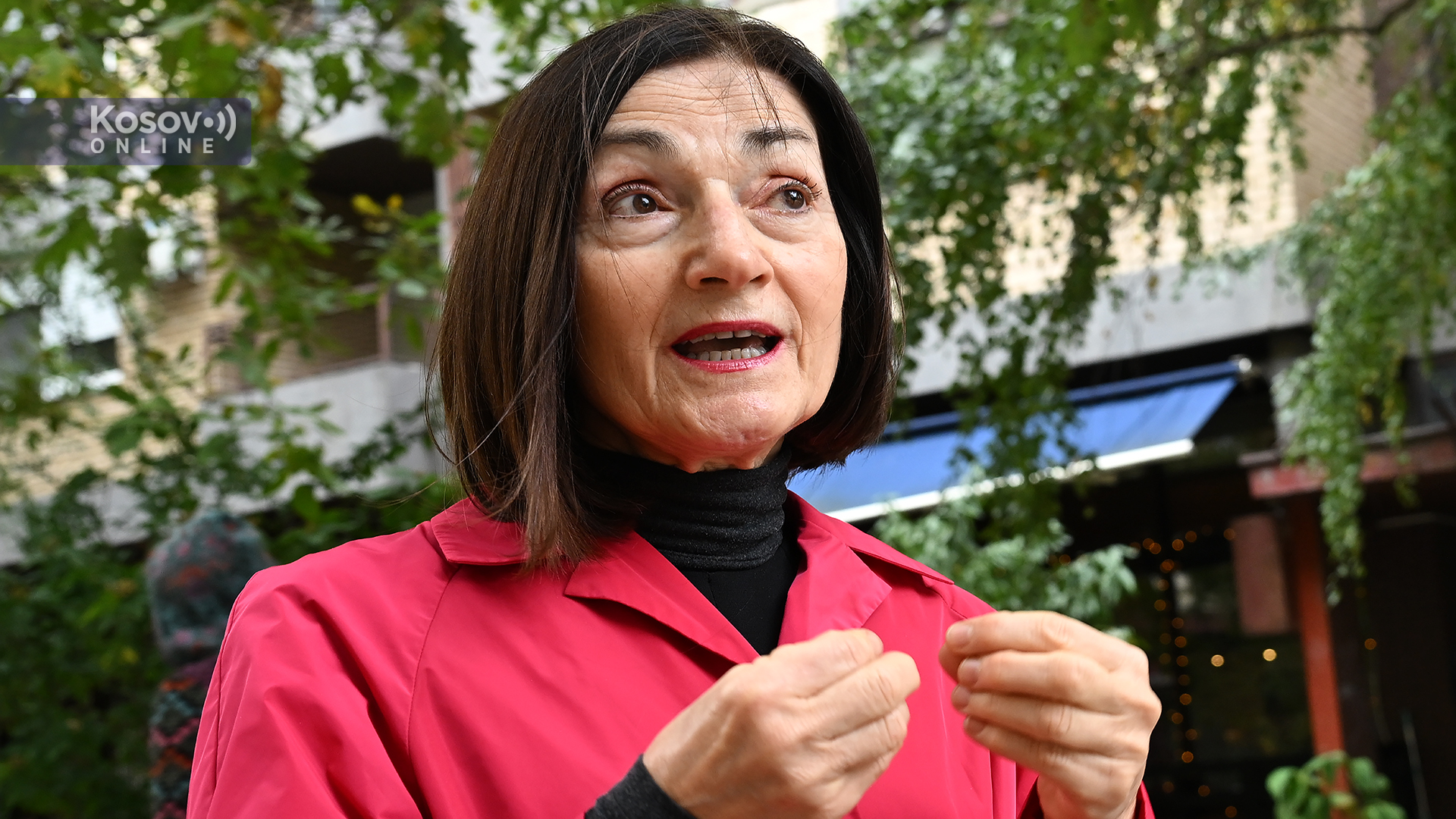
She emphasizes that in the future, the rule that each country has the right to veto decisions of the Union will no longer apply.
"The talks about the new organization have not yet really begun, and when they end, membership in the Union will not be as precious as when our 'European path' began, because from that moment onwards, officially, on paper, there will be first and second-class states. As in reality today, when it comes to the real balance of political forces and economic power of member states. We cannot know what that new union will be like, and we can only speculate on the conditions it will impose on potential new members for admission", Smajlovic says.
According to her, this means "that our EU future is on a long, ever-lengthening stick".
"This has nothing to do with the Brussels or Ohrid Agreement, or with accepting European values, let alone aligning Serbian regulations and foreign policy with EU regulations and foreign policy. Whatever we do, even if we turn into heavenly angels overnight, into Thomas Jefferson and Annalena Baerbock, we would not get an inch closer to EU membership. It would be easier for a camel to pass through the eye of a needle than for us to reach the doors of Brussels' Berlaymont. I see that Hungarian President Viktor Orban, in an interview with Tanjug, declares the idea of including the Ohrid Agreement as a condition in Chapter 35 as a 'provocation' for Serbia and promises us support. Still, it seems to me that the main 'provocation' is actually the implicit, implied threat that Serbia will not have access to EU funds, which may, as a consolation prize, open up for Balkan aspirants", Smajlovic warns.
She emphasizes that she does not underestimate that provocation; however, she says she is unable to see it as an obstacle to Serbia's EU accession since the "chances for Serbia to join the EU in the foreseeable future are non-existent".
"And they would remain non-existent, even if Serbia were to turn upside down tomorrow and recognize Kosovo, or if, in the elections, it only and exclusively chooses parties that go along with Brussels and Washington in everything", Smajlovic concludes.


comments