
Lavrov: The West has shown incompetence; the deadlock in implementing the agreements between Belgrade and Pristina has been going on for a long time
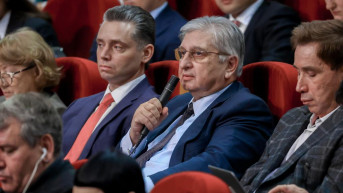
Kosovo online's special correspondent from Moscow Zeljko Sain
Sergey Lavrov, the Minister of Foreign Affairs of the Russian Federation, held his annual press conference in Moscow, outlining his plans and forecasts for the year 2024, marking 20 years at the helm of the Russian Ministry of Foreign Affairs.
In his introductory statement on foreign policy, Lavrov emphasized President Putin, who defined the main directions in March 2023, approving the concept of the foreign policy of the Russian Federation in a new, radically revised edition, based on the realities of the modern world.
"The West has proven its complete inability to negotiate and its unreliability as a partner in any endeavor. The majority of the world does not want to tolerate such a selfish approach and wants to develop in full accordance with its national interests, with the interests of each country, and with full respect for the principles of the UN Charter, starting with the respect for the sovereign equality of states. Since the adoption of the Charter in 1945, no foreign policy action of the West on the international stage has taken into account or respected the principle (as stated in the Charter) of the equality of all states, large and small, regardless of values, religion, and traditions", Lavrov emphasized before outlining the guidelines of the Russian Federation:
"On the foreign policy front, we have clearly defined guidelines for developing relations with those willing to do so on equal, mutually beneficial, mutually respectful terms through sincere dialogue, negotiations aimed at finding a balance of interests, and not solutions that fulfill exclusively someone's unilateral selfish plans, as is largely evident in discussions involving the West, led by the United States".
Reflecting on the past year, Lavrov also noted how one became accustomed to the role of a hegemon, illustrating with the example of the United States:
"The past year has shown the rejection of the traditional ways of the Western hegemon, which are entirely based on their own selfish interests and do not take into account the opinions of everyone else. Yes, ruling the entire world for 500 years and having no serious competitors for almost the entire period (with a possible exception of the Soviet period) probably helps a person get used to the role of a hegemon. But life moves on, new centers of economic growth, financial power, and political influence are emerging, which have already become stronger, significantly ahead of the United States and other Western countries".
He then highlighted the relationship with China, which is the best in the centuries-long history of these two countries:
"I am sure you are aware of our assessments of the development of relations with the PRC. It is the fastest-growing economy along with India. Relations with China are experiencing the best period in their centuries-long history. For us, it is especially valuable that Xi Jinping, in his first state visit after re-election as President of the People's Republic of China, came to Moscow in March 2023. In return, President V. V. Putin visited China in October 2023 to participate in the Third International Forum 'One Belt, One Road'."
He categorized India as a strategically privileged partner:
"The relationship of a particularly privileged strategic partnership with India is constantly progressing. Regular high-level dialogue has been established here, as well as contacts between departments through foreign ministries".
Lavrov also did not forget the countries in the surrounding region:
Top of Form
"If we talk about our immediate surroundings, then, of course, it is the countries of the Middle East, Iran, Turkey, Saudi Arabia, the UAE, and Qatar. Of course, we are interested in developing relations not only in bilateral channels but also with regional structures created by many of our partners. I mean the Gulf Cooperation Council, the League of Arab States, ASEAN, the African Union, the Community of Latin American and Caribbean States, etc".
He highlighted Russian partnership with African countries as on the rise, confirmed by the Second Russia-Africa Summit held in July 2023 in St. Petersburg, as Lavrov stated. As evidence of Russia's development in Latin American countries, he mentioned the International Parliamentary Conference "Russia – Latin America", held in the fall of 2023. "We consider Africa, Latin America, and Asian countries as new independent centers of a multipolar world", the Minister of Foreign Affairs of the Russian Federation said, who also focused on the defense of the UN Charter:
"We have been actively working within the UN framework. The Group of Friends in Defense of the United Nations Charter has been created there, and it has been functioning successfully for several years. Joint statements on fundamental issues of global development are adopted within this group. The group actively stimulates the work of the General Assembly as a whole, promoting common initiatives, including Russian ones. We support the ideas of our partners about this new formation".
He called the security agreement between Great Britain and Ukraine at least comical, pointing out that the content of that agreement had not changed the goals. Responding to a journalist's question about whether Russia would be willing to engage in dialogue if new elections in Ukraine led to a new president willing to talk with Russia, Lavrov said he was not interested in the political life in Ukraine.
He emphasized that the United States had shown no interest whatsoever in ending the war, and instead of moving towards ending the war, the West was escalating the Ukrainian crisis. He openly warned that Ukraine could face the fate of Afghanistan. However, Lavrov specifically noted that Ukraine was not the one to decide when negotiations would begin because it was very clear that "Washington is the one calling the shots". He recalled that Ukraine would have to reject "anti-Russian racism, Nazi ideology, and its aspirations for NATO", concluding that the West was not interested in any negotiations.
At the traditional annual conference, the Minister of Foreign Affairs of the Russian Federation also expressed his stance on the Kosovo issue and the fate of the Western Balkans.
"When it comes to Kosovo, both President Putin and I, whenever we meet with the Serbian leadership, always emphasize that we support and will support the position chosen by the Serbs, i.e., the Serbian leadership. We see how the Serbs are being mocked when it comes to the Kosovo issue. In 2013, through the mediation of the European Union, an agreement was reached between Pristina and Belgrade on the creation of the Community of Serb-majority Municipalities in Kosovo. Everything was described there: their rights, how they organize their lives, how they ensure legal functions, language, education, schools, and churches. More than ten years have passed, and nothing has changed. The deadlock in implementing this agreement, which the European Union presented as its greatest diplomatic achievement, has been going on for a long time, and the European Union, in fact, has done nothing. The European Union, I believe, to satisfy Pristina and, above all, Mr. Kurti, rewrote that agreement on the Community of Serb-majority Municipalities in Kosovo so that the Serbs in northern Kosovo have no rights, and those rights would be absolutely artificial, while real power would be retained by the Albanians. Of course, this should be a shame for the European Union because back in 2013, they bragged about achieving everything, claiming that the Kosovo issue was resolved – and none of that happened. And now, when it is time to implement the agreement, they are backtracking, in favor of the side that is closer to them in this specific case. And, of course, the Kosovo Albanians are closer to them because they have sworn allegiance, want to join NATO, and will faithfully follow the instructions of the European Union unless the Albanian problem explodes in the Balkans. Speaking of which, I still don't understand why the term 'Western Balkans' is used. Why 'Western' when there is no 'Eastern'? (laughter) The Albanian factor is much more serious, as confirmed by the situation in North Macedonia. To this day, the speaker of the Macedonian parliament sits at a table with the Albanian flag placed on it. The Macedonian flag is there too, but so is the Albanian. But that is actually a separate topic".

comments