
Turudic: Presidential elections in Russia bring no changes in policy towards the Balkans and Kosovo
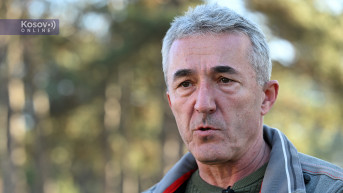
The presidential elections to be held in Russia next year will not change anything when it comes to Moscow's policy towards the Western Balkans and the Kosovo issue, because the results of those elections are known, says journalist Momir Turudic, editor of the OKO Radio Television of Serbia portal.
In Russia, presidential elections have been announced for March 17, during which Vladimir Putin will run for another term that could ensure his power until at least 2030. Voting should also take place in Ukrainian regions now controlled by Russian forces.
On the other hand, next year is an election year in Ukraine as well, but for now it is uncertain whether the vote for the president, which "according to the schedule" also falls in March, will be held considering that the country is at war.
"Some drastic change in Russia's policy, both in relation to the Western Balkans and in relation to all other hot spots in the world, will certainly not happen. It will almost certainly be exactly the same as it is today. What is interesting is what would happen, theoretically, if elections were held in Ukraine, but I think that the probability of such a thing is really minimal as the President Volodymyr Zelensky has already announced that there will be no elections while the country is in a state of war, and that war will certainly last into next year. Not only is the country at war, but also millions of its citizens are in exile, how would elections be organized under such circumstances and how credible would the results of such elections be in general, that is a big question", says Turudic for Kosovo Online.
Since the outbreak of the conflict between Russia and Ukraine, the Kosovo issue has been placed in that context - from whether Kiev, which does not recognize Kosovo, will change its position, to whether Russia can use this case as an argument in its claims to parts of Ukrainian territory.
"My impression is that there was more talk about it at the beginning of the war between Russia and Ukraine, when it really was the news that wiped out all the others. The covid pandemic that turned the world upside down, and all other topics, disappeared overnight. At that time there was a lot of talk about the case of Kosovo in relation to everything that is happening in Ukraine. However, on the other hand, we have to be aware that things have accelerated so much, that when events 'eat' each other, both medially and politically, that and the war between Russia and Ukraine kind of fell into the background," says Turudic.
He points out that this happened even before the outbreak of the war between Israel and Hamas. This does not mean, he adds, that this war is in any way different for Russia and Ukraine.
"But for the rest of the world somehow that tension has subsided, the news has become routine and everything that happens in that context is much less followed. Not to mention what happened when on October 7 Hamas attacked Israel and Israel responded. War of Russia and Ukraine has in some way 'sunk'. It does not mean that its importance is less, but in the context of what is happening in the world, and as things stand, we have seen that overnight there can be an outbreak of a completely new hot spot, it is not it is impossible that in the next year the relationship between Russia and Ukraine, and how it reflects on the Western Balkans and everything else, will somehow be at an even lower level. Some kind of, not a frozen conflict, but a low-intensity war for the rest of the world in which little that on the field, and also politically moves", our interlocutor believes.
Among the first significant elections that will take place in the world this year are the presidential elections in Taiwan, on January 13, which, if the course of independence is confirmed, could further tighten relations with China, which considers this island country part of its territory. Turudic says that he does not believe that these processes can be reflected in our space in any way.
"The problem of Taiwan and China is a problem of a different kind. Both the US and the countries that are most 'in a clinch' with China recognize its territorial integrity, that is, that Taiwan is an integral part of it. It has been like this since the thaw between America and China in the 70s The fact that it is not quite like that on the ground does not mean much for China itself, which does not allow that integrity to be questioned in any way and it is a step-by-step tactic, like Hong Kong after 99 years again became a part of China. The same was true for Macau, a former Portuguese colony. China's policy is that Taiwan is part of China and that one day it will be fully united with the motherland," says Turudic.

0 comments