
Melania Trump vs. Eastern European miserabilism
Written for Kosovo Online by Srdjan Garcevic, founder of The Nutshell Times
Ever since its announcement earlier this year, I have been looking forward to Melania Trump's memoir. Her matter-of-fact frankness has always put her at odds with her enemies, who tend to claim the mantle of “authenticity” and “empathy."
Whether it was her eye-catching "I really don't care, do U?" jacket, which she wore as a challenge to the "liberal media" while visiting a migrant detention facility, or her disarmingly honest dismissive attitude towards "Christmas decorations," it was clear that the former and potentially the future US First Lady has strong attitudes behind her demure façade and heavily accented English.
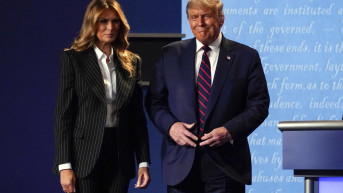
Unfortunately, the views and true uniqueness of the second foreign-born First Lady in US history mostly remained unexamined by the mainstream media due to their hostility towards Donald Trump. Despite being a stunning former professional model from Slovenia, she did not get a coveted Vogue front cover during Trump’s presidency, while Dr Jill Biden got two, including the latest one in August this year just after the disastrous debate that ruined her husband's career. When not being treated as a potential spy for her Slavic origins during the Russiagate hysteria, or being called a prostitute by “liberal journalists, Melania Trump was, at best, treated as a passive victim. Not once was she allowed to be presented as a glamorous woman who, despite the odds, managed to become the First Lady of the most powerful nation on earth through her talents.
I hoped "Melania" would finally tell her story on her terms.
Sadly, it is a disappointing read—full of clichés and few new insights – although very much in line with her public façade, down to many corporate-y, English-as-a-second-language phrases peppered through it. However, also in line with Melania Trump's image, it is a story of a woman who decided to take on the world bravely and who rarely resorts to painting herself as a victim.
The part I was most interested in was her description of her upbringing in Slovenia, or rather SFR Yugoslavia, where she lived from her birth in 1970 until her move to Italy and then France in the mid-1990s to pursue her modeling career. I was happy to see that Melania Trump did not throw her family or her former countries under the bus, unlike many ex-Yugoslavs and Eastern Europeans who make it big in the West.
Although her generation was one of the worst affected by the country's breakup—she was twenty-one when Slovenia declared independence, setting off the painful, almost decade-long dissolution of the country—Melania focuses on her happy family life and the opportunities her native country gave her.
While Melania Trump has fond memories of playing with Barbie dolls, being shown her father's cars, and traveling around Central Europe and Italy, Kolinda Grabar Kitanović, the former Croatian president, who is only a few years her senior, infamously claimed in an interview to have been scared by the fact that she was unable to choose between multiple varieties of yogurt in the socialist times. Similarly, Marina Abramović, the trail-blazing performance artist and the daughter of two Yugoslav grandees, in her memoir, “Walk Through Walls”, described Yugoslavia as "a dark place," with an "aesthetically based on pure ugliness." Where Trump saw "picturesque landscapes of Croatia and Slovenia," Abramović only had "a feeling of oppression and a little bit of depression."
That is not to say that Melania Trump is non-critical of the Yugoslav system. She does describe the problems her father went through in one investigation by the Yugoslav authorities, which she similarly described as "oppressive and invasive." However, that is in the chapter describing her family's legal woes after 2020, relaying that all systems can be ruthless when facing potential political enemies.
This level-headed approach is contrary to the core requirements of the cottage industry of Eastern European miserabilism, which requires overplaying the bad and insisting on the uniqueness of local problems (corruption, political, ethnic tensions, inequality, etc.), especially when mining own "trauma." In the sea of this trauma cottage industry, which has been going strong since the 1990s, one particularly funny recent example is the documentary “The Other Side of Everything” by the Serbian director Mila Turajlić in which, through staged shots, she tries to show her rather affluent and tidy Belgrade neighborhood as dangerous and chaotic. Indeed, the curator and researcher Aaron Moulton, in his work "The Influencing Machine," traced the politico-economic roots of miserabilism to the particularities of the local art scene, which incentivizes artists who want to make a name in the West (or receive Western funding) to focus on darker sides of own societies under the guise of "engaged art."
While one might say that Melania Trump may have been blessed with a particularly blissful Eastern European upbringing, as opposed to many perennially "traumatized" "voices" from the region, one can also read the situation as a difference in fundamental outlooks on life. One relies on the hope that somebody else or some system – a kind reader, a foreign arts council - will somehow compensate you for your "trauma." The other is the freewheeling Trumpian enthusiasm for the inevitable rough and tumble of life and clearing one's path all the way from Sevnica to the White House.


0 comments