
New Delhi as a roadmap for Kosovo and Metohija: Could the BRICS model open new space for Belgrade-Pristina dialogue?
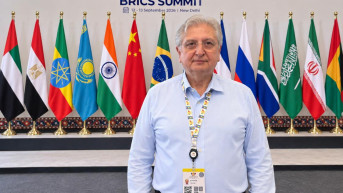
Written by: Zeljko Sajn, Kosovo Online special correspondent in New Delhi
The BRICS Summit in New Delhi concluded with a declaration that is far more than a collection of positions held by eleven countries. Its political weight lies in its insistence on the United Nations Charter, the sovereign equality of states, territorial integrity, the peaceful settlement of disputes and the role of diplomacy. At a time when the international order is increasingly being fractured by rivalry among the major powers, it is precisely this combination of principles and practical diplomacy that demonstrates why BRICS is becoming an important forum for the Global South.
New Delhi, however, demonstrated something else as well: international politics is not merely a question of who is right, but also of who is capable of talking to those whose interests are opposed to their own. India succeeded in keeping Iran and the United Arab Emirates at the same table, even though their positions differ dramatically because of regional conflicts. Their rapprochement was one of the important diplomatic signals to emerge from New Delhi.
That may be the most important lesson for the Balkans.
If countries whose relations are burdened by serious disagreements can sit at the same table in New Delhi, why should it be impossible to open a broader international space for dialogue between Belgrade and Pristina? Not a forum in which someone would determine the outcome in advance, but one in which a solution would be sought based not on unilateral imposition, but on international law, consent and political compromise.
It is precisely here that the issue of Kosovo and Metohija acquires a new international dimension.
The New Delhi Declaration reaffirms respect for the UN Charter and its principles, including the sovereignty and territorial integrity of states. At the same time, BRICS advocates the peaceful settlement of international disputes through dialogue, consultation and diplomacy. These are not merely formulations destined for diplomatic archives. They constitute a political framework within which the issue of Kosovo and Metohija could also be reconsidered.
Belgrade could therefore pose a simple but far-reaching question: if a new multilateralism is being discussed today, why should its principles not also be applied to Europe’s most sensitive issues?
In that sense, BRICS should not be envisioned as a new organization that would replace the United Nations or take over the Belgrade-Pristina negotiations. Its value lies precisely in the fact that it can provide an additional political space in which the voices of the Global South are heard and in which the idea is affirmed that no solution to an international dispute can be sustainable if it circumvents international law.
And this is where one fact from New Delhi becomes particularly important: India has demonstrated that diplomatic skill can bring together even those who, at first glance, appear to stand on opposing sides.
The best example of this is not even the Middle East, but the meeting between India and China.
The world’s two most populous countries have unresolved issues, including a border dispute, intense competition and deeply rooted mutual distrust. Nevertheless, Narendra Modi and Xi Jinping met in New Delhi and reaffirmed that differences do not automatically have to become conflicts. Both sides emphasized the need for peace along the border and the continued resolution of outstanding issues.
That is the essence of diplomacy that the Balkans must rediscover.
Rather than demanding that the other side first abandon everything it regards as being in its own interest before talks can even begin, the objective should be to find a sufficiently broad framework in which dialogue can begin despite those differences.
Interestingly, this principle from present-day India can be connected with Belgrade’s own historical experience.
More than six decades ago, Belgrade itself was one of the places where a new diplomacy of the Global South was taking shape. The 1961 Non-Aligned Conference brought together leaders of states that did not want to be mere objects of the policies of the major blocs. Josip Broz Tito, Jawaharlal Nehru and Gamal Abdel Nasser, together with other statesmen, created a political space in which sovereignty, equality, the peaceful settlement of disputes and the right of peoples to decide their own future were far more than ceremonial phrases.
Today, that historical arc can be viewed almost symbolically: from the Belgrade of the Non-Aligned Movement to the New Delhi of BRICS.
India, which together with Yugoslavia helped shape the policy of non-alignment, is today one of the principal pillars of the emerging architecture of the Global South. China, which together with India affirmed the Panchsheel—the Five Principles of Peaceful Coexistence—as early as 1954, will assume the BRICS chairmanship for 2027. By handing the chairmanship over to Beijing, New Delhi has thus demonstrated both continuity and change: the principles remain, while international relations evolve.
Therein lies a potential message for Kosovo and Metohija as well.
If Belgrade was once a place where large and small states sought common ground, why should it not once again attempt to offer the international community a model through which the issue of Kosovo and Metohija could be returned to where, by its very nature, it belongs—to the broader framework of international law and the United Nations?
That would not mean returning to the past. Quite the opposite.
The world has changed, but the need for compromise has not.
Even when it comes to Ukraine, the example of the United Arab Emirates demonstrates that states outside the traditional European security system can assume a concrete diplomatic role. Abu Dhabi has already played an important role in mediation between Russia and Ukraine, particularly through prisoner exchanges and humanitarian initiatives.
If that principle is accepted, why should all those capable of contributing to its success not be included in future talks on the normalization of relations between Belgrade and Pristina?
The European Union must remain an important part of the process. The United States also carries political weight that cannot be ignored. The United Nations provides the international legal framework. But alongside them, broader space could also be opened for countries of the Global South, including BRICS as a political forum that would not impose a solution but encourage dialogue.
For Belgrade, this would mean viewing the issue of Kosovo and Metohija not solely through the prism of the current balance of power in Europe, but also through the transformation of the global system.
For Pristina, it would mean that normalization is not synonymous with international endorsement of unilaterally declared independence.
And for the international community, it would mean finally testing whether a principle so frequently invoked in New York, Geneva and other centers of international diplomacy—dialogue with respect for international law—can genuinely function in the Balkans as well.
If New Delhi can open space for dialogue between India and China, two major powers with disputes of their own and profound strategic differences; if it can bring Iran and the UAE to the same table, despite years of serious regional disagreements between them; and if countries of the Global South can assume part of the diplomatic role in efforts to end the war in Ukraine, then it is difficult to accept the claim that compromise in the Balkans is impossible from the outset.
This does not mean that Indian-Chinese or Iranian-Emirati disputes were resolved in New Delhi, nor that BRICS can resolve the issue of Kosovo and Metohija. Their importance lies elsewhere: they demonstrate that even when profound differences exist, the door to dialogue does not have to be closed. If diplomatic channels can be built where the interests of major powers and regional rivals diverge, such an approach must also be possible between Belgrade and Pristina.
The question, therefore, should no longer be whether compromise is possible, but whether sufficient political will exists to create a broad enough international framework around it—with the European Union and the United States, but also with the United Nations and countries of the Global South capable of contributing to the process.
Kosovo and Metohija can therefore become more than just another problem on Europe’s diplomatic agenda. They can become a test of a new diplomacy.
If BRICS today is one of the platforms where states with different political systems, economic interests and regional ambitions come together, its greatest value may lie not in speaking with one voice, but in demonstrating that different voices can sit at the same table.
That is a lesson the Balkans need.
Drawing on its own historical experience, Belgrade could offer what was once one of its greatest diplomatic advantages: the ability to talk to different sides. Not against the European Union and the United States, not against the United Nations, and not as part of any bloc, but at a table where all important international actors would have an opportunity to contribute to a compromise.
Such a format would not determine status in advance. It would not replace the existing negotiations. It would not bypass either side.
But it could broaden the space for political creativity.
For Kosovo and Metohija, this would mean that the objective would no longer have to be the victory of one side over the other, but the creation of a sustainable arrangement that would provide Serbs with security, the ability to remain and live in their ancestral homes, Albanians with security and prospects for the future, and Serbia and the entire region with long-term stability.
Such a solution would not be simple. But no historically sustainable solution has ever been simple.
Perhaps that is precisely the most important lesson from New Delhi—not to ask who will win, but to ask who can help reopen the dialogue.
In a world changing from Washington to Beijing and from Moscow to New Delhi, Kosovo and Metohija should no longer be treated solely as a European issue. If the international order has truly become multipolar, then the path toward compromise must also become broader.
Kosovo can embark on that path.
Not by building new walls, but by building new bridges.

0 comments