
New UN Secretary-General will be chosen through a compromise among the great powers
Written for Kosovo Online by Zeljko Sajn
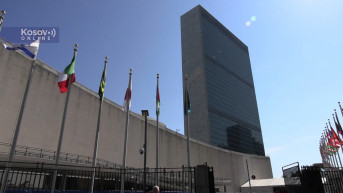
The first informal round of voting in the United Nations Security Council to select the tenth Secretary-General has shown that the international community has yet to rally behind a candidate enjoying full consensus. Although former Costa Rican Vice President Rebeca Grynspan received the highest number of supportive votes, there is little doubt at UN headquarters that the final decision will only be made after several rounds of consultations and voting, when the decisive influence of the five permanent members of the Security Council, the United States, Russia, China, France and the United Kingdom, comes into play.
This is precisely the biggest difference between the process and what the public often expects. The results of the first round do not determine the winner, but rather indicate the mood among Security Council members. Only in the later stages of voting does it become clear whether a candidate can secure the consent of all five permanent members, meaning that none of them exercises its veto. Previous Secretary-General selection processes have consistently shown that the outcome is almost always achieved through political compromise among the major powers, rather than by simply adding up the votes from the initial informal straw polls.
At the same time, diplomatic circles at the United Nations are increasingly voicing a strong desire among many member states for the UN's milestone tenth Secretary-General to be a woman. In more than eight decades of its existence, the Organization has never had a woman in the position, and many member states believe this election would represent a historic breakthrough. However, even that argument will not be sufficient unless the candidate secures the approval of all five permanent members of the Security Council.
Particular attention has also been drawn to the first reaction of the United States Ambassador to the UN, Mike Waltz, following the initial round of voting. He declined to comment on the individual results but made it clear that the United States wants a Secretary-General who will reform the United Nations, make it more effective and better equipped to respond to the challenges of the modern world, while fully respecting the Charter of the United Nations.
That approach largely aligns with the views expressed by Russian President Vladimir Putin at the BRICS summit in Kazan. He stressed that the future international order must be based on the consistent observance of the Charter of the United Nations and international law. Although Washington and Moscow have profound disagreements on numerous international issues, their insistence on the importance of the UN Charter is one of the few areas in which common principles can be identified.
For that reason, one of the key criteria in selecting the new Secretary-General will be the candidate's willingness to consistently uphold the principles enshrined in the Charter of the United Nations. At a time of profound geopolitical changes, wars and increasingly vocal demands for reform of the international order, the head of the UN will have to reaffirm the Organization's authority as a guardian of international law.
For Serbia, this issue is of particular importance. What matters is not who will be elected as the new Secretary-General, but whether the future head of the United Nations consistently respects the UN Charter and the decisions of the Security Council, including Resolution 1244, which remains the valid international legal framework for resolving the issue of Kosovo and Metohija. The future Secretary-General's approach to international law will therefore be one of the most important measures of the success of the mandate.
Although the General Assembly formally appoints the Secretary-General upon the recommendation of the Security Council, experience from all previous selections shows that the key decision is reached through an agreement among the five permanent members of the Security Council. The General Assembly provides the final legitimacy to the appointment, but the political compromise is achieved within the Security Council.
The next step is expected at the beginning of next week, when Denmark, which assumes the rotating presidency of the United Nations Security Council on August 1, is expected to schedule the second informal round of voting. That round could show whether support is gradually coalescing around one or two candidates or whether further diplomatic negotiations among the permanent members of the Security Council will follow.
The selection of the tenth Secretary-General of the United Nations is therefore entering its decisive phase. Regardless of the outcome of the first round, the final decision will depend not only on the number of votes but, above all, on the ability of the five permanent members of the Security Council to reach a compromise on the individual who will lead the United Nations from January 1, 2027.

0 comments