
From Njegos to Demaci: The presence and significance of Kosovo in Serbian and Albanian literature and art
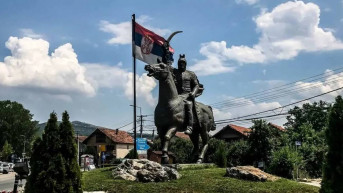
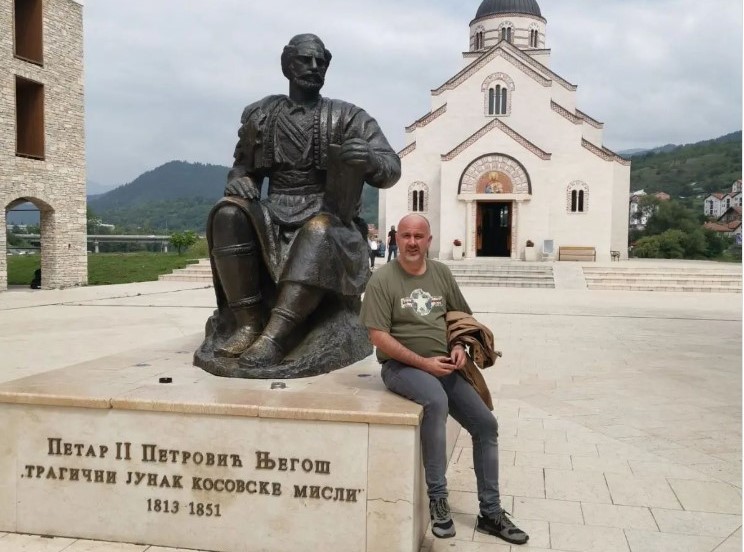
"Oh, Kosovo, a place of great judgment, in your midst, Sodom silenced... Let the struggle be incessant, let it be what cannot be... Ivo Andric referred to Petar II Petrovic Njegos as a tragic hero of Kosovo's thought. Enchanted by the brilliance and significance of Njegos's verses, the famous Nobel laureate understood well how The Mountain Wreath and The Ray of Microcosm are immersed in the Serbian tragedy in Kosovo. Thus, the two colossi of Serbian literature about Kosovo understood each other well".
Edited by: Milos Garic
Today, Kosovo is discussed daily in the context of global politics and the Serbian-Albanian dispute over the primacy of rights in that area. Therefore, it is worth reminding ourselves of how much the theme of Kosovo is ingrained in the heritage of these two nations, in their culture and art.
It is said that the word "Kosovo" in The Mountain Wreath is mentioned the most, alongside the word "God". When discussing the presence and significance of the Kosovo theme in Serbian literature and art, Njegos' work, created in the first half of the 19th century, is one of the main reference points. Still, there are many others, so much so that some claim that all of Serbian culture is woven from Kosovo symbols.
From unknown authors of epic poems from the period before and after the Battle of Kosovo, to figures like Saint Sava, Jefimija, Stefan Lazarevic, through Alekse Santic, Milutin Bojic, Milos Crnjanski, Paja Jovanovic, Uros Predic, Stevan Stojanovic Mokranjac, Jovan Ducic, Desanka Maksimovic, Isidora Sekulic, Matija Beckovic, there is an immense number of Serbian writers, painters, and musical creators who Kosovo has significantly inspired in their works.
The author of the famous poem "Na Gazimestanu", poet Milan Rakic, recounted to his friend Mladen St. Djuricic what it was like when he arrived in Pristina with his unit during the Balkan War.
"So, we arrived at the very site of the Battle of Kosovo. On the right, the Lab was roaring, filled with new strength from the autumn rain, rushing to deliver great news. On the left, on the hill, Murat's tomb stood pensively... They lined us up. Accompanied by the staff, the commander appeared. In a tight formation, rifles clanked against rifles, belts tightened. Soldiers were dropping around me. I looked, and they were kissing the ground...
Rakic's verses have remained for eternity.
“The mighty armadillos, without fault and fear,
Cold as your armor and grim view,
You assaulted then in a cloud of dust
And there was a slam and a bloody race.
Shaky empire toppled up with you...
When the storm passes over the Kosovo field
Kosovo became a vast pit
Terrible ossuary and glorious from defeat...
...And today, when it comes to the last battle,
Irradiant from the glow of old aureole,
I will give my life, to you my fatherland
Knowing what I give, and why I give!“
Writer and journalist from Gracanica, Zivojin Rakocevic, expressed himself eloquently on this topic for Kosovo Online.
"From the broadest perspective on the history of Serbian art and literature, it could, to the greatest extent, be freely called Kosovo's because the words and meanings of the names Kosovo and Serbia - when it comes to culture, spirituality, and statehood - are synonymous. From our cultural model and context, at all times, almost everything unrelated to Kosovo has disappeared. Kosovo and Metohija are the places of our civilization's zenith, and from the historical perspective, the three levels clearly distinguish themselves, belonging to Serbian culture and completely outside territorial and ideological limitations. The first level consists of exceptional monuments and medieval temples, with Decani as the artistic crown of the Balkans. Without mythologizing, frescoes in Kosovo's caves or small, unknown churches could adorn the walls of the world's greatest museums. All of this is the property of the Serbian Orthodox Church, our people, and our culture. The second level is Kosovo's genius epic poetry, Njegos, the era of slavery and liberation. Bosnian Muslims, Dubrovnik citizens, as well as Orthodox Ottoman subjects, through songs and stories about Kosovo, see a part of their freedom and hope. The third level is a contemporary creation, full of tectonic shifts, with Kosovo at its center. Despite everything, images of the same value as in Nis or Banja Luka are now emerging here. From all this, it can be concluded that Kosovo is a living, paradoxically modern tradition that we will never conquer or fully understand, but, in Andric's words about the Drina, we must never stop understanding and conquering Kosovo", Rakocevic explains.
Albanian Literature
On the importance and the presence of the Kosovo theme in the overall Albanian literature and tradition, Professor of Political Sciences from South Mitrovica, Nexhmedin Spahiu, spoke to Kosovo Online.
"In Albanian literature, the theme of Kosovo is rare. Before the war, the Debar writer Haki Stermilli (1895-1953) wrote a novel in which the main character is a refugee from Kosovo who falls in love with a girl from Albania. After the Second World War, the Vlach-origin writer Jakov Xoxa (1923-1979) wrote a novel on the same topic, where a refugee from Kosovo falls in love with a girl from Southern Albania. The strongest theme of support for Kosovo was also written by a Vlach from Albania, Dhimiter Pasko (1907-1967), who, in 1941, composed a poem on the occasion of the annexation of Kosovo by Albania. That's all Albanian literature has for Kosovo. Of course, Kosovo's literature has dealt with the theme of Kosovo. The first novel in Kosovo was written by Adem Demaci in 1958, dealing with blood revenge in Kosovo, criticizing this negative phenomenon in a progressive way", Spahiu says.
Durata Shehri, a Professor at the Historical-Philological Faculty of the University of Tirana, who also teaches literature at the University "La Sapienza" in Rome, states that Kosovo initially appeared in Albanian literature in a geographical sense.
"Pjeter Bogdani, in his work 'The Songs of the Sibyls', mentions the mountain Pastrik as a toponym. This is only a century after the first work in Albanian, by Pjeter Budi in 1555. After that, Kosovo appears several times, as a toponym or as a geographical element, or as an ideal geography. Until 1912, Kosovo was considered only one of the provinces inhabited by Albanians, one of the provinces of Ideal Albania. We find Kosovo in the work 'Animal Husbandry and Agriculture' by Naim Frasheri. There are several toponyms of Kosovo in this work, as a part of Ideal Albania, by this author", Shehri says for Kosovo Online.
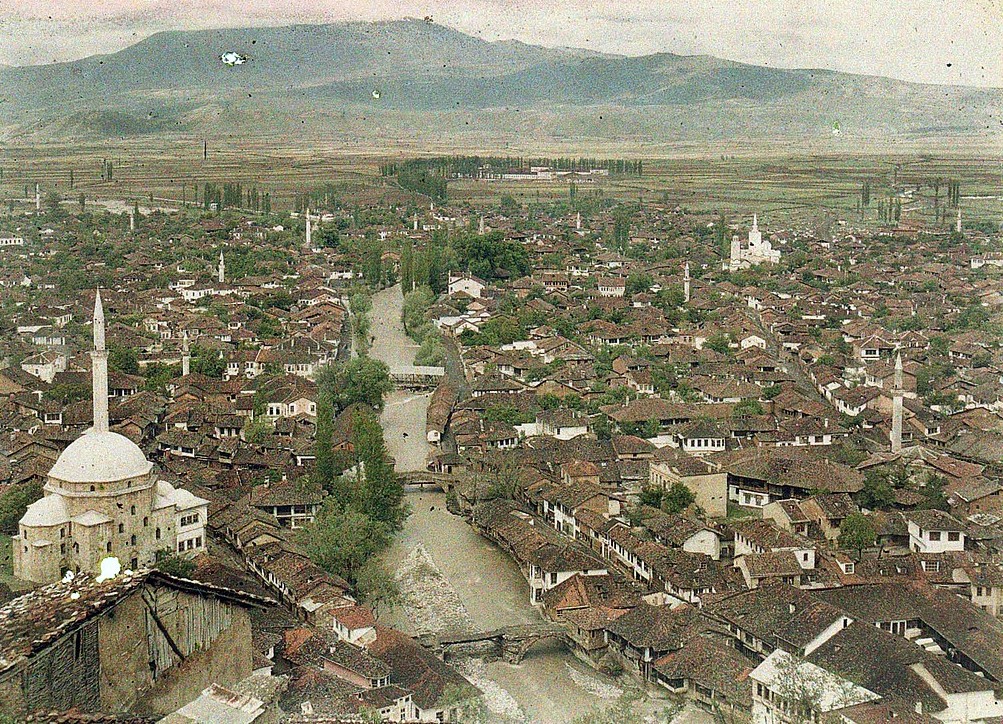
He adds that Kosovo "appears in Albanian literature in connection with the suffering of Albanians, as was the case in the Balkan wars".
"It appears in an important work by Gjergj Fishta, 'The Highland Lute'. One of its main songs is about the League of Prizren, which includes several significant figures from Kosovo. Kosovo appears as longing and nostalgia, as history and geography, and as a spiritual ideal. In some of Azem's poems, in those of Mitrush Kuteli, and in general in modern Albanian literature. There are two outstanding works by Kuteli, an extraordinary report when he visited Prizren in 1943, under the name 'In Prizren, Between the Living and the Dead'. Equally famous, even more so, is Kuteli's 'Kosovar Song'“, Professor Shehri says.
According to her, during the socialist realism period after 1945, Kosovo disappeared from Albanian literature for political reasons.
"It was considered a kind of forbidden topic. This prohibition sometimes appeared openly, forbidding publishing houses to publish works about Kosovo. However, despite the bans, Kosovo was present in Albanian literature at that time. In 1966, Ismail Kadare wrote a poem about Kosovo, writing about the famous battle of 1389 in Kosovo. Kadare extensively dealt with this topic after 1990, as seen in his work 'Three Lamentations for Kosovo'. Another important battle, the Battle of Kacanik, appears several times in Albanian literature, such as the poetry of Fatos Arapi from the socialist realism period. Dritero Agolli also dealt significantly with Kosovo, especially after 1990. We have a whole book entirely dedicated to Kosovo. Two important authors from the Albanian diaspora, are Arshi Pipa and Bilal Xhaferi. The poetry of Arshi Pipa relates to important historical events, such as the demonstrations in 1981 in Kosovo. The dissident Visar Zhiti dealt with this issue, with poetry that has a very symbolic title, 'How to Reach Kosovo?'" Shehri notes.
She adds that before 1990, Kosovo literature found very little space in school textbooks in Albania.
"Albanian authors from Kosovo were not an integral part of Albanian literature but were considered a separate branch, perhaps due to occasional differences in quality between authors from Kosovo and Albania. In any case, after 1990, authors such as Anton Pashku, Teki Dervishi, Sabri Hamiti, and Ali Podrimja entered", Shehri says.
Anchor of Serbian spirituality
Serbian poet from Kosovo, Milica Lilic, tells Kosovo Online that Kosovo, as an integrative motif of the Serbs, pulsates in all aspects of Serbian art, painting, music, and literature from the Middle Ages to the present day.
"In the 19th century, Njegos called Kosovo a great judgment, which it still is today. He sang about it as the most sublime struggle against evil and injustice. It is still known today who is faith and who is disbelief. Isidora Sekulic foresaw it prophetically: Kosovo has neither stopped nor disappeared nor will it ever as long as we exist. It does not start with Prince Lazar but even earlier, from Tihomir, from Prince Lazar and Murat, through various uprisings, the ruling efforts of Njegos and his poetry, Kumanovo, through Albania and Kajmakcalan, through our medieval art, through Mestrovic - Kosovo, lives and will live tomorrow and the day after tomorrow, although always as something else and third, political, cultural, artistic, scientific", Lilic says.
She emphasizes the infinitely great power of the Kosovo pledge.
"For centuries, it generates the creation of new artistic achievements in all areas of Serbian culture. And wherever Serbs live, they live that pledge and renew it in their artistic works. In it, you can hear the echo of that maternal melody Nastasijevic sang about; it resonates with the consciousness of the existence of something above the daily, trivial, and perishable. For Serbs, wherever they are, Kosovo is not just a space; it is a sign! It is a representation of the primal home, the ancestor, and the descendant. Of the foundation and pedestal. Wherever they go, they will always return to Kosovo as a mythical source from which strength, vitality, the return of faith, and meaning are drawn", Milica Lilic emphasizes.
The Serbian poet emphasizes that Kosovo has thus anchored itself in all aspects of Serbian spirituality and art.
"Starting from epic poems of the Pre-Kosovo, Kosovo, and Post-Kosovo cycles, through the lives of saints in the Middle Ages, that is, biographies of Serbian rulers, through writings about charters that affirmed and established spirituality and historical memory. Through Jefimija's golden embroidery 'Dedication to Prince Lazar', through the brotherly love of Despot Stefan Lazarevic the Tall, who warns that love surpasses everything. And this love, as a cohesive motive, keeps Serbs in kinship because of Kosovo and beyond Kosovo. Even if that is shattered, and we are witnessing every effort to break us into faceless and helpless individuals, Kosovo will be preserved despite the difficult and evident occupation because no one has ever been able to subjugate the spirit! In Serbian genes, those who placed freedom and honor above all else pulsate. The awareness of their sacrifice for Kosovo, and all those who have embedded themselves in Serbian survival in Kosovo and Metohija for centuries, lives in Serbian literature and multiplies daily, starting from Njegos, Isidora Sekulic, Milan Rakic, Andric, Desanka Maksimovic, Darinka Jevric, to our contemporaries, which is hard to list", Milica Lilic says.
No one, she adds, can sing so powerfully about something that is not their essence, a part of their inner world and truth.
Kosovo's epic has withstood the test of time.
"Oh, what to say about the Kosovo melody that spreads wherever we are, touching the soul in the most painful place. It's not by chance that Nusic, who was a consul in Pristina, said that the soul is softest in Kosovo. The legendary Jordan Nikolic confirmed it with his sonorous and melancholic voice, revealing the deeply wounded soul of the Kosovo and Metohija people, wounded for centuries. What to say about the frescoes of the holy Nemanjic dynasty in the Visoki Decani Monastery, the frescoes in Gracanica, and other monasteries? Whose past does all this confirm? Whose past is affirmed by the old Serbian language that has survived for centuries, a language in which charters were written, our deeds, and indisputable proof of ownership? Kosovo and Metohija exist, no matter what some may call it, and there is Serbian history, no matter how many try to deny or erase it. It is an inseparable part of the Serbian being; Kosovo, as the heart of the nation, pulsates in every conscious member of this people who has not become estranged or sold out. With that pulsation, we are born, grow, and mature with the light of the Kosovo Covenant, our guide created based on the New Covenant, an orientation and refuge. The idea that it is more honorable to die than to live in slavery and humiliation. Someone said that the Serbian people are not great in number, but they are great in myth, sacrifices, and historical sentiment. Even today, they try to prove that the Kosovo myth originated from something not based on scientific facts; the truth is something entirely different. Life itself twisted it in battles and suffering. What survives in time testifies with its longevity. In this sense, Zoran Misic's words are relevant: The Kosovo epic is not based on conquering arrogance but on the pride of those who, with the weapon of spirit, conquered the conquerors. That's why it doesn't threaten anyone. The Kosovo myth far surpasses the boundaries of national myth; in its essence, it joins those highest creations of the human spirit gathered in the Imaginary Museum of a unique European culture. And the power of myth is in turning history into nature, as Roland Barthes wrote. That's exactly what happened to us", the poet Milica Lilic concludes.
Top of

0 comments