
Markovic: Rohde's statement on Decani biased, "Kosovo cultural heritage" doesn't exist in scientific literature
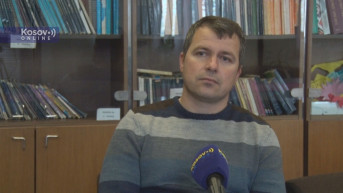
Historian Marko Markovic, director of the Institute for Contemporary History, deems the statement that the Visoki Decani Monastery is "Kosovo's" as something only someone uninformed and looking at things from a political standpoint could say. He clarifies that the term "Kosovo cultural heritage" cannot be found anywhere in professional and scientific literature.
Markovic argues that the statement by German Ambassador Jorn Rohde, in which he refers to the Visoki Decani Monastery as Kosovan, is extremely biased.
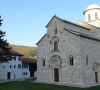
"If we know that Visoki Decani were built in the first half of the 14th century, we clearly know that they belong exclusively to Serbian cultural heritage. Also, one of the clear and unambiguous pieces of evidence that Visoki Decani belong to Serbian cultural heritage is the original Decani Charter that has been preserved to this day and can be seen in the Archives of Serbia. It clearly states when Visoki Decani were built, who the builders were, who built them, and whose endowment it is. Anyone who reads this original Decani Charter has no doubt about who built it and whose cultural heritage it is. So, in every sense of the word, only someone who is not well-informed and who views these matters from a political, or rather, a political stunt standpoint, with passion and bias, can make such a statement. In this case, there were clear pieces of evidence about the German ambassador's intention," Markovic said.
He explains that the term "Kosovo cultural heritage" does not exist.
"The first thing that stands out in public is the term, for example, 'Kosovo cultural heritage.' Nowhere in professional and scientific literature can you find that term. In this area, it is Serbian cultural heritage, which is the oldest. Then, with the conquest of these territories, Ottoman cultural heritage emerged, and since the last 150 years, Albanian cultural heritage has developed in these areas," Markovic said.
He also recalled the relocation of the memorial plaque for Serbian soldiers fallen in the Balkan Wars and World War I on the military section of the Orthodox cemetery in Pristina, calling the move uncivilized and barbaric.
"Simply put, in the 21st century, in the heart of Europe, for someone to move someone else's monuments is simply inconceivable to common sense. Regardless of whose monuments they are, everyone should treat them with the same respect. So, I firmly believe that this relocation is not a coincidence but carries a certain political background with the aim of rewriting history and putting aside those people who sacrificed for freedom, not only of their country but also of the allies. And that some other people, who can freely say they did not participate at all in World War I, especially not on the side of the allies, are portrayed as allies and as someone who made a huge contribution to the victory of the allies. If we now connect this event in the context of marking Armistice Day in Paris, it will be much clearer to us where this is heading," Markovic assessed.
When asked about the goal of representatives of Pristina, who almost daily try to present Serbian cultural heritage as Kosovo's, Markovic responds:
"They want to build their statehood on some artificial and historically unfounded things. When you look into the past from their perspective, they have nothing to attach themselves to, and when you don't have your own, you are only in a situation to take over and appropriate others, primarily in the case of churches and monasteries," he concludes.
0 comments