
Normalization is a long way off: What will 2024 bring to the relationship between Belgrade and Pristina?
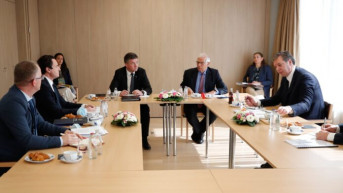
"Normalization is much harder to define than pathology, claim most psychologists. In the case of the relationship between Serbs and Albanians regarding Kosovo, this thesis is especially true. Severe pathology in Serbian-Albanian relations has been ongoing for a long time and has developed to complete extremes, making it the 'norm'. All previous external influences have only contributed to making the situation even worse."
Edited by: Milos Garic
Where to start when talking about the chances for normalization of relations in Kosovo and around Kosovo?
It's best to start with the fact that the diametrical opposition of Belgrade and Pristina's positions fundamentally differs on the crucial question – what is Kosovo?
Is Kosovo with Metohija an integral part of Serbia, as stated in its constitution and valid UN documents, supported by over 100 countries worldwide, led by China, India, and Russia, or is Kosovo an independent state, following the unilateral decision of Albanian political representatives in 2008, accepted by a group of countries gathered around the U.S., Germany, and the U.K.? The same countries that, prior to that, dropped tons of bombs on Serbia under the guise of "protecting" Albanians.
Just mentioning the bombing in a "humanitarian mission" is enough to understand how far we are from normality, but let's focus on current difficulties. These difficulties are such that the divergence in the positions of the two sides, coupled with inter-ethnic hostility, constantly fueled by the authorities in Kosovo discriminating against Serbs, prevents any possibility of establishing a common ground for normalization.
In such circumstances, it is very difficult to expect that a new plan the European Union wants to impose on Belgrade and Pristina after 12 years of struggling in the dialogue can bring significant progress toward normalization in 2024.
So, what can be expected on this issue next year?
The Council of the EU has requested the European Commission and the EU High Representative Josep Borrell to urgently propose to the Council, by the end of January 2024, amendments to the criteria for Chapter 35 in the accession negotiations with Serbia. This includes obligations arising from the Agreement on the Path to Normalization between Kosovo and Serbia and its Implementation Annex.
On the other hand, the government in Serbia is ready to seek a compromise that involves difficult decisions towards normalization, but Belgrade unequivocally rejects the possibility of Kosovo's membership in the UN, with a categorical stance that it neither legally nor factually accepts the unilaterally declared independence.
Meanwhile, Kosovo Prime Minister Albin Kurti seizes every opportunity to reject and sabotage agreements and obligations that Pristina has, especially regarding the formation of the Community of Serbian Municipalities and the return of local self-government to the hands of Serbs in northern municipalities. When it comes to normalizing relations with Serbs, Kurti is interested only in recognition from Belgrade, stating that "first and foremost, Serbia needs to normalize" because, according to him, "Kosovo is perfectly normal."
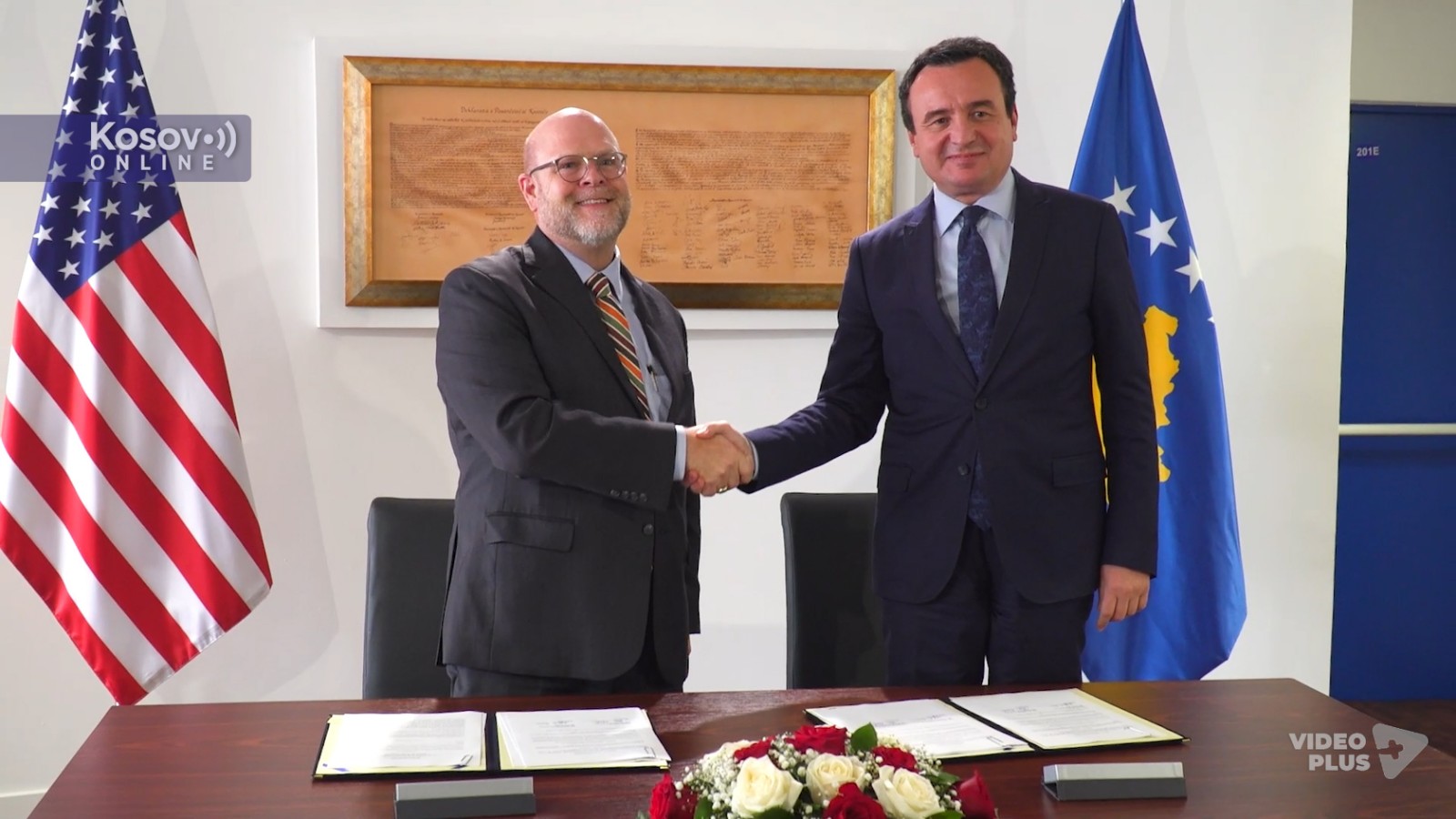
At the same time, the U.S. Ambassador to Pristina, Jeffrey Hovenier, expects "progress in the implementation of agreements between Pristina and Belgrade in 2024, and that the process of normalizing relations will conclude with mutual recognition."
"We hope to see real progress in 2024, including Serbia taking significant steps to fulfill all its obligations under the agreement and Kosovo also fulfilling all its obligations, including progress regarding the Community of Municipalities with a Serbian majority," said Hovenier.
When looked at all together, it seems like a big confusion with little chances of improvement.
Influence of U.S. and EU elections
Former head of the Coordination Center for Kosovo and Metohija in the Serbian government, Nebojsa Covic, reminds of the importance of the presidential elections in the U.S. to be held in 2024, the voting for the European Parliament, and in several European countries, including some in the region.
"This will almost certainly lead to completely new structures of government and new priorities in their national and foreign policies. The results of the elections held in some European countries in 2023 showed the expected strengthening of right-wing forces, which, among other things, oppose further EU enlargement and show a degree of skepticism regarding support for Pristina and the Kosovo project as a whole. Despite the feverish efforts of neoliberal forces, which have been in power in recent years, to impose their solutions, including an ultimatum to Serbia regarding the de facto recognition of so-called Kosovo by the end of January, it should be said that nothing imposed now will be set in stone and will be subject to change. What is important is for us to clearly state that any connection between further progress in the EU integration of the Republic of Serbia and the de facto recognition of so-called Kosovo is entirely unacceptable for us, regardless of whether it will impact current EU decisions," says Covic.
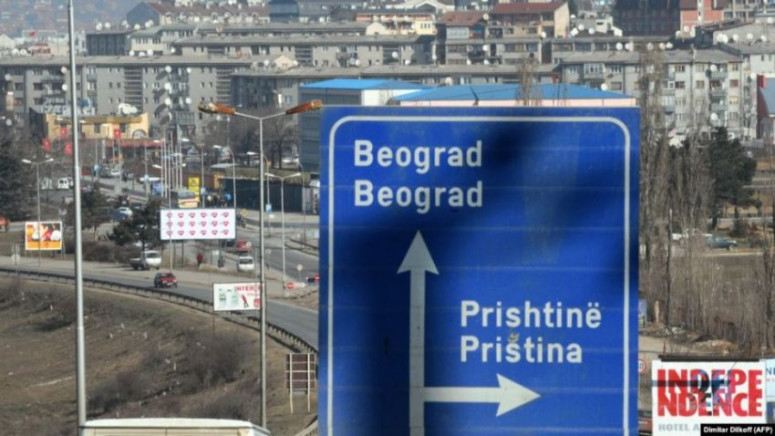
He says that the strategy of Pristina and those states that unconditionally support Albanians is very clear.
"In 2024, parallel to the pressure on Belgrade regarding further undermining the presence in Kosovo and Metohija and abandoning this part of the territory in international forums, they will rapidly work on the forced creation of a new reality in the province, strengthening repression and apartheid against the Serbian community to make as many Serbs as possible decide to leave their homes. They are also creating and arming paramilitary formations in violation of all legally binding international and local documents, aiming to render objective the impossibility of securing full membership of the so-called Kosovo in the UN," Covic believes.
In his opinion, Albin Kurti will continue to escalate tensions on the ground while simultaneously postponing the implementation of Pristina's obligations.
"Kurti simulates constructiveness and comes up with some new proposals, such as the latest seven-point plan or the senseless offer that he personally prepares the statute of the Community of Serb Municipalities next year. Truth be told, Miroslav Lajcak gave him the cue with an irresponsible statement contrary to the mandate entrusted to him, violating the Brussels Agreement, that the statute of the Community of Serb Municipalities is an internal matter of Kosovo, and it is not up to Belgrade to approve or disapprove it. More than five years ago, long before the dramatic destabilization caused by the arrival of Albin Kurti, I warned that the plan of certain countries of the collective West is to present the formation of the Community of Serb Municipalities as a compromise by Pristina, for which Belgrade would be asked to recognize this quasi-state, regardless of whether it is de facto or de jure. This is happening now, and this will be the prevailing attitude of the most vocal Western advocates of the Kosovo project in 2024. It is up to our negotiators to reject such an approach as absolutely unacceptable. The establishment of the Community of Serb Municipalities, within the framework agreed upon in 2013 and 2015, is part of the obligations already undertaken by Pristina and the EU, and it cannot be put in the context of some new negotiations," emphasizes Covic.
Political scientist and international relations expert Dimitrije Milic also emphasizes that Western countries enter the new 2024 campaign with new priorities and thinking focused on re-election and achieving the best results at the polls. Despite this, he expects strong pressure on Belgrade.
"The elections for the European Parliament in the spring and the U.S. elections in November are certainly among the most important in the West. Although at first glance, there may be less energy for foreign policy issues due to the preoccupation with the campaign throughout the European Union or the marathon campaigns in the U.S., this may not be the case with the Kosovo dialogue. Such shortened deadlines can primarily prompt European politicians to act more decisively and exert pressure on both sides regarding the implementation of the Ohrid Agreement at the beginning of 2024. Despite the fact that a significant number of European parliamentarians and their parties will be campaigning, this will not hinder Lajcak and Borrell from using their political power, perhaps even with the pressure of several European leaders, to achieve some implementation," warns Milic for Kosovo Online.
He estimates that in the U.S., despite greater intensity and longer duration, the campaign will not necessarily impede the functioning of the system and the state apparatus.
"This could be seen with the Washington Agreement during Donald Trump's re-election campaign, where the most important steps were taken at the very end of the campaign. For this reason, pressure on the normalization of relations will almost certainly be present throughout the next year, where European pressure can be expected more in the first half of the year, while American pressure may be more unpredictable and possible at different times in 2024 until the elections at the beginning of November," warns Milic.
Collapsed false image of Kosovo
Former Foreign Minister of the Federal Republic of Yugoslavia, Zivadin Jovanovic, assesses that what has been done and is being done in Brussels were not, nor will they ever be, negotiations, but a masked, deceptive involvement in the mechanism for crushing Serbia and Serbs as an old, highly civilized, and brave European nation.
"True negotiations and a fair solution for Kosovo and Metohija will be possible; they will certainly happen, and no one should doubt that or be tempted by any promises, investments, or donations. They have destroyed so much and caused harm to the Serbs that it cannot be covered by any alms, nor can it be forgotten. The time will come to expand the agenda of negotiations. However, these will be true negotiations, not an imitation where everything depends on the goodwill of some delusional so-called democratic commissars," emphasizes Jovanovic.
Regarding the decision of Serbs in northern Kosovo to withdraw from Pristina institutions and the consequences that have arisen over the past year, Nebojsa Covic says he still believes that this move was legitimate and the only possible move to draw attention to the repression of Pristina authorities and the violation of all elements of the binding legal framework that should have ensured the protection of the Serbian community.
"With this act, the false rosy image of Kosovo's mentors and lobbyists in the international public about Kosovo as an alleged bright example of a successful and modern democratic society was undermined. However, what was supposed to be a move to provide a tactical advantage for the interests of the Serbian community in Kosovo became its complete opposite due to the inertia of Serbian political structures and the lack of a well-thought-out plan for the day after, which I have pointed out several times, creating space for the rampage of Pristina institutions and paramilitary structures in northern Kosovo. Once again, we have put ourselves in a situation where, when we already have victory in our hands, instead of proactively acting, our passivity and reactive action render meaningless, in this case, the withdrawal from institutions and the legitimate reasons for this decision. In such circumstances, when the only thing left is damage control, submitting a petition for the dismissal of Kurti's illegitimate mayors in the north was an excellent tactical move that caught the temporary Pristina authorities off guard," emphasized Covic.
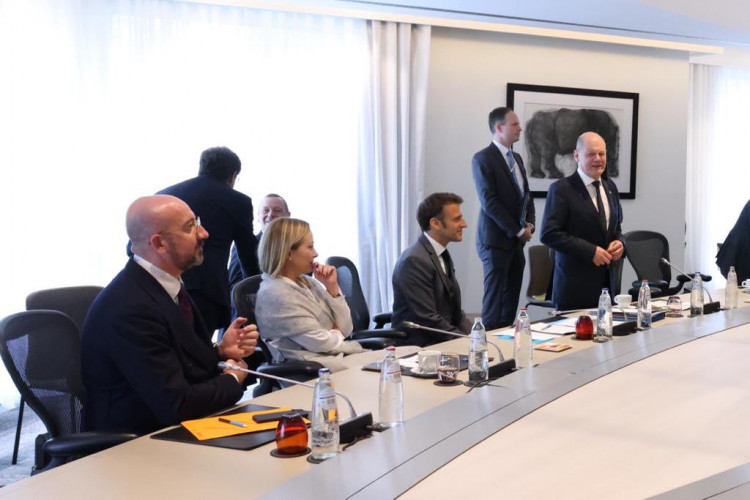
He adds that the initial refusal of local Albanian structures to accept petitions, followed by the additional complication of procedures established by Pristina itself, confirms the fact that Kurti, for whom such a situation is favorable, never actually intended to organize new elections.
"This was Kurti's lie in collusion with Western mentors, which he sold to the international public by presenting himself as a 'legalist,' who is actually only hiding behind administrative procedures and false dedication to the 'rule of law.' The ultimate goal of the loudest mentors of the Kosovo para-state project is the complete collapse of Serbian structures and self-government in northern Kosovo and Metohija. In this regard, there is no doubt that Albin Kurti, with their blessing, will continue with the usurpation of Serbian property in the north, building new paramilitary bases—without a reaction from KFOR, EULEX, the Quint—under the pretext of establishing the 'rule of law' and 'preventing terrorist incidents,' such as the one near the Banjska Monastery in September," adds Covic.
Change of Approach
He emphasizes that precisely the 'rule of law' is the main argument of those Quint countries that unconditionally support Kurti, primarily Germany, the United Kingdom, and the United States, which, on the one hand, "publicly and tepidly demand respect for signed agreements, while on the other hand, incite Kurti to continue building apartheid in Kosovo, which should accelerate the completion of the ethnic cleansing of the Serbian community from the province."
"This scenario has already been seen—an apartheid, brutal violation of human rights, intimidation with secret arrest lists, false accusations of war crimes, prevention of the return of property to displaced persons, prevention of return, brutal armed action—which these same countries developed for the ethnic cleansing of the Serbian community from Croatia 30 years ago. To a significant extent, something similar is happening in the Middle East at this moment. Bearing this in mind, as well as waiting for Godot, so is waiting for the EU, the Quint, and the OSCE to react energetically, senseless in 2024. The Western mantra of 'normalization' is an empty story; for these organizations, it is not a priority to monitor the situation on the ground, ensure respect for existing binding agreements, but blindly, bureaucratically, and arrogantly push the geopolitical and regional agenda of the most influential EU members, in this case, primarily Germany, in coordination with the United Kingdom," says Covic.
Regarding the Serbian side, he believes that it is necessary to change the approach as soon as possible and that much more should be sought than is expected to be obtained.
"By lowering the bar of our demands to the last red lines, we are constantly on the defensive and give an advantage to the other side. Instead, we must insist on fulfilling the conditions set at the end of last year when Serbs withdrew from institutions in the north: urgently establishing the CSM as defined by the signed and ratified Brussels Agreement of 2013 and 2015, the resignation of illegitimate mayors, immediate withdrawal of all paramilitary and paramilitary formations, the return of usurped property and compensation for damage to owners, the release of all detained Serbs to await the completion of legal proceedings in freedom, strict adherence to the ethnic composition of judicial panels in cases involving Serbs, the cessation of all activities on the formation of the so-called Kosovo Army, the immediate return of property to the Visoki Decani Monastery, the establishment of a registry of ethnically motivated crimes against Serbs and other non-Albanians and their property and cultural and religious heritage, the introduction of the category of hate crimes into the relevant legal framework, strict adherence to all previous binding agreements and other international legal documents... Only when these conditions, which are already defined by the legislative framework of the provisional institutions of self-government in Kosovo and Metohija, are met, should we proceed to fulfill our side's signed obligations, not before, as is currently being done," emphasizes Covic.
He concludes that Serbia should not even think about stopping the campaign of derecognition and actively preventing Kosovo from joining international organizations.
"When Belgrade, at the urging or pressure of the collective West, intervenes to stop the justified revolt of the Serbian population in Kosovo and Metohija, it must be aware of the consequences and have scenarios worked out for various developments so that Serbs are not left to themselves and Pristina's repression. It is certain that in 2024, all stories about fulfilling Pristina's obligations will remain a dead letter, and we urgently need to create scenarios for our proactive action in this regard, without giving any further concessions to Pristina and its mentors," concludes Covic.


0 comments