
Pavlovic: Customs are a pledge for the future of Serbs in Kosovo and Metohija
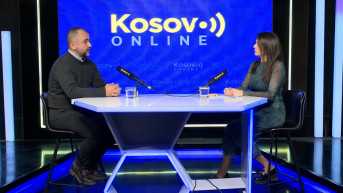
Customs and traditional culture never exist in a vacuum, independently of social, political, and economic processes or of the position of the population that practices those customs. When we speak about young people in Kosovo and Metohija, I can say from experience that there is strong interest—primarily in those customs through which, also in the context of the circumstances they live in, they are able to express their identity and attachment to their community and people. In that sense, customs acquire an additional national symbolism that is by no means negligible when we talk about tradition. Interest among young people does exist; the problem, unfortunately, is that in many communities there are fewer and fewer young people. I want to be optimistic and believe that young people will remain in our communities and take care that customs do not disappear. There is a kind of feedback loop here: customs help keep young people rooted, and young people, I hope, will be the segment of the population that preserves those customs,” said Dr. Aleksandar Pavlovic, Senior Research Fellow at the Institute for Serbian Culture Pristina–Leposavic, speaking on Context.
He defended his doctoral dissertation, “Everyday Life of the Inhabitants of Northern Kosovska Mitrovica,” based on field research conducted from 2011 to 2015.
In an interview for Context, he says that much has changed just a decade later.
“However, some basic characteristics and parameters of life for Serbs in this part of Kosovska Mitrovica have, unfortunately, remained the same. That was one of my conclusions in both the monograph and the dissertation—a sense of uncertainty and insecurity about the future. That is how life was lived ten or more years ago, and that is how it is lived today as well. I would say this is one of the main characteristics of life for Serbs in Kosovska Mitrovica,” Pavlovic says.
With that feeling, Serbs in Kosovo welcome one of their greatest holidays—Christmas. The guest of Context notes that Christmas is celebrated with such diversity that it is difficult to identify a single form characteristic of the Kosovo area.
“We can say that what characterizes the celebration of Christmas among Serbs in Kosovo and Metohija is the symbolism of the holiday, with its system of messages and values. It practically gives Serbs a kind of anchor and confirmation of their identity and continuity,” Pavlovic assesses.
Consumption of Dried Sparrows
One of the long-standing peculiarities among Kosovo Serbs was breaking the Christmas fast by consuming dried sparrows, or dzivdzan. Pavlovic notes that this custom has disappeared, but survives in narratives and oral tradition.
“It can be reliably confirmed that this custom did exist among Serbs and implied that, on the eve of Badnjak Day or on Badnjak itself, households would try to catch sparrows that would be prepared for breaking the fast on Christmas Day. The sparrow meat would usually be thermally processed—cooked together with other food, with cabbage and meat—and this would be the first bite taken by household members on Christmas morning,” Pavlovic explains.
Serbs, he says, have always attributed certain characteristics to animals, usually based on their real traits.
“The sparrow is a small bird—nimble and lively—and for that reason it may have been believed that if household members broke their fast with sparrow meat, they too would be nimble, lively, and diligent throughout the year. But there is another interesting interpretation. In the Gracanica area, the sparrow is called dzivdzan. That term is not unusual; it is found elsewhere among Serbs as well. However, dzivdzan refers to a bird that is not migratory, one that remains in its area even during winter. If we look at the context of the position of Serbs in areas where they were often under pressure to move away, consuming sparrow meat symbolized that they would remain on their ancestral hearths,” the Context guest notes.
Procka in the Sirinic District
A custom that is still alive among Serbs—primarily in the Sirinic district—is Procka, or White Shrovetide, which marks the end of winter and the beginning of spring. It always falls on the Sunday before the start of the Easter fast. Although this is a custom found among other Slavs as well, an integral part of Procka in the Sirinic district is “The Wedding of Prince Marko,” during which a masked procession of vucari symbolically depicts a wedding.
“The procession sets off in the morning hours and consists exclusively of men of middle or younger age. It passes through settlements in Sirinic; noise is made, and participants express themselves through song, shouting, and laughter. Procka is a day when people seek reconciliation through jokes and laughter, when a cheerful spirit and pleasant atmosphere should prevail. Looked at more deeply through history, the origin of such processions is not strictly of an entertaining nature. Namely, at the transition from winter to spring, according to old beliefs, the souls of ancestors are especially alive and active among the living, and it is believed that the lives of descendants depend on the mood of the souls of the dead. Through masked processions, the living sought to appease the souls of their ancestors. During this period, evil forces are also believed to be active, so the procession can be seen as a form of human activism—through noise and masks—to drive away evil forces,” explains the researcher at the Institute for Serbian Culture.
Participants also chase away evil forces through an act known as “mavanje kumbare,” as Shrovetide bonfires are called in the Sirinic district.
“Kumbara is a word of Persian origin that entered Serbian via Turkish. Fire as an element has always been regarded in the traditional culture of Serbs and other peoples as a means of protection; it served to destroy everything impure and evil. In essence, people sought protection through fire. In the Kosovo Pomoravlje region, fires are lit at crossroads and village centers, but the symbolism is the same,” Pavlovic emphasizes.
Bela Vila in Velika Hoca
The Context guest also spoke about other preserved customs related to agrarian magic and cults, through which people seek to ensure a fertile year and the productivity of crops and livestock. One of these is Bela Vila, practiced in Velika Hoca on the third day of Easter.
“One of the elements of Bela Vila is ‘building the city,’ where a group of six or seven young men form a circle and another group climbs onto their shoulders to create a kind of tower, or a circle upon a circle. In its symbolism, due to its circular shape, this can be linked to agrarian cults and solar cults, which clearly point to the importance of weather conditions on which fertility and prosperity depend,” Pavlovic said.
Other elements of Bela Vila are “the dance of the peacock and peahen” and “the hunt for wild horses.”
“The dance of the peacock and peahen is performed exclusively by women; songs are sung that contain elements of fertility and even erotic motifs, pointing to the importance of that time of year for the growth and fertility of crops, livestock, and people. The hunt for wild horses is a male game in which one group of young men, carrying freshly leafed green branches, attempts to chase another group of young men—who supposedly represent the horses—through the village,” Pavlovic describes.
Filija as a Symbol of Interweaving
The boundaries among the peoples inhabiting the Kosovo area were not always clearly drawn, Pavlovic explains, noting that during periods of peace there was significant cultural exchange and cooperation.
“If we look back historically, it is precisely in the field of culture that we can observe interweaving and the presence of what is called shared tradition, where certain cultural elements exist among several different peoples and ethnic groups. In the domain of food, there are certain dishes consumed by all peoples in Kosovo and considered part of their tradition. This includes, for example, filija or flija, maslenik, redovac. It is essentially the same dish, known by several different names—a type of pie. This is one segment of a common, shared tradition that persists to this day and can show how cultural elements run through, intertwine, and meet among all peoples in Kosovo and Metohija,” Pavlovic said.
The Context guest concludes that customs are a confirmation of the historical continuity of Serbs in Kosovo and Metohija and a reflection of their lives.
“Customs tell us about the lives of our compatriots and about their—hopefully—efforts to remain and to have those customs as a kind of pledge for the future,” Pavlovic emphasizes.
You can watch the full appearance of Aleksandar Pavlovic on the Context podcast in the accompanying video segment.



0 comments