
Self-Determination and DPK together: Is a reconciliation between Kurti and Thaçi on the horizon?
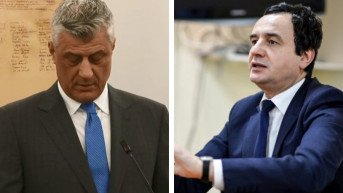
The hostility between the two sides peaked in 2019 following a court case regarding accusations of top Self-Determination members participating in a terrorist attempt to assassinate Azem Vlasi. Kurti has long held a grudge against Thaçi for his leading position among Albanians, as well as for the Brussels Agreement and other obligations from the dialogue with Belgrade, even after the arrests and transfer to The Hague. Have things changed since then?
Prepared by: Milos Garic
No Kosovo government since the unilateral declaration of independence in 2008 has lasted a full four-year term, and it looks unlikely that the current government led by Albin Kurti with Self-Determination will either, even though there is just over half a year left until the regular election date.
The political crisis in Kosovo has been ongoing for months, with the parliament practically paralyzed, and all Albanian parties, both in power and in opposition, disregarding some long-established "red lines" in their mutual relations.
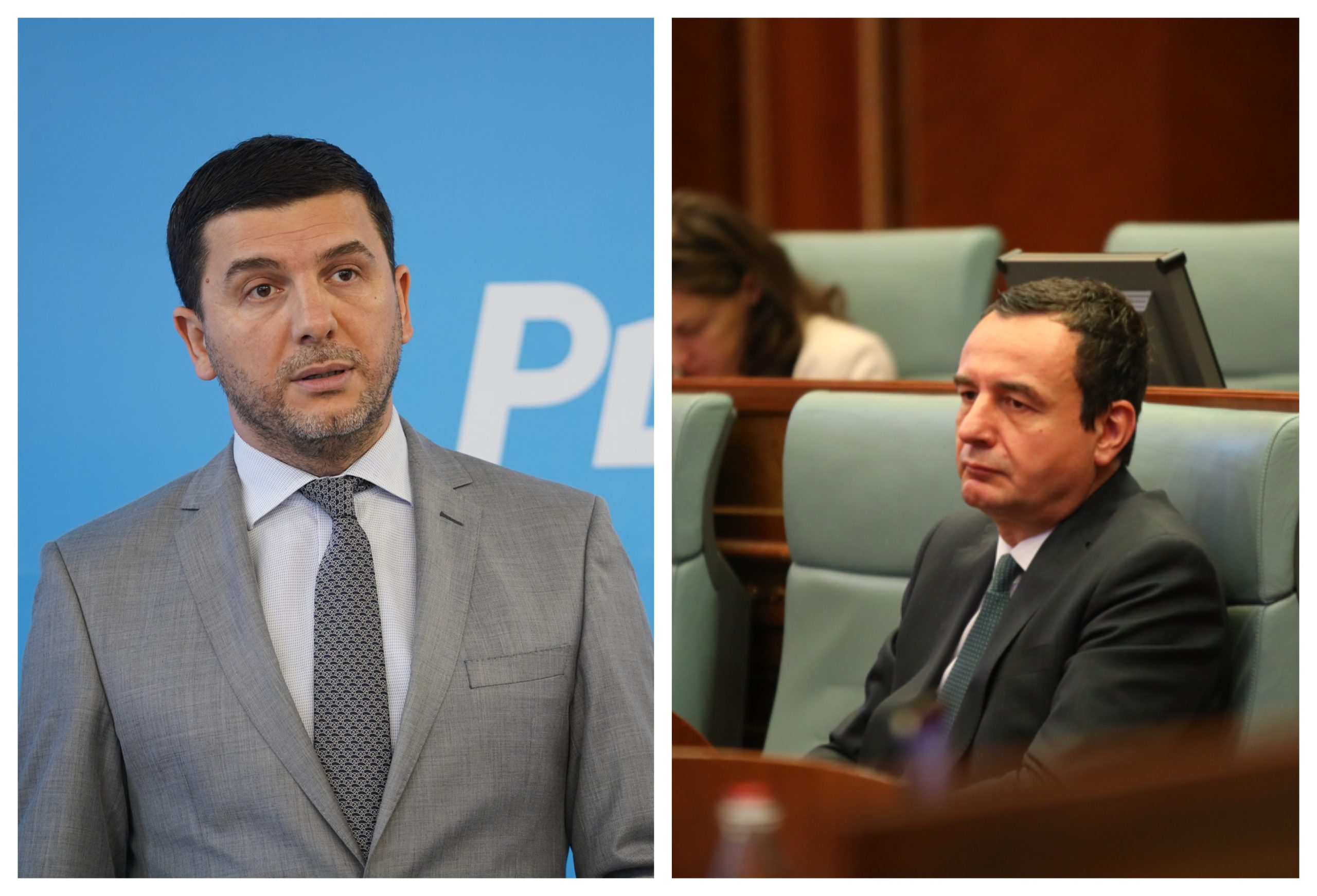
This Kontekst also includes the recent meeting between the leader of the Democratic Party of Kosovo, Memli Krasniqi, and Albin Kurti, after which discussions opened about possible post-election cooperation between the two parties despite strong hostility from earlier times.
In response to a remark by the president of the Alliance for the Future of Kosovo, Ramush Haradinaj, that Kurti "will destroy the DPK, as he previously did with the LDK," Krasniqi stated that their party "are not children to be deceived by Kurti."
The history of poor relations between the DPK and Self-Determination is as old as the parties themselves. The founder and long-time undisputed leader of the DPK, Hashim Thaçi, was never "to the liking" of Albin Kurti, and their rivalry grew over time due to their different roles and contributions in the KLA.
Kurti and Self-Determination strongly opposed and resisted Hashim Thaçi's policies, particularly after the 2013 Brussels Agreement, due to the obligation to form the Association of Serb Municipalities, and the agreement that members of the KSF could not go to northern Kosovo without the approval of KFOR and local mayors.
Healed complexes?
Mutual attacks culminated in 2019 when a court in Pristina launched an investigation following a criminal complaint by Albin Kurti and Glauk Konjufca against Hashim Thaçi and Kadri Veseli, accusing the Self-Determination leaders of participating in the terrorist organization "People's Eye" and attempting to murder Pristina lawyer Azem Vlasi.
Kurti and Konjufca dismissed the accusations of terrorism and subversion of order by Thaçi and Veseli, asserting that the DPK actually intended to remove Self-Determination from the political scene of Kosovo.
In early 2020, after snap elections, Self-Determination took over the governance of Kosovo's government with the LDK, but tensions and disagreements between Kurti and Thaçi, who was then president, persisted.
The political climate in Pristina shifted at the end of summer 2020, following the (un)expected arrests of Thaçi and Veseli with indictments for war crimes, and their transfer to detention in The Hague for trial. Kurti used the new circumstances and confusion within the DPK to take complete control in Kosovo, which he still firmly holds.
However, the relationship between the two Albanian leaders and their parties continued to deteriorate. Last summer, Democratic Party of Kosovo MP Ganimete Musliu stated that Prime Minister Albin Kurti has a complex because of Hashim Thaçi as history has not positioned him where the former Kosovar president and KLA commander once stood.
"Kurti sees Hashim Thaçi in his dreams. Thaçi is out of politics, dealing with other issues, and Kurti is still occupied with him. He suffers from this complex. This is complicated because history has not positioned him where Thaçi has been," Musliu said.
Have things changed in the meantime, and will DPK and Self-Determination members now raise their hands together in the Kosovo parliament?
Political analyst Visar Xhani emphasizes that political cooperation between Hashim Thaçi's Democratic Party of Kosovo and Albin Kurti's Self-Determination is a complex and very delicate issue.
Historically, these two parties have had significant ideological and strategic differences. The DPK, which is more established and traditional in its approach to politics and governance, has often clashed with the more radical and reformist stance of Kurti's Self-Determination. However, in politics, situations and positions can change. There may be moments or specific issues that require pragmatic cooperation between different sides to achieve concrete goals or overcome certain crises. In this Kontekst, while full and long-term cooperation may be difficult due to deep differences, there may be opportunities for temporary or limited cooperation on certain issues where interests align. Ultimately, the possibility of political cooperation will depend on specific circumstances, the position of leaders at different times, and the needs of the political moment,” explains Xhani for Kontekst.
Pristina analyst Blerim Burjani indicates that the meeting between Memli Krasniqi and Kurti was related to the adoption of international agreements, meaning Kurti is in trouble when it comes to securing votes in the Assembly for their adoption.
“Of course, they might have discussed new elections, but I don't think Kurti will accept his dismissal as Prime Minister. Kurti won't resign as a bad prime minister, he doesn't accept that. However, I think it would be better to go to new elections as soon as possible, for the benefit of Kosovo,” says Burjani.
No More Red Lines
He warns that at this moment, anything is possible regarding future coalitions.
“DPK now has no red lines, and cooperation with the DPK now suits Self-Determination as well. After the new elections, two coalitions are possible. One is to unite DPK, Self-Determination, and minorities, and the other is for Self-Determination to create a majority with LDK and ABK. These are possible new government coalitions in Kosovo,” Burjani points out for Kontekst.
And political scientist Ognjen Gogic leaves open the possibility for cooperation between Self-Determination and DPK, but for him, the first question is when will the elections be.
“Kosovo is in a pre-election period, and the ruling party is considering when they could be, which term is most favorable. Whether to wait for the regular one in February, March, next year, or to have them this summer already. It seems that all actors are interested in having elections before the regular term. The impression is that Kurti wants the elections to be during the summer. There are two reasons. The first is that people from the diaspora will be in Kosovo for their annual holidays, and he counts on their votes. And second, it suits him to have elections before the presidential elections in the USA, which are in November, and it is possible that Trump will return. There are two ways to go to elections. Either Kurti resigns or the Assembly is dissolved. Kurti will not resign, as it would be a bad start to his campaign, while the opposition wants exactly that. The opposition benefits from weakening Kurti's position,” explains Ognjen Gogic for Kontekst.
However, Kurti received the DPK's approval a few days ago for his idea to dissolve the Assembly without his resignation. This speaks to the possible cooperation between DPK and Self-Determination despite the old enmity.
“So, the question arises whether a post-election coalition between Self-Determination and DPK is possible. It is possible. On the principle that yesterday’s enemy can be tomorrow’s friend, it is possible that DPK goes through what SPS did when Dacic took over the party and supported Kostunica’s government. Now Krasnici could do the same. In politics, nothing is definitively predetermined. However, we must first wait for the elections and see the results. Because, even if something was agreed with Krasnici, Kurti could easily break it if the election results allow him. The possibility of cooperation between DPK and Self-Determination and what it will look like will be decided by the votes of the electorate and the results of both parties,” concludes Gogic.
Analyst Visar Duriqi for Kontekst also agrees that the so-called “red lines” regarding coalitions in Kosovo's political parties have long been crossed.
“They no longer exist. On a local level, Self-Determination and DPK have already had a coalition - in the municipality of Gnjilane. It worked for more than two years. About DPK's decision that it is ready for elections as Kurti wants, I think it has been misinterpreted. DPK wants elections and is not picky about the way we get there. But, to answer your question. If, after the elections, Self-Determination is the first party, and DPK is third, it is most likely that they will form the next government together. In case DPK is the second party by results, then the coalition will be Self-Determination and LDK. So, it will go in a way that the first party makes a coalition with the third party, and the second party will make a strong opposition,” thinks Duriqi.



comments