
Serbia and Switzerland are closer than we think
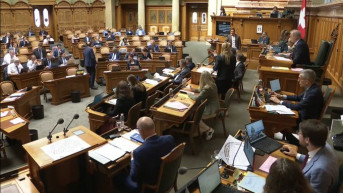
I returned from my recent visit to Serbia with many impressions and one firm conviction: our countries have far more in common than may appear at first glance. Together with my colleague, MP Roman Bürgi, I had an opportunity to get to know a country that is proud of its history yet strongly oriented toward the future. I will particularly remember the exceptional hospitality, open conversations and warmth of our hosts.
About a year ago, our Switzerland–Serbia Parliamentary Friendship Group resumed its active work, significantly increased its membership and became the second-largest such group in the Swiss Parliament. This reflects the growing interest in Serbia. As co-chair, I believe parliamentary cooperation builds ties not only between governments but also between societies, even when differences of opinion exist.
Belgrade is a city where European history can be felt at every turn. I experienced this particularly strongly at Belgrade Fortress, overlooking the confluence of the Sava and Danube rivers. For centuries, peoples, empires and cultures met there. The Romans, Byzantines, Ottomans and Habsburgs all left their mark. The fortress bears witness not only to wars and changes of rule, but also to trade and cultural exchange. Belgrade has never been on the periphery of Europe; it has always been one of its important crossroads.
This makes the contrast with present-day Belgrade all the more fascinating—a modern metropolis with new urban districts, a vibrant cultural life and an increasingly strong technology sector. The city radiates confidence and energy. Its history is omnipresent, yet its gaze is firmly directed toward the future.
We had an equally impressive encounter with history at Viminacium, once one of the most important Roman cities in this part of Europe and the capital of Upper Moesia. The vast site comprised a city, a legionary camp and necropolises, and at its height tens of thousands of people lived there. As much as the scale of the ancient city itself, I was impressed by the work of Serbian archaeologists. With scientific precision, modern technology and remarkable persistence, they are uncovering a world that lay hidden beneath the ground for centuries. Only a small part of the site has been explored so far. Their work not only preserves the past but also enriches our knowledge of our shared European heritage.
After encountering the past, the Science Technology Park Belgrade offered us a glimpse into the future. There, we met young entrepreneurs determined to turn innovative ideas into products and successful companies. I am pleased that Switzerland has also contributed to the development of this center: investment in science and technology is, above all, an investment in people.
Political discussions were an important part of the visit.
I am grateful to representatives of the National Assembly, particularly Speaker Ana Brnabic, as well as Foreign Minister Marko Djuric and our other hosts, for their warm welcome and open exchange of views. We discussed the economy, energy, European integration, regional stability, security and human rights. We do not have to agree on everything. That is precisely why direct meetings are so important: trust is not built by avoiding dialogue, but through a willingness to discuss everything openly.
I consider relations between Serbia and Switzerland to be excellent. This year, we are marking 110 years of diplomatic relations. Another particularly important moment was this year’s visit to Belgrade by President of the Swiss Confederation Guy Parmelin, which gave fresh impetus to cooperation, especially in the field of innovation. I am pleased that our partnership extends far beyond political contacts: it rests on the economy, education, science and, above all, ties between people.
There are also interesting similarities in the way we view the world. Both Serbia and Switzerland attach great importance to independence and sovereign decision-making. Switzerland’s traditional neutrality and Serbia’s military neutrality arose under different historical circumstances and rest on different foundations. Nevertheless, both countries share a strong desire to decide independently on their own future and contribute to peace and stability in Europe.
Around 130,000 people of Serbian origin live in Switzerland. They are entrepreneurs, professionals, scientists, athletes and our neighbors; they are an inseparable part of our social and economic life. They know both countries and their cultures and often speak both languages. No diplomatic initiative can replace the importance of these everyday human connections.
Economic cooperation is already producing significant results. Hundreds of Swiss companies operate in Serbia, creating jobs, training professionals and transferring new knowledge. Growing exchanges in the IT sector, research and modern services demonstrate how well our respective strengths complement one another. There is also the Swiss government’s long-term support for science and technology parks, entrepreneurship and vocational education, including experience drawn from Switzerland’s dual education system. Such investments create opportunities for future generations.
During the visit, I also discovered an unexpected connection between our two countries. Simmental cattle, a breed originating in Switzerland, have been widespread on Serbian farms for generations. It seems Swiss cows found their way to Serbia long before many Swiss politicians did—and have made themselves very much at home here! Perhaps that is the best proof that successful cooperation does not always have to begin with the signing of diplomatic agreements.
And another major event already lies ahead—Expo 2027 in Belgrade. Switzerland was among the first countries to formally confirm its participation by agreement. I believe this international exhibition will be an exceptional opportunity for Serbia to showcase its creativity, hospitality and ambition to the world. I myself plan to return next year with parliamentary colleagues and friends to visit the Expo. I am already looking forward to it. The new President of Switzerland is also expected to attend.
From the Roman excavations at Viminacium and the historic walls of Belgrade Fortress to the innovative companies at the Science Technology Park, I encountered a country that knows its past, confidently shapes its present and has many ideas for the future. I return to Switzerland with fond memories and optimism: the friendship between our countries rests on solid foundations, and its most interesting chapters are yet to come.
Written for Politika by Christian Imark, member of the Swiss National Council and co-chair of the Switzerland–Serbia Parliamentary Friendship Group
0 comments