
Somaliland – Relocation of Palestinians and the challenges of international recognition of independence (1)

By Habib al Hadi for Kosovo Online
Somaliland, officially the Republic of Somaliland, is an unrecognized state in the Horn of Africa. It lies in a strategically important location—on the southern coast of the Gulf of Aden—bordering Djibouti to the northwest, Ethiopia to the south and west, and Somalia to the east. Its claimed territory covers 176,120 square kilometers with an estimated population of 6.2 million in 2024. The capital and largest city is Hargeisa. Somaliland declared independence in 1991, primarily due to the collapse of Somalia’s central government and the chaos and civil war that followed.
In 1991, the regime of Siad Barre was overthrown, which led to a power vacuum and widespread conflict throughout Somalia. Somaliland, which had been a self-governing British colony before uniting with Italian Somaliland in 1960, sought to preserve its relative stability.
Before unification, Somaliland had enjoyed a certain degree of political stability and autonomy under British colonial rule. Following the collapse, northerners—disillusioned with the joint state shortly after unification—pushed for independence and self-rule, beginning a guerrilla resistance supported by Ethiopia’s communist Derg regime. After the fall of Siad Barre’s 22-year rule, Somaliland declared independence in 1991, at the same time as the former Yugoslav republics, which were soon recognized by European states. Somaliland, however, was not so fortunate. To this day, no country has formally recognized it, and it continues to navigate a complex geopolitical landscape in pursuit of international recognition.
Despite maintaining a stable government, democratic institutions, and a growing economy since its unilateral declaration of independence from Somalia in 1991, Somaliland remains unrecognized by the international community. This lack of recognition has limited its ability to engage in formal diplomatic relations, secure international development aid, and fully integrate into global economic and political structures. Yet now, it seems fortune may be turning for this secessionist territory.
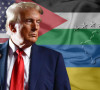
Recent events have placed Somaliland at the center of a new diplomatic controversy—rumors of its involvement in a U.S.-Israeli plan to relocate displaced Palestinians from Gaza. According to reports in global media, the Boston Consulting Group (BCG), a U.S.-based consulting firm, modeled the transfer of Palestinians from Gaza to Somalia and Somaliland.
According to these reports, BCG consultants developed the model for a group of Israeli businessmen working on post-war reconstruction plans for Gaza. The model included a slide deck predicting that 25% of Gaza’s population would want to leave the Strip, and most would not wish to return.
“By accepting residents of Gaza who temporarily and voluntarily relocate, the country would gain an influx of population that could clearly bring significant economic benefit,” a person familiar with the work told The Times. “But the countries in the model were not chosen based on knowledge of specific discussions. The idea was to understand the economic issues tied to the options President Trump put on the table.”
BCG also helped set up the controversial Gaza Humanitarian Foundation, backed by the U.S. and Israel, which manages aid distribution sites in the enclave.
Earlier this year, Trump presented plans to resettle Gaza’s residents in third countries while developing the Strip into the “Riviera of the Middle East.” While no clear progress has been made on the plans, they received support from some Israeli ministers and fierce condemnation from the Arab world and Western nations.
Relocation in a Conflict Zone: A Geopolitical Flashpoint
The proposed resettlement plan has quickly emerged as one of the most contentious geopolitical issues in recent years. The idea of relocating Palestinian refugees from Gaza to alternative regions has sparked intense debates across international political, ideological, and religious arenas. Although details remain vague, rumors suggest Somaliland could potentially be considered as one destination. This prospect has triggered significant political and diplomatic controversy, especially in the Middle East and Africa, where the Palestinian cause remains a deeply rooted symbol of anti-colonial resistance and pan-Arab solidarity.
Many see the relocation proposal as part of a broader geopolitical strategy to reshape the region’s demographic and political landscape. If implemented, the move would not only transform the lives of millions of displaced people but could also shift the balance of power in the Middle East. Given the long-standing Israeli-Palestinian conflict and the polarized global response to Israel’s policies, even the suggestion that Somaliland might take part in such a plan carries profound implications for its own political future.
Reports indicate that the U.S. and Israel have allegedly spoken with leaders of this unrecognized territory, offering international recognition in exchange for accepting Palestinians relocated from Gaza.
For Somaliland, which has long-standing cultural, religious, and historical ties with the Arab and Muslim world, even the notion of participating in such a controversial plan is fraught with risk. Its weak international standing as a self-declared independent state without recognition leaves it especially vulnerable to the shifting currents of global geopolitics. Somaliland’s strong sense of identity is deeply tied to its Islamic faith and Arab heritage, and any perceived alignment with Israel—or even the hint of it—could be seen as a betrayal of its religious and moral values. For much of the Arab and Muslim world, the Palestinian cause is more than a political struggle; it is a symbol of the broader fight for justice, dignity, and self-determination against colonialism and occupation. Thus, Somaliland’s participation in any plan interpreted as condoning Israeli actions risks alienating key allies in the Middle East and Africa and destabilizing its already precarious international position.
The dilemma is further complicated by the broader geopolitical context of the Israeli-Palestinian conflict. The world remains sharply divided along ideological and political lines. The U.S., Israel, and their Western allies defend Israel’s right to security, framing the Palestinian issue as one of terrorism and border defense. In contrast, much of the surrounding region—including key players like Egypt and Jordan, as well as numerous African states—have consistently supported Palestinian self-determination and sovereignty, condemning Israeli settlement policies and military actions. They are joined by most European countries, major Asian powers like China and Japan, as well as Canada and Australia.
In this polarized climate, rumors of Somaliland’s potential participation in the relocation plan have provoked immediate reaction. Many in neighboring regions and cultural communities see the plan as an attempt to normalize Israel’s role in the conflict zone—perceived as a violation of Palestinian and international rights. Relocating Palestinians would, for critics, bolster mounting accusations of genocide against Israel. For some, the mere suggestion that Somaliland might play a role in such an initiative represents a betrayal of pan-Arab and Muslim solidarity, long a cornerstone of its diplomatic credibility.
Israel’s Broader Interests in the Horn of Africa
Israel also has growing strategic interests in the Horn of Africa. Somaliland’s significance for Israel extends beyond the relocation plan, as reported by the Israeli daily Haaretz.
On December 3, 2024, Haaretz published a report titled “All Eyes on Somaliland: The Small African State Key to Israel’s War Against the Houthis.”
The report highlighted Israel’s intention, supported by the United Arab Emirates, to establish a military base in Somaliland to counter the Houthis in Yemen, who had carried out drone and rocket attacks on occupied Palestinian territories in solidarity with Gaza.
Since the outbreak of the war in Gaza, and with the Houthis joining the fight, Israel has struggled to stop their attacks due to geographical distance and intelligence challenges.
On November 17, 2024, the British website Middle East Monitor reported on Israel’s efforts to establish a base in Somaliland.
Ahmet Vefa Rende, a researcher at Sakarya University’s Middle East Institute in Turkey, wrote that the base’s purpose would be to target and deter the Houthis, in exchange for official recognition of Hargeisa and investment projects.
The report added that Israel has long sought to establish zones of strategic depth for its security, such as Cyprus in the Mediterranean, and aims to make Somaliland a similar hub in the Horn of Africa.
The British site further cited diplomatic sources revealing that the UAE—having normalized ties with Israel in 2020—has been mediating between Tel Aviv and Somaliland. Abu Dhabi has reportedly not only persuaded Somaliland to allow the military base but also committed to funding the project.
The UAE’s role has been controversial, particularly regarding Palestinian resettlement plans. Although the country’s official stance publicly rejects relocation, it has been linked to Trump’s proposals.
On February 14, 2025, UAE Ambassador to the U.S. Yousef al Otaiba commented that Washington’s current approach to Gaza was “difficult,” adding: “But in the end, we are all searching for solutions—we just don’t yet know where this will end.”
Some interpreted this as an implicit signal that Abu Dhabi had accepted Trump’s proposal to relocate 1.5 million Palestinians from Gaza.
In March this year, The Jerusalem Post reported that Somaliland had not rejected the possibility of receiving Palestinians on its territory. Shortly afterward, several media outlets circulated a statement allegedly from Somaliland’s foreign minister saying that “Somaliland is open to discussions about accepting Palestinians.” However, that statement has not been credibly verified, though indirect references to such talks have since surfaced.
(To be continued tomorrow)

0 comments