
Summary of the Week 72
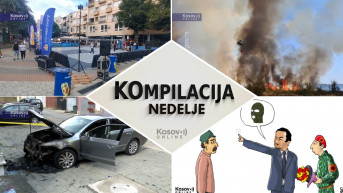
Even when few people think about sports, everything turns into a competition. To win—and even more importantly, to defeat the other side. Sometimes referees help, and sometimes they get in the way. Which “disciplines” dominated this week, and who tried to discipline whom?
In the region, it is never too hot to further heat up the atmosphere on the field. That is why, the Central Election Commission (CEC) estimates, this is a convenient moment to introduce new rules into the competition.
“It will be interesting to see how far Albin Kurti can push this boundary of Western tolerance and display uncooperativeness,” concludes historian Stefan Radojkovic after the CEC’s decision not to confirm the participation of the Serb List in the local elections.
Where the boundaries lie will have to be decided by the referees. Although the way they have ruled so far has not pleased all the players.
“The referee has ruled,” says political analyst Shkëlzen Maliqi. “Whether you like it or not!”
Maybe a referee’s decision cannot be overturned, but it can be commented on—and blamed for everything. Just like in sports.
“Imagine a stupid referee…,” Professor Nexhmedin Spahiu vividly describes the situation in Kosovo after the Constitutional Court’s ruling. “And that referee will interpret the rules of football differently from what they actually are. For example, that the team which concedes more goals should win the match,” says Spahiu.
Scoring more points matters in another discipline, for which Kosovo seems to be preparing.
Milos Pavkovic from the Centre for European Policy expects a tough match—both before and after the elections.
“This opens a new agony, in the sense of going to new parliamentary elections. They are highly uncertain, in terms of whether they will be able to resolve this political crisis,” Pavkovic says.
That sport requires international referees too. Although their judgments sometimes need additional clarification. This week, we interpreted what German Ambassador Rode said—and what he meant.
“The statements are moving in the right direction,” says Slobodan Zecevic from the Institute for European Studies. “Still,” he adds, “they need to be substantiated with concrete political actions by the EU and the US.”
There was no shortage of opportunities for concrete action this week—across the entire region. Fires are one of the rare occasions when everyone plays for the same goal.
“You saw our firefighters going into the flames wearing short sleeves,” journalist Marko Stojanovic described the equipment and engagement in extinguishing fires in Montenegro.
Perhaps equipment is also the reason why real sport in Kosovo is allowed for some but not for others. Or is the selection made according to some other criteria?
“There is no politics in this,” says Milan Radojevic from the Serb List. “And yet, they went so far as to ban our children, our clubs, from using the Sports Hall,” Radojevic explains.
The field doesn’t matter when the rules are clear. Understanding the rules in Kosovo is a special discipline—in which very few come out as winnersy.


0 comments