
Summary of the Week 74
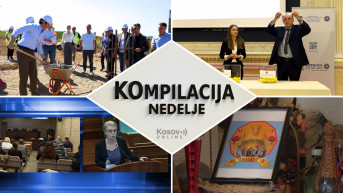
Double standards have long since been surpassed; in Kosovo today, everyone has their own standard. By it, they measure what they are entitled to, what is just, what must be done, and what need not be. That is why this week has not brought a resolution to the political situation, but rather dozens of new twists.
The colorful scene confuses lawyers and analysts, but often makes things easier for politicians. It gives them the opportunity to interpret every situation as it suits them. Yet another Constitutional Court decision, and yet another dilemma: what comes next?
“It is certainly impossible to have elections without the constitution, full constitution, of the Assembly,” reminds Milica Rakic Andric from the New Social Initiative. “So a new vote will have to take place,” she adds.
There is no dilemma, and the arguments, everyone says, are completely clear. What to do with them, however, is not. Some are satisfied with the arguments of the Assembly President, while others are dissatisfied both with the arguments and with the President himself.
“Above all, it is his own Self-Determination Movement that is not satisfied with Basa as Assembly President,” says analyst Marko Milenkovic.
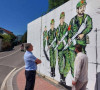
Satisfaction and perception can sometimes be decisive. Every symbol, therefore, is carefully examined and interpreted. This week, women from the Association Tradition Through the Centuries had to explain to the police whether there was anything controversial in their tradition and their work.
“Before our eyes, they took our little flag, that panel, tore it apart and threw it away,” recalls Danijela Mitic Simonovic from the Association. “It really hurt us,” she explains, describing a situation they had never faced before.
Flags, like murals and graffiti in Kosovo, have both a front and a reverse side. Decisions depend on which side you look at and between which lines you read. Historians have an explanation for this:
“Pristina wants to create in the north a sterilized environment. An environment without memory, without culture. An environment shaped to its own measure,” says Luka Jovanovic, a historian from North Mitrovica.
Justice according to personal measure is the privilege of individuals. By their own standards, they decide to whom they owe an explanation, and to whom they do not.
“You cannot ignore when you are summoned, and then appear when it suits you,” comments diplomat Blerim Canaj on the decision of the caretaker prime minister to choose which court proceedings he will attend. “Justice and law are not a Swedish buffet,” Canaj says.
Perhaps not like at a Swedish buffet, but before a major choice, voters in Kosovo will be in October. And for that decision, order—or at least a sequence—is needed. It doesn’t always happen, but this time the job was completed by drawing lots.


0 comments