
The U.S. and Russia are drawing a new security map of Europe

Written for Kosovo Online by Željko Šajn
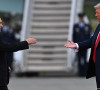
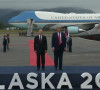
When Politika published an interview in early February with Aleksey Drobinin, Director of the Department for Foreign Policy Planning of the Ministry of Foreign Affairs of the Russian Federation, many at the time overlooked the essence of his carefully phrased diplomatic warning. Speaking on the anniversary of the Yalta Conference, Drobinin made it clear that the foundations of the new world order will be determined by only two powers — Russia and the United States. In other words, without the British prime minister, without Europe’s centers of power, without the role the West had assigned to itself throughout the post-war decades. There is no longer room for hegemonism. Such a statement, made about two weeks after Donald Trump’s inauguration and six months before the summit between the two leaders in Anchorage, Alaska, appeared as a geopolitical thesis whose true weight was yet to be revealed.
Today, however, after the publication of Trump’s 28-point peace plan — delivered to President Zelensky in Kyiv — it has become clear that Drobinin was merely articulating what Moscow views as inevitable and what Washington sees as a necessary framework for stabilization: a return to a bilateral format reminiscent of the major geopolitical stage of 1945, but without London and Brussels. The plan, published by Ukrainian MP Oleksiy Goncharenko, contains elements that are essentially aligned with Russian demands presented over the past decade, but also with the American need to bring the Ukrainian crisis to a close and incorporate it into a broader European security arrangement.
The first point states that Ukraine’s sovereignty will be confirmed, but the second and third paragraphs reveal a logic entirely different from the West’s previous policy: Russia, Ukraine, and Europe conclude a comprehensive non-aggression pact; all disputes from the past 30 years are considered resolved; Russia commits not to invade its neighbors; and NATO commits to no further enlargement. In the fourth point, the United States becomes the exclusive mediator between Moscow and NATO, effectively removing Brussels from the negotiating process. The plan further stipulates that Ukraine will receive security guarantees, that its armed forces will be capped at 600,000 troops, that a permanent constitutional provision on non-accession to NATO will be adopted, and that the Alliance will not deploy troops on Ukrainian territory. Europe’s role is reduced to a technical function — European aircraft would be stationed in Poland, not Ukraine — while Washington assumes all political and security levers.
The most sensitive part of the document lies in points 21 and 22, which state that Crimea, Donetsk, and Luhansk are de facto recognized as Russian territories, while the front line in Kherson and Zaporizhzhia is frozen. Ukraine withdraws forces from part of Donetsk oblast, which becomes a demilitarized buffer zone. The remaining points foresee Russia’s reintegration into the global economy, phased lifting of sanctions, an invitation for Moscow to rejoin the G8, use of 100 billion dollars in frozen Russian assets for Ukraine’s reconstruction, a long-term U.S.–Russia agreement on economic cooperation, programs promoting tolerance, a ban on Nazi ideology, prisoner exchanges, a humanitarian package, elections in Ukraine within 100 days, and amnesty for all participants in the war. The agreement would be legally binding and overseen by a Peace Council chaired by Donald Trump. A ceasefire would take effect immediately upon signing.
Such content fully reflects Drobinin’s assessment that the world is undergoing a transition from a unipolar to a multipolar order, that attempts to halt this transition are counterproductive, and that the new model of international security will depend on the restraint and rationality of all actors — not just Russia. His view that it is necessary to eliminate the causes of the Ukrainian crisis and prevent Ukraine from ever again becoming a platform for threatening Russian interests is now materializing within the American peace package.
Another important point from the interview — Russia’s 2024 proposal to create a comprehensive Eurasian security architecture — finds its practical form in Trump’s plan. If the United States becomes the intermediary between Russia and NATO, and European structures no longer make decisions but merely implement them, then it is clear that Eurasian security will be discussed in platforms such as CSTO, CIS, SCO, CICA, GCC, or ASEAN, while the EU becomes, for the first time in modern history, a geopolitical observer rather than an actor.
For Serbia, this shift carries multiple implications. First, the multipolar world is no longer a theoretical category or the subject of academic debate — it is a reality unfolding before our eyes. At a moment when the U.S. and Russia are negotiating without Europe, Serbia’s room for maneuver remains open, but requires psychological and diplomatic composure, particularly because the international circumstances in which decisions about Kosovo and Metohija are made are now drastically different from those of just a few years ago. If the maxim that borders cannot be changed by force is no longer an absolute principle but instead a subject of geopolitical negotiation, then the framework for interpreting the status of Serbia’s southern province expands. At the same time, Serbia’s participation in conferences on Eurasian security — something Drobinin explicitly welcomed — acquires new significance at a moment when the contours of the new order are being drawn within platforms dominated by the Global South and BRICS members.
Finally, it is necessary to recall one core sentence from Drobinin’s interview, which today appears to be the most concise description of the epoch we are entering:
“The current phase of global development is characterized by a high degree of uncertainty. What we are witnessing is an objective process of forming a multipolar world, accompanied by attempts to halt and disrupt it by the former hegemon and the group of countries that pledged loyalty to it. The struggle between these two main forces will, in our view, produce future scenarios ranging from the creation of a new global balance based on law to a large-scale conflict involving nuclear powers. The latter must be avoided, but restraint and sound judgment will have to be demonstrated by all — not just Russia.”
This very quotation embodies the essence of the new era. Trump’s plan — whether accepted in its current form or modified through negotiations — demonstrates that Washington and Moscow have begun the process of redefining the global order, while Europe, for the first time in modern history, finds itself outside the main decision-making circle. Whether such an order will be sustainable depends on the willingness of major powers to respect the rules they themselves establish, but what is certain is that a new global architecture is emerging before our eyes, one that will shape the 21st century.


0 comments