
War to the limits of reason: How great-power conflicts end before the abyss
Written for Kosovo Online by Zeljko Sajn, Special Correspondent from Moscow
The war in Ukraine is entering its final phase not because anyone has achieved an absolute victory, but because the key actors have reached the limits of rational exhaustion. After a prolonged period of military contestation, the center of gravity is shifting from the battlefield to the diplomatic table. Talks conducted from Riyadh, via Istanbul, to Davos, Moscow, and Abu Dhabi indicate that the conflict is gradually being translated from the military into the political sphere.
Within this sequence, Istanbul occupies a special place—a city where peace was possible too early. Both Riyadh and Istanbul represented premature attempts at agreement, undertaken while the war had not yet reached a level of exhaustion sufficient to make compromise sustainable.
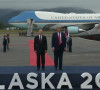
In diplomatic circles, Anchorage is mentioned as a turning point—not as the venue of a signed agreement, but as a space of oral understanding. Without contracts or formal signatures, a framework was established: what is off limits, where the boundaries lie, and how the war can end without formal acknowledgment of defeat. In great-power diplomacy, such moments often matter more than paper, because they demonstrate that political awareness has arrived ahead of legal form.
In this context, it is realistic to expect that at his annual press conference Vladimir Putin will shift the emphasis from escalation toward closure of the conflict. This will likely not be a speech about victory, but about conclusion; not about offensives, but about limits. In such situations, a change in tone often precedes the actual end of a war.
The present moment more closely resembles late 1962 than 1916 or 1941. The year 1916 marked the point of exhaustion in the First World War, while 1941 signified entry into total war with no room for compromise. By contrast, in 1962, during the Cuban Missile Crisis, the world realized that the next misstep would lead to global catastrophe. It was precisely that awareness—rather than military weakness—that opened the path to de-escalation.
On the ground, Russia has achieved the minimum of its strategic objective: stable control and the avoidance of defeat. That reality, although legally contested, is becoming a political fact. As Carl von Clausewitz warned, war loses its meaning the moment it begins to endanger politics itself, because it then ceases to be a tool and becomes a risk. A similar logic of restrained realism was articulated by the American diplomat George F. Kennan, who cautioned that the aim of policy is not victory, but the ability to survive the consequences of one’s own decisions.
For this reason, the final phase of this conflict is not being shaped through triumphalism, but through control. In such circumstances, great powers do not seek symbolic victories, but the management of consequences. Stability becomes more important than narrative, and predictability more valuable than escalation. War then closes not with spectacle, but with discipline—in a silence in which damage is assessed and future risk contained. This is the logic of mature politics, in which strength is demonstrated by the ability to stop.
If Anchorage provided the framework for a possible ending, it is logical that the conclusion be formalized in a city that symbolizes Russian-American restraint and the continuity of statesmanlike cooperation from major wars. In that light, even the idea of a visit by Donald Trump to Russia can be interpreted as a signal of a search for a political format to close the conflict. Such a choice draws on the tradition of great powers that, at decisive historical moments, knew how to separate hostility from responsibility.
In a world that has already experienced 1916, 1941, and 1962, the greatest act of statesmanship is not to win yet another war, but—as Alexander Gorchakov and Charles de Gaulle understood—to stop history one step before the abyss.


0 comments