
What Kurti really wants to achieve by opening the Bridge on the Ibar?

Unilateral actions by Albin Kurti aim to maintain a cycle of continuous crises and test Serbia's patience. In his violent pursuit of the north, the bridge on the Ibar is his target, also because of the strong symbolic significance it holds for Serbs.
Prepared by: Milos Garic
The last attempt to open the bridge on the Ibar between North and South Mitrovica occurred just over 10 years ago, on June 22, 2014, when several hundred extreme Albanians, under the slogan "Either you or us," crossed to the other side, breaking and burning everything in their path, after the bridge was briefly opened to traffic.
With shouts of "UCK" and "Adem Jashari," the riots that day lasted for more than two hours, injuring several dozen rampaging participants and 13 police officers. Four vehicles were set on fire, including one police car, one EULEX vehicle, and two UN-marked vehicles. Gunfire and tear gas were heard from the southern side until late at night, and KFOR troops had to struggle to secure access to the northern part of the city.
In the painful history of Serbian-Albanian conflicts, this bridge has been the site of many bloody moments. March 2004 was particularly tense.
On March 17 of that year, two Serbs were killed by automatic gunfire and sniper shots, and many more were seriously or lightly injured defending their freedom from frenzied neighbors from the south. Albanian extremists did not spare themselves in clashes with KFOR, suffering losses, but their desire to "conquer" the north never left them.
This summer, Albin Kurti and his local party comrades are again announcing something similar, or perhaps worse.
The Important Role of KFOR
Since Kurti met with the ambassadors of the Quint countries last week to discuss reopening the main bridge on the Ibar, and after his statement that the bridge "must be opened because freedom of movement and the rule of law do not threaten peace and security," it has been clear that no one can stop the Kosovo Prime Minister in his dangerous plan, despite warnings from Brussels and Washington.
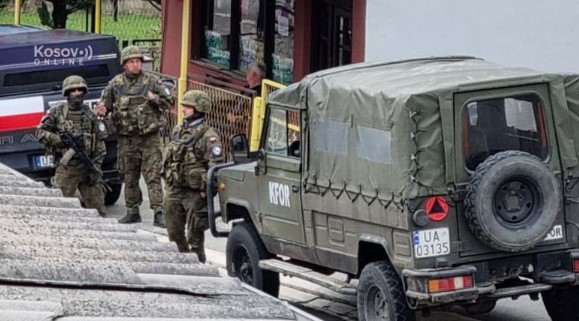
The last hope lies with the KFOR command. Their announcement that they will not hesitate to react if necessary and that they will adhere to the obligations under UN Security Council Resolution 1244 from 1999, actually indicates that they assess a high possibility of dangerous riots.
Even the Western sponsors and partners of the Albanian extremists in the Kosovo government have no justification for Kurti's intentions regarding the Ibar Bridge. Many are asking why he is so keen on taking such a risky step.
"The bridge on the Ibar is a symbol. This is not about practical or traffic-related reasons for its opening. There are other bridges that connect the southern and northern parts of Mitrovica. What Kurti wants is to symbolically destroy that Serbian resistance that has emerged and persisted for the past 25 years. We must not forget that Albanian hordes were stopped on that bridge 20 years ago during the March Pogrom. Albanian demonstrators, or rather destroyers, had been gathering for months, planning how to cross to the northern part and ethnically cleanse Mitrovica. Mitrovica is the only urban area that remained in Serbian hands after March 2004. The bridge symbolizes Serbian resistance to final Albanian supremacy," explains Luka Jovanovic, a history professor from North Mitrovica.
He points out that the formal unification of northern and southern Mitrovica would undermine the foundation of the Community of Serbian Municipalities.
"North Mitrovica is supposed to be the center of the Community of Serbian Municipalities. If the north and south of Mitrovica were united, Serbs would lose an important municipality, and the Community itself would lose its purpose. Here in the northern part, besides the monument to Prince Lazar, there is also a monument to the Russian consul Grigory Shcherbin, who was killed during an Albanian attack on Mitrovica in the early 20th century. He advocated for the protection of the endangered Serbian population and against attempts to ethnically cleanse Mitrovica by Albanians from the surrounding areas. He paid for this with his life. His monument in the southern part of the city was destroyed, and now the Albanians would gladly remove it from North Mitrovica as well," notes Jovanovic.
Opening the bridge and including it in daily political issues would lead to new tensions and a broader plan, which, according to Jovanovic, aims to expel the Serbs and finally "resolve the Mitrovica question," as the Albanians see it.
Interestingly, some Albanian politicians from opposition parties do not believe in Albin Kurti's sincere intentions regarding the bridge. Pal Lekaj, a member of the Alliance for the Future of Kosovo, assessed that by insisting on opening the Ibar Bridge, Kurti's government wants to divert attention from its numerous failures.
"Kurti's government is not fulfilling its promises. Kurti has only one priority, to provoke a situation in the north to divert attention from his failures," emphasized Lekaj.
Tensions Against the Interests of Serbia
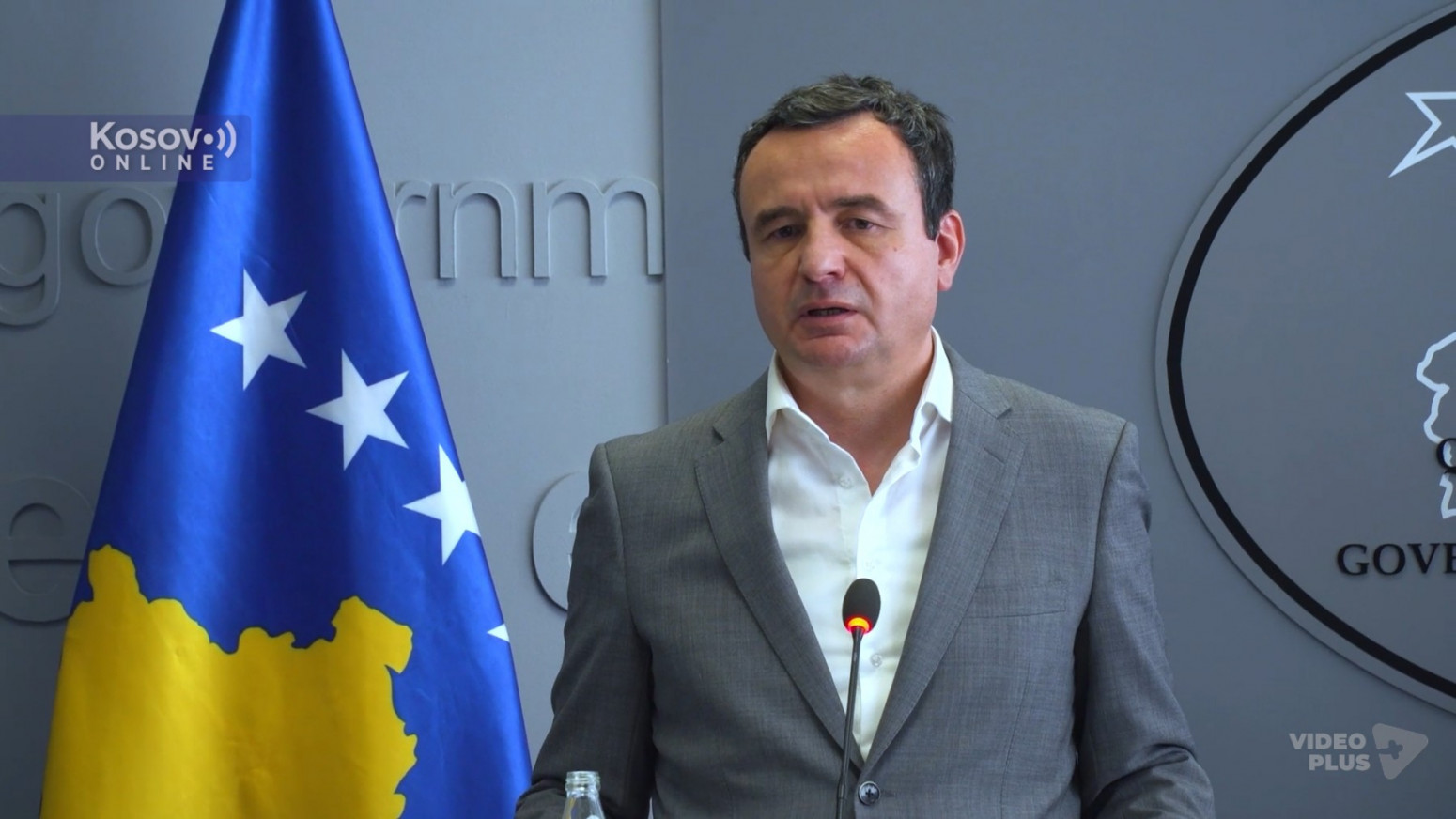
Political analyst and security expert Darko Obradovic notes that Albin Kurti, through his unilateral actions, aims to maintain a cycle of continuous crises and test Serbia's patience.
"Kurti is aware that by creating crises, he jeopardizes the strategic relations between Serbia and the EU because it tests the EU's credibility as a negotiator. Regarding the security aspect, the situation with the bridge on the Ibar is a longstanding issue that has been left to be resolved at a political level. According to KFOR's mandate, which is carried out by the NATO mission, freedom and security are imperative. The fact that the issue of the Ibar bridge has not yet been resolved through compromise indicates that the solution comes through the 4P model - political solution (which is lacking), trust (which is lacking), prosperity (which is lacking), and reconciliation (which is lacking). Based on all this, KFOR must act in relation to its primary task, which is security for all," Obradovic believes.
A complete compromise and mutual normalization of relations between Belgrade and Pristina, he emphasized, should remain a priority and the ultimate goal.
"If the bridge over the Ibar River increases risk and security instability, it should not be forcibly opened. This worsens the overall management of security risks, causes a loss of control over the situation, and creates the possibility for scenarios of street riots. However, on the other hand, Albin Kurti maintains that the absence of tensions and chaos benefits Serbia in strengthening its strategic partnership with America and the EU. Kosovo is the only political obstacle that separates Serbia from full alliance with the West. In such a situation, Albin Kurti would be remembered as the man who is a hindrance to regional cooperation, which affects Montenegro, Albania, North Macedonia, and Bosnia and Herzegovina," explains Obradovic.
Due to Kurti's unilateral measures, he adds, Belgrade has not weakened its international and economic position, and the crises created in Kosovo have not economically isolated Belgrade.
"On the contrary, the arrival of German Chancellor Scholz and the strategic partnership related to lithium show that the European Union views Serbia as a reliable partner, including it in the center of its strategy regarding strategic autonomy. Thus, from the Brussels Agreement to today, Serbia has become part of the European solution and cooperation in the region. President Vucic foresaw and announced Kurti's intentions to lead Serbia into a spiral of crises and escalations long ago, thereby warning our European partners. At this moment, it is crucial to eliminate all factors that would turn a political crisis into a security issue. Many experts rightly note that we are currently in security terms rather than political ones. The opening of the bridge over the Ibar cannot happen at a time when it is known what it will be used for. The rise of interethnic tensions and provocations is imminent," concludes Darko Obradovic.

comments