
What specific measures could the political West take to quickly calm tensions in Kosovo and why aren't they doing so?
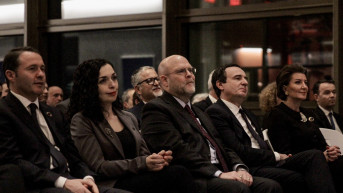
"KFOR and EULEX could start by preventing certain escalatory moves by the Kosovo Police and ensuring the delivery of cash for payments to the affected population. An embargo on further armament and affirmation of independence would also send a concrete warning to the authorities represented by Albin Kurti."
Edited by: Milos Garic
Speaking about the current relationship between the US and Kosovo, Ambassador Jeffrey Hovenier stated a few days ago that partnership could not be defined as simply "yes" or "no"; it could exist as either a strong and robust partnership or a weaker and insufficient one. In this regard, he added that the US Government could not send clearer signals than those recently from Washington, expressing their current dissatisfaction with the quality of partnership with Kurti's government.
Hovenier says that the US does not believe that the current Government in Kosovo has been careful enough regarding plans to implement regulations from the Central Bank of Kosovo, particularly regarding the abolition of payments in dinars, which has completely hindered normal life for the Serbs and jeopardized their livelihood.
However, the US Ambassador to Pristina refused to comment on speculation that some Kosovo officials were on the State Department's sanctions list, requesting that no one be labeled until it was publicly announced. Regarding his relationship with Albin Kurti, when asked by reporters about the reactions of the Kosovar Prime Minister during their meetings, Hovenier was also discreet, stating that it was not appropriate to disclose the content of privileged diplomatic communication.
After everything that has been heard and seen in the past month since the decision to abolish the dinar in Kosovo came into effect, two things are clear. The US Government is dissatisfied and somewhat angry with Albin Kurti's behavior, but at the same time, it has not yet taken concrete measures to convince the authorities in Pristina that Washington is serious when voicing objections and warnings.
Kfor and Eulex are too passive
The fact that Kurti still has no real reasons to worry about his unilateral and provocative policies is evident from numerous indicators.
The highest representatives of the Kosovo authorities in the structures of certain Western countries, despite some verbal criticisms, continue to have significant support for the plans they are implementing. They are regular and highly respected guests at numerous important international events. There is ongoing arming and every other form of support to the Kosovo armed forces, and international representatives in Kosovo leave the daily routine entirely up to the Pristina institutions, especially the police, and judiciary, to act in a manner that directly damages the rule of law and undermines the security of the population.
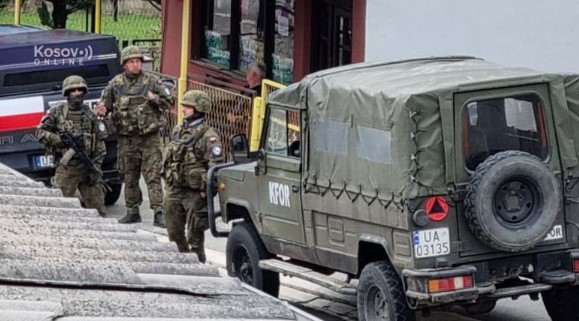
One example is very illustrative. Since February 1st, the Kosovo Police have stopped and prevented two attempts to deliver cash in dinars for the payment of citizens in Kosovo, among whom there are significant numbers of Albanians alongside the Serbs. At the administrative crossing of Jarinje, the Kosovo Police rudely blocked the British company personnel who have long been involved in cooperation with the Serbian side in securing the transport of money. The question arises as to why, in these cases, the Kfor and Eulex personnel do not provide appropriate assistance and support, prevent the Kosovo Police from acting arrogantly, and ensure the delivery of money to destinations in areas where the Serbs live. This would not be a particularly difficult task for Kfor and Eulex, and the alarming situation among the population left without means of livelihood would be effectively alleviated. In this way, the representatives of the authorities in Pristina would receive a clear message that their arbitrariness cannot be boundless.
There are many questions, but let's return to the essence of this topic: what are the two or three specific measures that the political West, led by the United States, could quickly enact, that would effectively influence the stability of the situation in Kosovo, severely endangered by the previous numerous actions of the government of Albin Kurti?
Political analyst Ognjen Gogic is often present in Kosovo and discusses the current situation with both Serbs and Albanians. He says that the measures that the West could apply to calm tensions in Kosovo can be grouped into three categories, but it's possible that Albin Kurti actually wants them.
"These are calming measures, punitive measures, and withdrawal measures. However, all of these measures are double-edged swords. All measures that the West can take carry a certain risk in a situation where the party they are targeting sees its interest in deepening the crisis. The Franco-German agreement was a kind of attempt at calming down Pristina. Its purpose was to give Kurti what he wants, which was de facto recognition by Serbia, in order to stop provoking crises," Gogic points out for Kosovo Online.
"Retreat" as the strongest card
According to him, calming measures would not necessarily be in favor of the Serbian side because they would require additional concessions from it.
"Punitive measures against Kosovo have been in place for months. However, they have not prevented Pristina from refraining from unilateral actions. They can be applied in an even more stringent form, but that may be precisely what Kurti desires. He believes that confrontation with the West and Kosovo's isolation creates space for him to solidify his position. The card Kurti is playing is to create resentment towards the West in the Kosovo public due to allegedly unfair treatment of the Albanians," Gogic notes.
He considers "withdrawal" measures to be potentially the most effective.
"The strongest card that the West has in Kosovo is its presence on the ground. The biggest risk for Kosovo is the 'Afghan scenario,' i.e., the withdrawal of Americans. The US has already hinted that they are not interested in supporting Kosovo if it goes against them. Kosovo still does not have a sufficiently developed administrative apparatus, and without Western support, it could easily become a 'failed' state," Gogic emphasized.
Kosovo journalist Albinot Maloku says for Kosovo Online that the European Union currently does not have a clear vision on how to approach further steps.
"Borrell expressed his impression when he had a meeting with the President of Serbia and the Prime Minister of Kosovo, but we do not have the prerequisites for a new high-level meeting between Kosovo and Serbia. This is due to the lack of vision within the European Union. This suits both President Vucic and the Prime Minister of Kosovo, but it shouldn't be like that because we have a consensus, the Franco-German plan. The parties should focus on what has been accepted and signed from 2011 to 2023," Maloku pointed out.
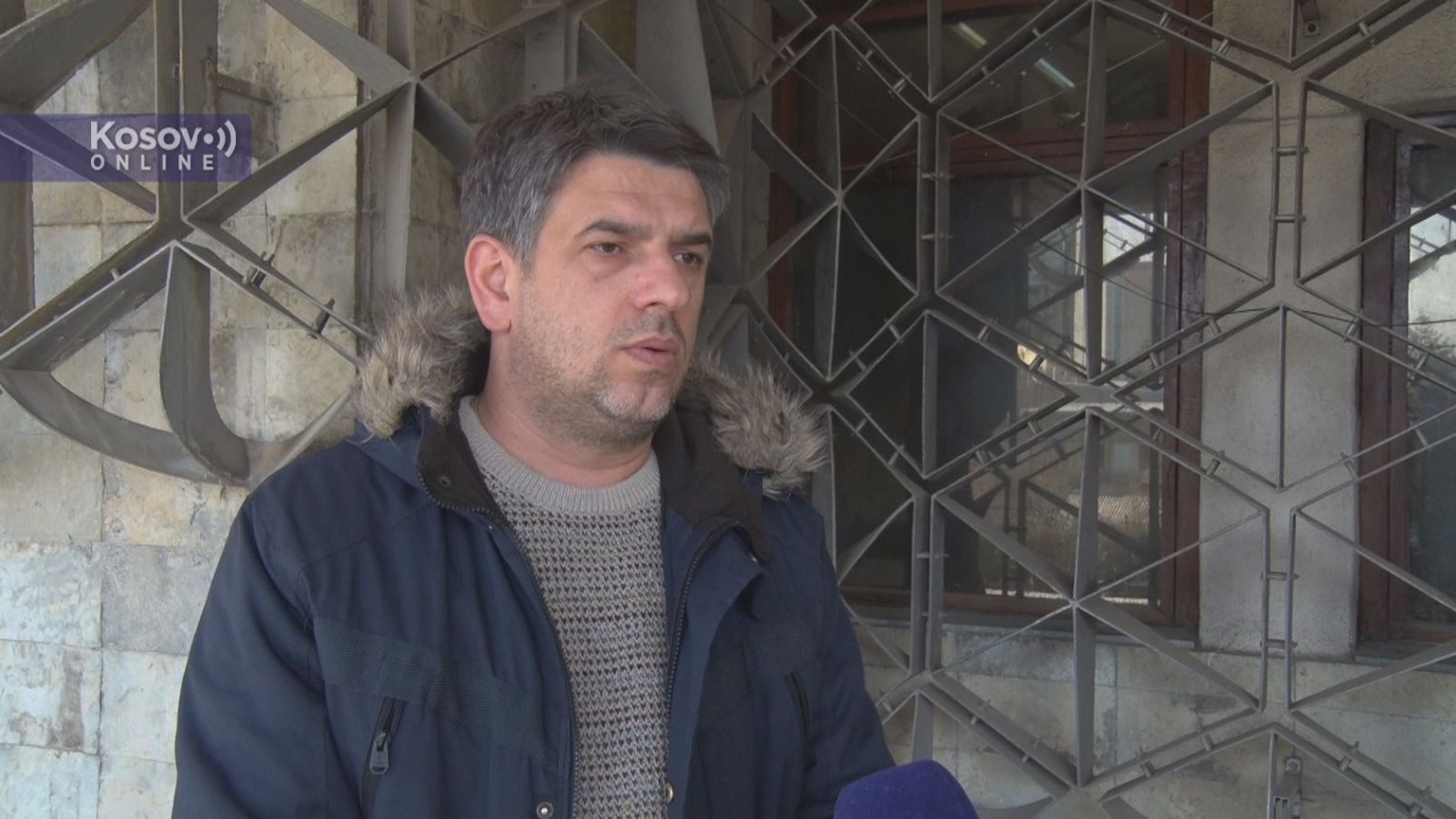
He emphasized that the relationship between the Serbs and Albanians was directly influenced by the relationship between Kosovo and Serbia.
"As long as we have such relationships, both sides will use the situation for political gains, thus creating tension and intolerance, which should not be a part of our culture. We can always have people who do not behave properly, who provoke the situation. I hoped that the EU would take seriously the implementation of agreements in Brussels and Ohrid. The Prime Minister of Serbia sent a letter stating that Serbia did not accept certain parts, and the Prime Minister of Kosovo sometimes forgot that the main part of this document was the implementation of the Community of Serb-majority Municipalities. It seems that the EU lacks vision, leaving room for the parties not to implement their obligations. Kurti lacks the will to implement the Community of Serb-majority Municipalities, and the EU has not had balance in its approach so far," Maloku concluded.
Suspension of administrative affairs
Darko Obradovic from the Center for Strategic Analysis says for Kosovo Online that negotiations on the normalization of relations between Serbia and Kosovo have become a source of new tensions.
"The refusal of Pristina to implement what has been agreed upon has become a source of instability. Most local tensions in Kosovo are a part of Kurti's tactic to destroy dialogue and move towards unilateral actions. What can be done in this sort of negotiating deadlock? In the first place, mediators in the dialogue should effectively address the blame for the non-implementation of agreed measures. Diplomatic manners and the need for de-escalation result in unclear conclusions regarding who among the participants is not adhering to the agreements, and this creates a kind of confusion from the plethora of accepted obligations, making it difficult to quickly conclude who is at fault," Obradovic says.
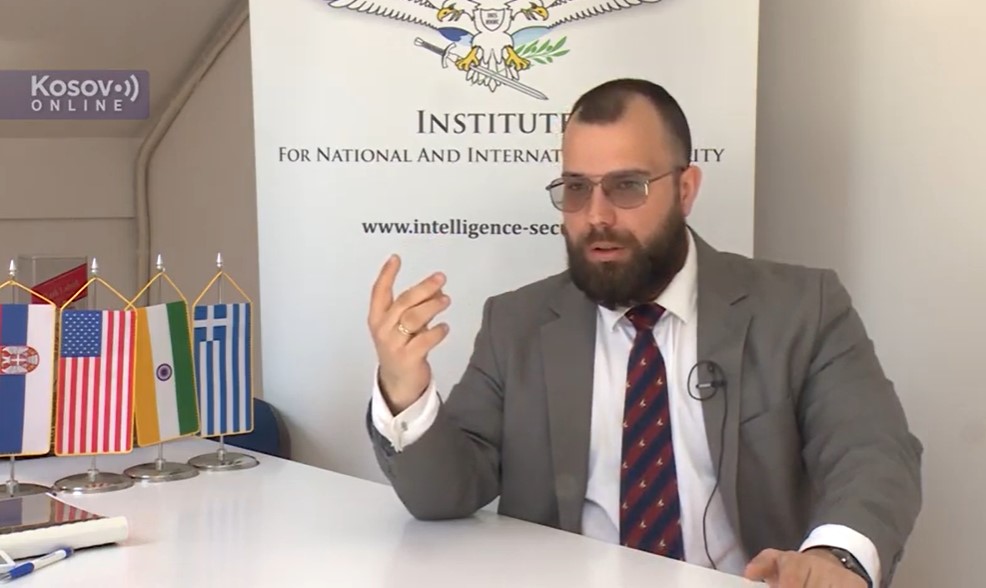
According to him, the failure to address the party that is not implementing what has been agreed upon is a way of leaving maneuvering space to the parties based on the principle of "nothing is agreed until everything is agreed."
"For the sake of transparency and the need to form an objective stance, negotiations must be more direct. The process of normalizing relations has to a large extent overlapped with the local institutionalization of life, which further complicates negotiations and generates new disputes. KFOR, according to Resolution 1244, is not authorized to conduct police operations but to prevent the renewal of armed conflict, thus having clear security jurisdiction. It largely involves a poor approach that has allowed the formation of local institutions in a capacity where there is still no political solution. One step could be the suspension of administrative and police functions in Serbian communities, which should be placed under international protection until a political solution is reached, with a defined deadline. In this sense, the Serbs would be exempt from institutional pressure at the local level by the Pristina authorities, thus preserving a neutral status until the formation of the Community of Serb-majority Municipalities," Darko Obradovic states.
He, however, believes that such a measure is a less likely option for many reasons, thus concluding that the third and crucial step in reducing tensions should be the imposition of the measure of forming the Community of Serb-majority Municipalities, sponsored politically by the Quint countries.
"This implementation should be reinforced by the prospect of strong economic constraints through which liberalized Kosovo Albanians would turn against Kurti. Consequently, the suspension of activities contributing to Kosovo's international recognition should be withdrawn, which is quite easy to do because, in most formats, Kosovo officials attend events at the invitation of the participating countries as guests and not as invited delegations," Obradovic concludes.
For now, there are no indications of what will come out from all of this, and there is increasingly less time for positive outcomes from the latest crisis in Kosovo.


comments