
WHO is WHO - Agron Bajrami: From critic of the dialogue to chief negotiator
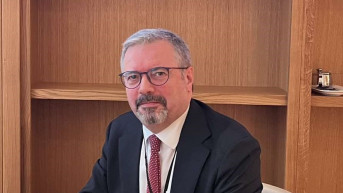
Agron Bajrami, a journalist and diplomat who for years sharply criticized the Belgrade-Pristina dialogue as a kind of performance for the international community rather than a process delivering concrete results, arguing that it was used to “buy time” and improve international image, now finds himself at its center as Kosovo’s chief negotiator.
“What is certain is that, with Albin Kurti at the head of the government, and Ms. Vjosa Osmani at the head of the parliament, Kosovo will no longer be what it was until now,” Bajrami said in 2020 about the new government in Pristina, following Kurti’s rise to power. At the time, he stressed that it would soon become clear which direction the new authorities would take regarding “the most important processes awaiting Kosovo, from the dialogue with Serbia to European integration.”
Six years later, little has changed in the dialogue, yet Bajrami himself has been appointed chief negotiator. According to a statement from the prime minister’s office, Kurti congratulated Bajrami on his new role and wished him success in fulfilling his responsibilities. In addition to this position, Bajrami serves as Kosovo’s ambassador to Belgium.
A process without a clear direction
Bajrami’s earlier views on the dialogue were strongly critical. As early as 2019, speaking to NIN about what prevents the region from functioning normally, he described politicians as hypocrites who present themselves as uncompromising democrats but do not miss the opportunity to make all decisions themselves.
“That is why the first condition for any normalization is the arrival of a new generation of politicians who will not see the narrative of European values solely as a tool for gathering votes and gaining the sympathy of Western diplomats. Who will not resort to extreme nationalism and already stale myths of an invented past, both distant and recent, for the sake of votes and power. Who will consciously stand on the side of justice and against the denial of crimes. Against war rhetoric toward neighbors that is always used to drown out internal social discontent,” Bajrami said.
His positions on the Belgrade-Pristina dialogue have remained consistently critical over the years, with a clear message that it is a process that has lost both momentum and purpose. During the mediation of Federica Mogherini, he accused her of slowing the process when the issue of territorial exchange was raised, and he also criticized Miroslav Lajcak, arguing that the EU failed to offer a clear and consistent negotiation framework, leading to confusion about the goals and outcomes of the dialogue.
One of the central points of his criticism concerns the concept of compromise. Bajrami warned that the idea that “both sides should gain and lose something” could be dangerous, as it opens the door to debates about territory rather than people and their quality of life.
Skepticism toward implementation
Bajrami often emphasized that political elites had “privatized” the dialogue, conducting negotiations within a narrow circle without broader social debate and transparency.
Even in the event of an agreement, he expressed doubts about its implementation, believing that putting it into practice could be more difficult than reaching the agreement itself, with the risk that citizens would bear the greatest burden.
Position on the Community of Serb Municipalities
In analyses related to the Brussels Agreement, Bajrami warned that provisions on the Community of Serb Municipalities could lead to the creation of “a third level of authority that would operate, if not de jure, then de facto, outside Kosovo’s legal framework.”
“This could render the country’s legal system dysfunctional and unstable,” he stated.
Mutual recognition as a condition
As ambassador in Brussels, Bajrami repeatedly emphasized that normalization of relations between Kosovo and Serbia is not possible without mutual recognition.
“Mutual recognition of Kosovo and Serbia is what must come at the end of this process. There is no way out, the completion of the dialogue and full normalization of relations between Kosovo and Serbia is only possible if there is mutual recognition,” he stressed.
Views on unilateral moves
Bajrami often justified unilateral actions by Pristina directed at the Serbian community. After Serbian institutions in Kosovo were closed in January 2025, he responded to an EU statement noting that the status of Serbia-supported structures should be resolved through dialogue.
“For clarification: There are no Serbia-supported structures in Kosovo, these were illegal structures managed by Serbia,” Bajrami wrote on the social network X, claiming that the actions of the Kosovo police did not cause any tensions.
“Balkanization” of EULEX
In response to the 2017 scandal involving EULEX, which concerned allegations of misconduct and corruption among senior officials, he blamed the mission for worsening failures in the rule of law.
“Today Kosovo has enormous problems with the rule of law, corruption is widespread and there is still impunity for high officials and political leaders, and EULEX is also to blame,” he wrote.
He further claimed that instead of Europeanizing Kosovo, “we have Balkanized EULEX,” although he acknowledged that the mission’s presence mitigated worse outcomes.
Biography
Agron Bajrami was born on December 5, 1967, in Pristina, where he graduated from the Faculty of Fine Arts in 1991. He is married and has two children. On social media, he describes himself as a lover of history, books, films, graphic novels, and rock music.
Before entering diplomacy, he built a significant journalistic career. He served as editor-in-chief of the daily Koha Ditore from 2004 and also headed the Kosovo Media Institute.
He began his journalism career in 1993, reporting on culture before becoming a culture editor. His early work showed an interest in Albanian cultural heritage, literature, and art.
He remained at Koha until 2021, when he moved into diplomacy after being appointed ambassador of Kosovo to Belgium, Luxembourg, the European Union, and NATO, based in Brussels.
He has actively participated in the Brussels negotiations and consistently advocated for Kosovo’s full independence and sovereignty.


0 comments