
Why did Osmani call elections six months in advance, and what could change by February?
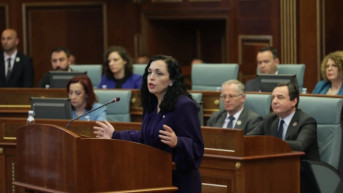
"It is no secret that Kurti has been hoping for voter turnout at the polls as early as the summer or fall. However, the outcome of the U.S. presidential race will also enter the Kosovo electoral equation as an important factor"
Prepared by: Milos Garic
Somewhat unexpectedly, amidst speculation about whether extraordinary parliamentary elections will be held in Kosovo by the end of the year, President Vjosa Osmani issued a decree about ten days ago setting the date for the regular elections for February 9, 2025.
This will be the first time since 1999 that a Kosovo assembly will complete a full term, and the President’s advisor, Bekim Kupina, explained that Osmani made the decision 'after careful consideration of the circumstances and issues that need to be taken into account, as well as after a thorough analysis of the legal aspects to ensure that the electoral process is organized according to the highest democratic standards.'
Earlier, during consultations with political parties, there were various proposals for the election date, ranging from January 26 to even early March. Some, like the current Prime Minister Albin Kurti, wished for elections before the regular term, during the summer or fall.
Avoiding the obligation to form the Association of Serb Municipalities, significant popularity among extreme voters due to the systematic persecution of Serbs, and uncertainty due to the U.S. elections are just some of the reasons that, according to political analysts, led Kurti to consider the idea of dissolving the Assembly earlier in agreement with all parties. However, he was not ready to expedite this by resigning, and the mandate of the current government expires only on May 13 next year.
So, what were the reasons Vjosa Osmani had in mind when she scheduled elections six months in advance, and who benefits the most from this?
The campaign is already underway
Political scientist Ognjen Gogic explains for Kontekst that Vjosa Osmani had the legal ability to call regular elections this early.
“As for the elections, Osmani did this after consultations with the parties. So she didn’t do it entirely independently but after discussions. However, the six-month period is interesting, and it primarily relates to the Election Law. In Kosovo, it stipulates that elections are announced four to six months in advance. This hasn't happened before because all previous elections were extraordinary. So, it is a legal option, and it is provided that elections are called fairly early. However, it didn’t have to be six months in advance, which is quite early,” Gogic says.
In his view, the Kosovo authorities want to establish a practice similar to that of local elections.
“In this case, Vjosa Osmani used the maximum of her powers and decided to announce the elections as early as possible, and it’s a logical question as to why. Is it just to allow enough time for electoral commissions and to plan budget funds on time? It may be that she wanted to put an end to speculation about extraordinary elections. Because even when she called for discussions about the elections, she didn’t have to do it so early. The elections didn’t have to be scheduled for February; they could have been in March or even a little later, depending on when this government’s mandate began,” Gogic points out.
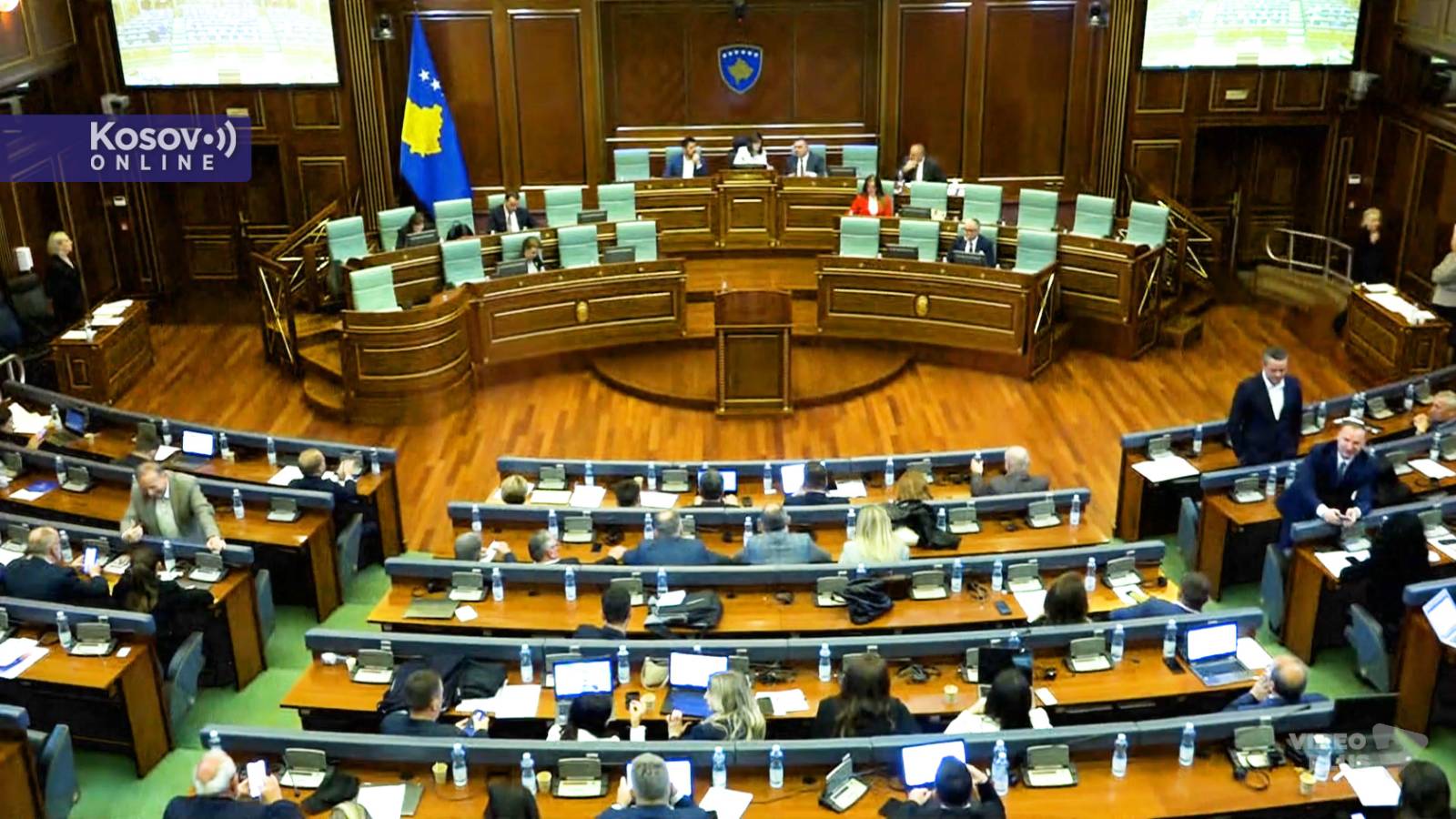
There are political, and even party-related, reasons for this decision.
"Vjosa Osmani likely wanted to put an end to the discussion about early elections because Self-Determination (Self-Determination Movement) wanted them, but they couldn't agree with the other parties on how that would happen. Kurti did not want to resign as Prime Minister; instead, he wanted the parliament to dissolve itself. Osmani, therefore, stopped that. Now, we'll see who benefits from a long campaign. Self-Determination has been campaigning all along, actually, but other parties have also been in campaign mode for a while," notes Gogic.
One factor, however, will significantly influence the Kosovo elections, and that is the U.S. presidential election, which will be held in November.
"The outcome of the U.S. elections will be very important. There is a widespread belief that if Trump returns to the White House, he will be even less favorable to Kurti than before and will be even harsher on him. This could be a reason for some Albanian voters to conclude that it may not be best for him to continue leading the Kosovo government, and this could cost Kurti some votes," concludes Ognjen Gogic.
Political parties have until Friday, August 30, to submit requests for pre-election coalitions to the Central Election Commission, and so far, only the parties of Ramush Haradinaj (Alliance for the Future of Kosovo) and Fatmir Limaj (Nisma) have announced their coalition.
Self-Determination at 36 Percent
The CEC has announced that political parties, civic initiatives, and independent candidates must submit their requests for participation in the Kosovo Assembly elections, scheduled for February 9, from September 1 to December 11, 2024.
Political analyst from Pristina, Blerim Burjani, emphasizes that setting the election date is the responsibility of President Vjosa Osmani, according to the Election Law.
"It explicitly states that six months before the government's mandate ends, the date of the new elections must be set. She acted as the law dictates. But we have been in campaign mode for a long time. Many factors will influence the outcome of the upcoming elections in Kosovo," adds Burjani.
He already has a prediction of the results.
"I think the result is already visible, and my prediction is the most realistic. Self-Determination will come in first with 36-38 percent of the votes, the Democratic Party of Kosovo will be around 19 percent, the Democratic League of Kosovo 20, and the Alliance for the Future of Kosovo and Nisma in coalition 8 percent. After that, the majority will be sought," concludes Burjani for Kontekst.
The Self-Determination movement has not yet stated whether it will participate in the elections independently or in a coalition with Guxho, the party with which it was already in a coalition in the previous elections. Meanwhile, the Democratic Party of Kosovo has been clear that it will go to the elections independently.
Journalist from Zvecan, Lazar Stevic, told Kontekst that it is too early to assess who will benefit more from such an early election announcement, six months in advance.
"We will see how the fact that Vjosa Osmani announced the parliamentary elections six months in advance will affect things. Whether this benefits Kurti’s party or the others more? What we do know is that there have been tensions between Kurti and Osmani. And now, there are even more. However, the opposition has a weak starting position; everything still plays into Kurti's hands," says Stevic.
The opposition primarily criticizes Kurti for the catastrophic economy, lack of investments, lack of new jobs, and the large number of Albanians from Kosovo who have flocked to EU countries since the introduction of visa liberalization.
"Kurti is weak in this area, but he plays the national card, the situation in the north, and the pressure he is exerting on the Serbs. His ministers are now in the north every day. First and foremost, Police Chief Svecla, and now Krasniqi has joined him, visiting municipalities in the north together. This is the main card Self-Determination will play. It is known that Albanians are very united when it comes to their nationalism, and that is what gives Albin Kurti an advantage over other parties whenever the next elections are held," concludes Stevic.



comments