
Why does Albin Kurti not allow new local elections in the north and what does that have to do with democracy?
"The institutional vacuum that exists in northern Kosovo is seen by Kurti as an opportunity to hollow out the protection granted to the Serbian community through decentralization, to the extent that Serbian municipalities are reduced to mere shells. The West observes Kurti's mockery of democracy and the violation of basic rights of the Serbs, but takes no action".
Edited by: Milos Garic
The entire rhetoric of the Western political establishment regarding the numerous "mistakes" of Albin Kurti and their alleged anger over the unilateral actions he takes is becoming increasingly absurd, even bordering on comical, it can be asserted without hesitation, that nothing is happening concurrently to specifically indicate that the current Kosovo Prime Minister is truly falling out of favor with any significant Western mediators in Kosovo.
This narrative has dragged on for too long with too many repetitions of the same scenario for us to still have any doubts. On the contrary, it has become a rule that despite some "thundering" from Washington, Berlin, and Brussels, all decisions leading to the violation of laws, particularly the trampling of the human and civil rights of the Serbs, which he, as the top leader in Pristina, has made, have already been implemented or are currently being executed, such as the recent measure to ban the dinar in Kosovo. Additionally, everything he refused to do, despite the "sharp" demands from the most important addresses in the US and EU, such as fulfilling the obligations to form the Community of Serb-majority Municipalities or returning the land to the Decani Monastery, the leader of the Albanian Self-Determination Movement has rejected with undisguised disdain and cynicism. And what happened? Nothing.
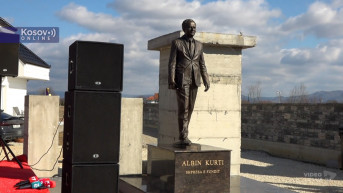
There's Kurti, still sitting in his cabinet, devising new plans to oppress the Serbs, all under the guise of Kosovo's "rule of law" and "democracy". And in the pauses between his regular activities, he receives confirmations from enthusiastic Albanian sympathizers on the ground about the "colossal results" of his actions, such as the recent news about the erection of a monument in honor of his deeds.
One of the many examples of how Kurti gets away with impunity while playing with the "enforcement of the law" with his government is the procedure regarding the repeat of local elections in municipalities in northern Kosovo. He has done everything to create a dense fog of procedural difficulties, where it is no longer clear what is happening, while his "mayors", elected with only two or three percent of the vote, continue to sit in their chairs and even shamelessly make significant local decisions.
Kurti's long-term plans
Political analyst Ognjen Gogic, who has a very good insight into the daily political events in Kosovo, tells Kosovo Online that all of Albin Kurti's moves are based on his long-term political plans.
"This is evident in his approach to elections in municipalities in northern Kosovo. The goal of the policy he is pursuing is to dismantle all arrangements that, in his view, have given too many rights to the Serbian community in Kosovo. This includes all agreements arising from the Brussels dialogue, as well as the Ahtisaari Plan on which Kosovo's constitutional order is based. The Ahtisaari Plan granted broad powers to municipalities with Serb majorities in Kosovo, while the Brussels agreements envisaged their formation of the Community of Serb-majority Municipalities. Because of both solutions, Kurti and his supporters have come into conflict with other Albanian parties and international mediators. Kurti sees the institutional vacuum that exists in the north as an opportunity to empty of content the protection given to the Serbian community in Kosovo through decentralization to the extent that Serbian municipalities are reduced to mere shells," Gogic points out.
When the Serbs in northern Kosovo, with the support of Belgrade, abandoned Kosovo institutions in November 2022, there had been an expectation that this move would restart the dialogue.
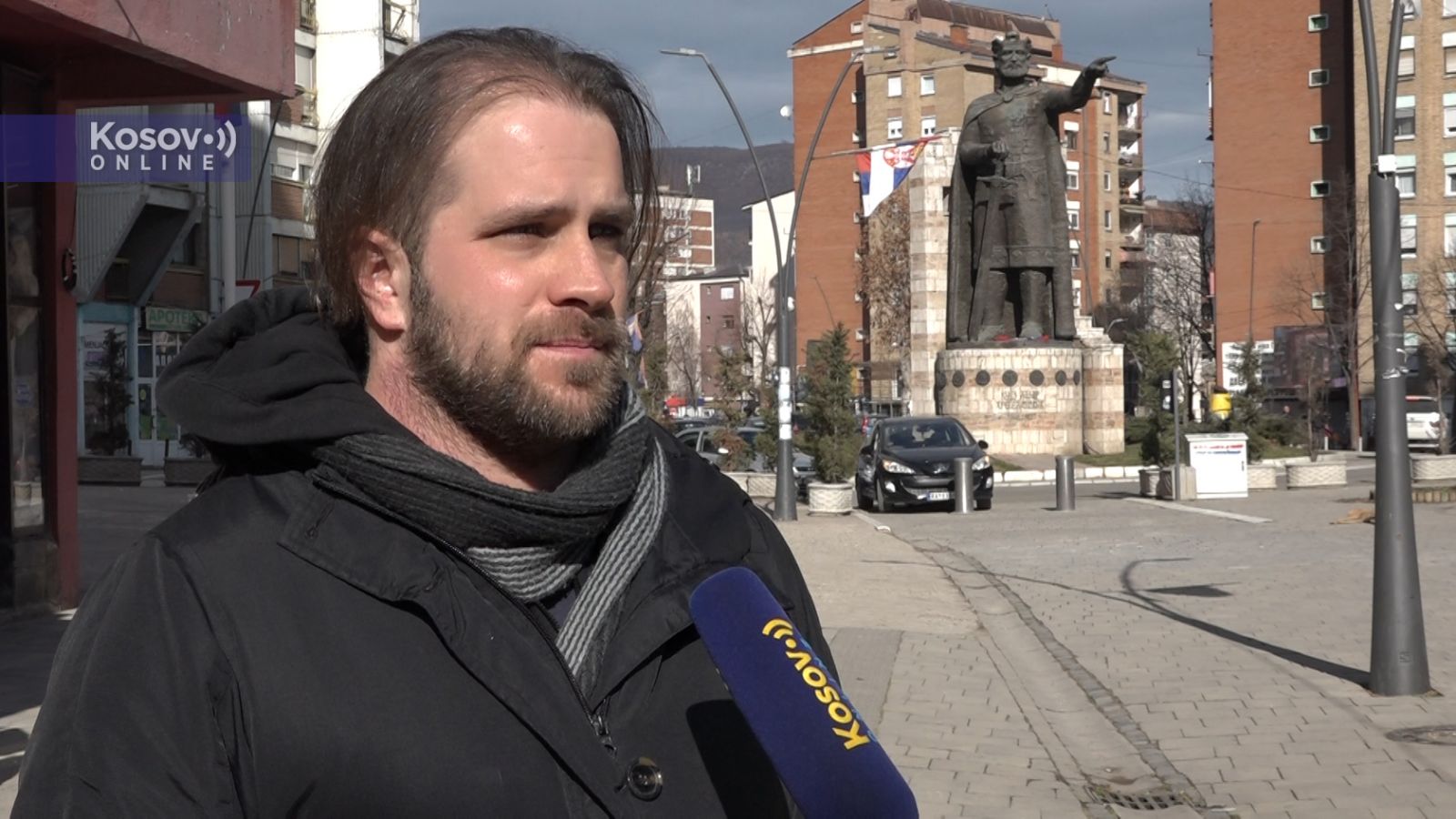
"In this way, it was intended to send a message that new agreements, such as the Franco-German proposal that was then the subject of negotiations behind closed doors, cannot be discussed, while at the same time, Pristina is making unilateral moves and refusing to implement previous agreements. However, dialogue mediators overlooked this, as if the situation in northern Kosovo would return to its previous state on its own. Kurti used this to take over local government in municipalities in northern Kosovo, which he maintains with the help of the police, compensating for the lack of legitimacy," Gogic explains.
He points out that, after the incident in Banjska, the Serbian side adopted a more accommodating stance.
"The leaders of the Serbs in northern Kosovo initially expressed readiness to return to municipal institutions without meeting the conditions they had previously set. The only thing they expected in return was that new elections would be called through the resignations of mayors instead of through the procedure outlined in the administrative instruction adopted by the competent Kosovo ministry. Since Pristina was not willing to make such a concession, the Serbs eventually agreed to return to the institutions in a more difficult way and under conditions defined by Pristina. However, it turned out that even that was not enough," Ognjen Gogic points out.
After the Serbs in each of the four northern municipalities collected signatures through petitions that far exceeded the number of votes obtained by Albanian mayors in the elections, the initiative to remove the mayors ended up in a drawer.
"The Kosovo Central Election Commission is currently not in a hurry to verify the signatures. When that task is finally completed, new obstructions will follow. The CEC has already stated that there is no legal basis for conducting a referendum to remove mayors, which should follow the petitions. When the CEC refuses to follow the procedure outlined in the administrative instruction, Kurti will act the same way as he did regarding the Regulation of the Central Bank of Kosovo. He will announce that it is an 'independent institution' to which he cannot dictate what to do. Even if the will and a way were found to hold referendums to remove mayors in the four northern municipalities, the question remains whether a safe environment would be provided for the required number of over 50% of registered voters to participate. Ultimately, even if new Serbian mayors were elected after all these obstacles, they would face councilors from Albanian parties who would obstruct their work," warns Gogic.
Elections only in the regular term
The wrangling over the dismissal of mayors, as things stand, will last just long enough to approach the regular local elections held fixedly every four years in Kosovo.
"Even if early elections were organized, the mandate of the new mayors would not last four years but until the moment of holding the regular local elections expected in the fall of 2025. In this regard, it can be expected that at some point an argument will be heard from Pristina that it is not economical to organize two electoral cycles in a short period. Elections in municipalities in northern Kosovo probably will not be held before the regular local election term, and certainly not before the parliamentary elections expected at the end of this or the beginning of next year," Gogic predicts.
By freezing the situation in northern Kosovo, he says, Kurti achieves multiple goals simultaneously.
"Local authorities in the northern municipalities, especially in North Mitrovica, are making decisions in line with the policies of Self-Determination that would never pass under other circumstances. Then, by nullifying the administrative instruction, a message is sent to the Serbs that they will not even be allowed to exercise the rights established by Kurti's government for them. The Serbs are thus encouraged to either opt for other methods to exercise their rights or to seek protection elsewhere. Ultimately, by dismantling the northern municipalities, the entire concept on which the Kosovo administrative system should be built is rendered meaningless. This reflects the deepest political goals of Kurti and Self-Determination, as they themselves recently expressed during the anniversary of the protests against the Ahtisaari Plan," Gogic concludes.


0 comments