
Why is it more important for Kurti to block the CSM than for Kosovo to join the Council of Europe?
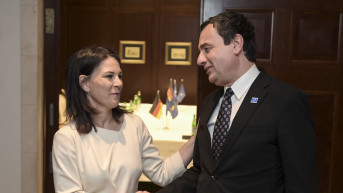
In realizing the Greater Albania project, as his life and political mission, Albin Kurti's tactics are clear, involving preventing and undermining all the rights of Serbs in Kosovo, especially those arising from the Brussels Agreement and the Community of Serb Municipalities. Kurti refuses the possibility that Serbs have any guaranteed right to life, and for the sake of his own ego and political rating, he is ready to sacrifice some obvious interests of Albanians in Kosovo.
Prepared by: Milos Garic
What those familiar with the character and political logic of Albin Kurti had presumed is happening. Faced with the already seen membership of Kosovo in the Council of Europe and preventing the formation of the Community of Serb Municipalities, the current Kosovo Prime Minister unhesitatingly chooses the latter.
From the moment the Community reappeared as a necessary condition for Kosovo's entry into the Council of Europe membership, some thought that Kurti would accept a minimal "sacrifice" and would send the infamous Draft Statute, which he received from Brussels, for evaluation to the constitutional court in Pristina. That was all that was needed. Everything else would have been left to Kurti’s "honorable word."
The leader of Self-Determination and his closest circle, however, decided to "trust" to the end in the report by Dora Bakoyani, according to which Pristina deserved entry into the Council of Europe this May, and all avoided obligations regarding the respect for human and civil rights could subsequently be drawn out as much as desired.
It should be noted that CSM, in its most lax form, as a condition for Kosovo returned to the ministers in Strasbourg only after fierce protests by official Belgrade, and with irrefutable arguments, which equally defend the dignity of the Council of Europe and the principles of this renowned organization, as much as the position of the state of Serbia in protecting its own integrity. The visit of President Aleksandar Vucic in April during an official visit to Paris and detailed conversations with President Emmanuel Macron made an additional and probably decisive effect in this direction.
Over the past few weeks, warnings have come from the EU to Pristina that the CSM is an important element in membership in the Council of Europe, and there were those who believed that Kurti's government would make an additional "effort" and pass the "hot potato" to its own court in Pristina. We've arrived a few days from the crucial meeting of European ministers and, as things stand now, nothing will happen. There will definitely be no movement towards the CSM, but it seems neither will there be official confirmation of Kosovo's membership in the Council of Europe.
Dangerous Ambitions
The political insolence, stubbornness, and pretentiousness of Albin Kurti, besides demonstrating a lack of logic, actually reveal the true face and essence of Greater Albanian extremism. At the same time, it shows how misguided are the ambitions of the political West, which, despite all diabolical moves, continues to give huge support to the authorities in Pristina in affirming the "independence and statehood of Kosovo".
If they doubt the bitter remarks of the Serbs, people in Brussels and Washington could at least listen more carefully to what people from Kurti's circle say, like his former close associate Haki Abazi, who has called the current political concept in Kosovo fascism and dictatorship several times.
This statement perhaps best explains where Albin Kurti's persistent refusal to do anything regarding the formation of the CSM, despite all the consequences that arise from such his attitude, comes from.
Historian from Gracanica, Aleksandar Gudzic, tells Kontekst that Albin Kurti's stance on any form of autonomy for Serbs has long been clear.
"Forming the Community of Serb Municipalities under the Brussels Agreement is out of the question for him, except perhaps as a non-governmental organization. In this context, Albin Kurti's willingness to sacrifice membership in the Council of Europe for the sake of minimizing Serb autonomy should be seen. Don't forget that we have parliamentary elections in Kosovo this year, and there is ongoing realignment and positioning. With such statements, Kurti wants to affirm his image as an impeccable fighter for Albanian interests and that he is for minimizing the rights of Serbs," explains Gudzic.
Kurti is therefore prepared, he adds, to sacrifice Kosovo's membership in the CoE.
"Whether the international community, primarily the leading countries of Western Europe and America, will exert pressure and force Kurti to yield, we cannot say for sure now, but at this moment Kurti is prepared to make that sacrifice and will do so," believes Gudzic.
Political analyst from Pristina, Bljerim Burjani, considers Kurti's policy, which is based on the promise that "he will not allow the destruction of the constitutional order and the unitary state," to be correct.
"This means that there will not be another Republic within Kosovo. The state of Kosovo and its constitutional order are, and will be, more important than joining the Council of Europe. I think there are mistakes in how the dialogue is being led by the EU and Lajcak. The priority should not have been given to the CSM. But here, something else is at play; they have excluded the recognition of Kosovo by Serbia, which has complicated the dialogue and made it clear that nothing concrete will happen. Kurti has always said there will be no CSM, and so it will remain until the end of his term," Burjani states in his comments for Kontekst.
Mistakes are still being made, he says, regarding conditions set by Germany, France, and Italy.
"These countries know that Kosovo's membership in the Council of Europe and the formation of the CSM are not linked. This criterion is against procedures and opposes the legal acts of the Council of Europe. I think some countries have promised Vucic that there will be no membership for Kosovo in the Council of Europe without forming the CSM. Kosovo will lose out on CoE membership. These countries are violating the Ohrid Agreement, which states that Serbia will not lobby against Kosovo in international organizations. These countries are siding with Serbia. Kurti has said he will not send any document to the Constitutional Court. The constitutional order is more important than membership in international organizations. Of course, it is significant for Kosovo to be part of international organizations, but the constitutional order is more important," Burjani points out.
He added that the EU mentions arbitration in the draft statute of the CSM in some situations.
"This means that according to this document, Kosovo no longer has the competence to implement all decisions if the CSM does not agree. This means that the authorities of Kosovo do not have sovereignty in the north. This will not happen while Kurti is in power. I think this dialogue has no perspective. There is no final agreement and there will not be one at all," Burjani is emphatic.
Out of their minds
Political scientist Ognjen Gogic says that the demand of European countries for Kurti to send the Draft Statute to the Constitutional Court was minimal, as it does not guarantee that the CSM would be formed.
"It's out of their minds for Kurti to refuse this. It is actually a call from Western countries to Kurti to make it easier for them to promote Kosovo's membership in the Council of Europe. It is a call to Kosovo to only create the appearance of wanting to work on the draft CSM and its formation to facilitate the voting in the Committee of Ministers. That's really the minimum expected of Kosovo, and truly out of their minds for Kurti to refuse to do that," points out Ognjen Gogic for Kontekst.
Knowing Kurti, he adds, it's clear that even that is too much for him.
"Because he fears how the domestic public would view it. He is not someone who makes any compromises or concessions. He still probably thinks that if he remains steadfast, the West will give in. Even if he sent the Draft Statute of the CSM to the Constitutional Court, he could still continue to block its formation. First, that assessment could take who knows how long to wait, he could even try to influence the decision of the Constitutional Court. Even if he let the court make a ruling and opinion on that Statute, whatever it was, Kurti would not be obligated to start working on forming the CSM immediately. He could bypass that ruling, so that even by sending the draft statute he could still come out well, but that simply isn't in the nature of his policy and personality to make any compromises," concludes Gogic.


comments