
Escobar: Due to the CSM, Kosovo could end up without enough votes in the Council of Europe
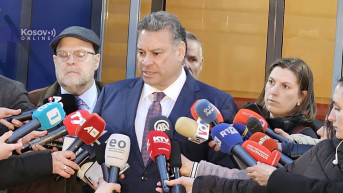
Due to obligations such as the Community of Serb Municipalities, which Kosovo has not fulfilled, Pristina could lack the necessary votes for membership in the Council of Europe, believes outgoing Deputy Assistant Secretary of State for European and Eurasian Affairs and U.S. Special Representative for the Western Balkans Gabriel Escobar, who announced that he will be leaving that position at the end of the month as his mandate has expired.
At an online press conference, when asked about the future of the dialogue between Serbia and Kosovo, given that this is an election year in the EU and the US, Escobar said that expectations from both sides are very clear and relate to the implementation of the Ohrid Agreement.
"I was present in Ohrid when it was agreed that the elements of the agreement must be implemented immediately. For Kosovo, this means establishing the Community of Serb Municipalities, and for Serbia, it means not blocking Kosovo's path to any Euro-Atlantic or international organization. Unfortunately, neither side has fulfilled these obligations so far," Escobar said.
He expressed confidence that both sides will still fulfil their obligations to make the region a better place where the two countries will have normal, predictable, and peaceful relations.
Regarding claims that Kosovo will not become a member of the Council of Europe next week, Escobar said that the US does not have a vote in that organization, but he knows that there is concern among some members because issues like the Community of Serb Municipalities (CSM) and other demands have been reiterated multiple times in the last three years.
"For three years, we have been repeating the demand for the CSM and some other demands related to the rights of the Serbian minority, which have not been met. This raises concerns that Kosovo may not get the votes," Escobar added.
Commenting on today's statement by Kosovo Prime Minister Albin Kurti that the implementation of the CSM and membership in the Council of Europe are two separate processes, Escobar said that these two processes are closely related.
"Membership in the Council of Europe is very much about minority rights, and Kosovo has shown commitment on that issue, which includes the CSM. It's a long-standing commitment, reflected in the Ahtisaari Plan, the Brussels Agreement, and the Ohrid Agreement. We've tried to understand why Kosovo is not fulfilling its obligation, and we've signalled that in many ways. There is concern that if the CSM is not formed after the Council of Europe session, it will only lead to further delay," Escobar said.
Regarding disagreements among Western diplomats, he said that all diplomats follow their governments' policies and that Kurti has heard the same message from all of them.
"From all levels, all governments, American, French, German, Italian," Escobar said, adding that Kosovo is encouraged to work with European and American partners to find a way to move forward in fulfilling the obligations, which must be fulfilled.
As EU Special Envoy for the dialogue Miroslav Lajcak is in Washington, when asked what messages he will convey from the US to Belgrade and Pristina, Escobar said that the first message is that the US strongly supports the dialogue mediated by the EU and will continue to do so as the closest partner.
"The second important message concerns the strategy for advancing the implementation of the Ohrid Agreement, so that the region benefits from this historic agreement. We discussed how to solve the issue of dinars, how to have an electronic private sector that will allow citizens in Kosovo to receive money. Those were the two main topics of discussion," Escobar conveyed.
Escobar also emphasized that the agreement on the normalization of relations between Serbia and Kosovo should not be implemented separately.
"On the one hand, what was on the table for Kosovo were additional recognitions, Partnership for Peace, EU candidacy, a strategic bilateral dialogue with the US, and a donor conference. On the table for Serbia was a donor conference, faster resolution of Chapter 35 issues that would allow Serbia to close that chapter, and additional investment for both countries. In return, Serbia and Kosovo were supposed to come to mutual recognition and work together for the people in Kosovo to live much better," Escobar said.
He also mentioned that his mandate in his current position lasts for three years and has long expired, but he requested to stay for some more time because he believed there would be more progress in implementing the Ohrid Agreement and establishing the Community of Serb Municipalities, as well as Kosovo's EU approximation.
"I still hope, but my mandate has expired. I know this office will remain a priority," he underscored.
Escobar stated that the information published by a journalist claiming he was dismissed due to alleged ties with the Serbian government is false. He added that this information surfaced after he informed Kosovar authorities about his departure.
"Everything stated in that article is false. I have not been fired, nor does my wife receive any money from any foreign state. Wherever I have served, she has engaged in direct contact with citizens, without any compensation, and will continue to do so. Also, I have no connections to any law firm in Texas. It is also inaccurate that such information could have come from Congress because it does not deal with that issue," he explained.
Escobar said that the information emerged after he informed authorities in the Balkans about the transition.
"It followed when I passed on the information to authorities in Kosovo. This is the kind of disinformation used in the Balkans, and that's why there are criticisms regarding the media in Kosovo," he added.
Escobar expressed happiness that more Western Balkan countries are progressing reasonably well on the Euro-Atlantic integration path, especially Albania, North Macedonia, and Montenegro, which have been particularly engaged in this process.
He expressed hope that North Macedonia's Euro-Atlantic path will continue after the elections.
Regarding Bosnia and Herzegovina, he emphasized that there have been steps toward greater functionality, and the country has been granted candidate status for EU accession.
"We will continue to work with the parties on the ground, civil society, politicians, and others to seize this historic opportunity. I am leaving this position believing that we have contributed to reconciliation and progress in Euro-Atlantic integration," Escobar explained.
Asked whether there is a need to amend the mandate of the EU Special Representative for the dialogue and his opinion on the candidacy of former President of Slovenia Borut Pahor, he said that it is important for the dialogue to continue.
"The dialogue is an important instrument in resolving one of the most challenging issues in the Balkans. Miroslav Lajcak has done a lot; he had a vision and was very active and detailed. Without dialogue, we wouldn't have an instrument for crisis management. As for the candidate for the EU envoy, whoever holds that position, I expect full support from the US," he emphasized.
Escobar said it is still early to discuss candidates because he does not have information on who they are.
Speaking about Kosovo's European path, he highlighted that he has always believed that Kosovo can swiftly move towards the EU.
"Kosovo has unique support for Euro-Atlantic integration. Kosovar institutions are young, open to reforms. The Constitution of Kosovo guarantees rights to all citizens, but the challenge is that these rights are not always enforced," he explained.
Escobar said the difference between Kosovo and Bosnia and Herzegovina is that in Kosovo, there are leaders who have a vision of a multi-ethnic community and full integration into the EU, which was not the case in Bosnia and Herzegovina when the idea was new.
"By walking the European path and coordinating with European partners, Kosovo can make rapid progress on that path," he added.
Regarding the question about Chinese President Xi Jinping's visit to Serbia and Hungary, as well as Russia, and whether his agenda in the Western Balkans raises concerns that he is working to create a new axis against European integration, Escobar said that this analysis is valid.
"I believe he chose countries that are open to undermining unity in the Euro-Atlantic community. We urge everyone to be cautious regarding the Chinese agenda in Europe," he emphasized.
Escobar reminded that the US apologized for bombing the Chinese Embassy in Belgrade and compensated the families.
Regarding Russia, he stressed that it is a mistake to consider Moscow as the cause of problems in the Balkans.
"The problems in the Balkans have been ongoing for 25 years. Russia merely exploits them. By solving the issues, the possibility of their misuse would disappear. As for Serbia, we have been very clear, and it would not be correct to say that we were not balanced in our approach to Serbia and Kosovo," he emphasized.
He recalled the measures taken against Serbia, such as blacklisting the former chief of the BIA.
"Toward Serbia, we have been very clear that integration into the Euro-Atlantic family is desirable, but there are conditions. We will continue to be clear that reconciliation, rule of law, and good relations with neighbours are essential parts of these conditions," Escobar concluded.
Regarding the division in Montenegro concerning the resolution on the Srebrenica genocide, he said it should not exist.
"The genocide in Srebrenica is a fact. The resolution does not mention any state, nation, or RS, only a historical fact. At a time when genocide is denied and criminals are glorified, sponsors believed it was time to remind through the resolution of this crime," he emphasized, adding that Montenegro does not need a mediator and that it is a respected member of the UN.


0 comments