
Why is the word "Metohija" forbidden among the Albanians in Kosovo?
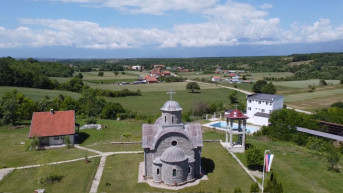
"The Albanian political elites in Kosovo are very uncomfortable with the name Metohija because that word reminds them of the centuries-long Serbian presence in this area. Albanians act as if the Serbs had never lived here before or as if they disappeared".
Edited by: Milos Garic
Recently, during the proceedings at the Special Court for KLA crimes in The Hague, at the insistence of the witness Sefer Goxhuli, the Prosecution stated that the term "Kosovo and Metohija was used mistakenly“ and that the name Metohija would no longer be mentioned in the court records. This development added a new dimension to the story and further confirmed the long-standing unjust ban on using the term.
The heard witness Goxhuli stated that the use of the mentioned term for the Albanians was extremely offensive because it was used in Serbia when talking about Kosovo in a derogatory way. However, he did not provide evidence to support this claim.
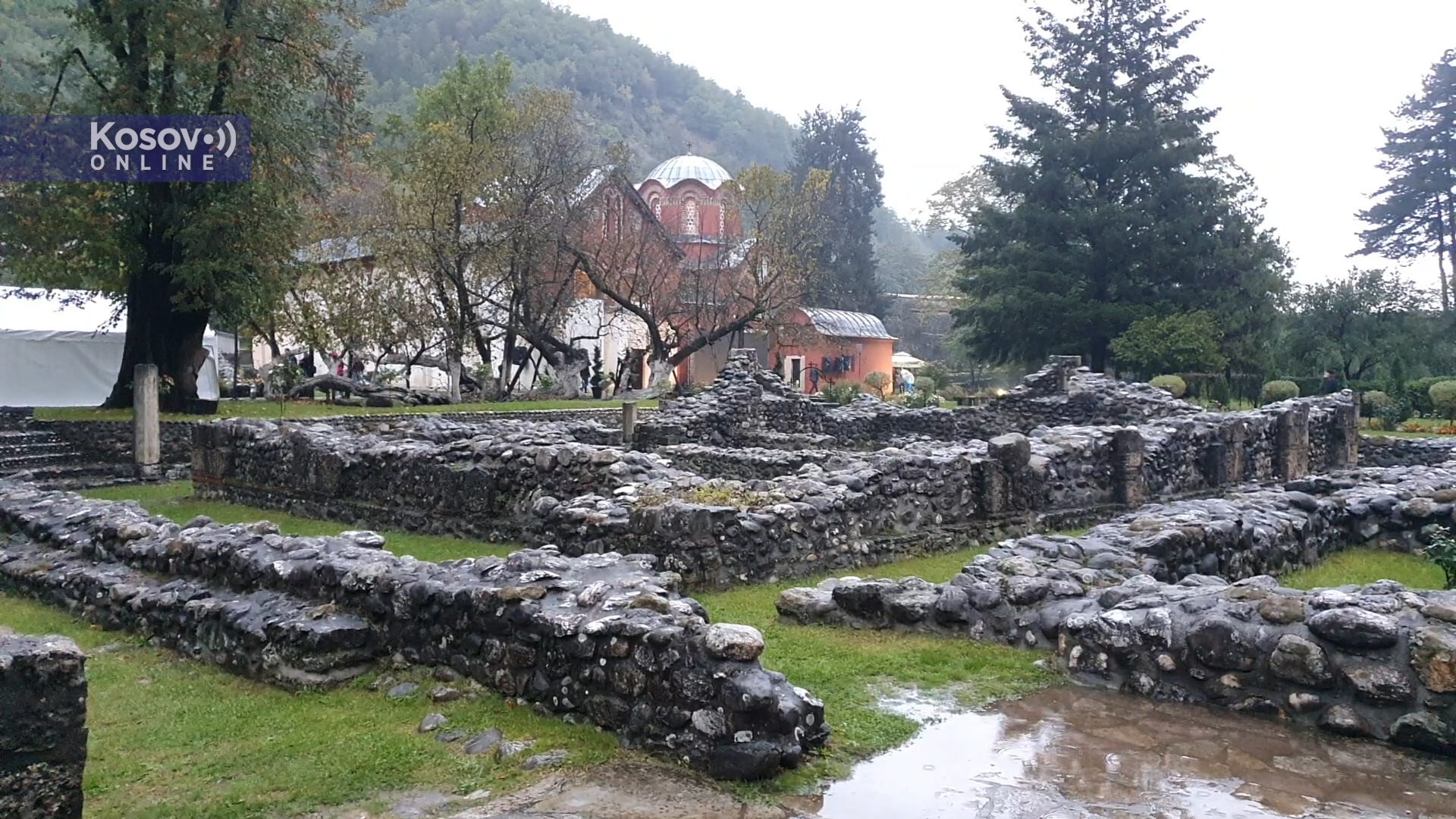
The story of Metohija dates back to several centuries ago when there was Old Serbia and monuments like the jewels of today's world history and culture were being built, such as the Patriarchate of Pec, Visoki Decani, and many others. After many difficult years, the Autonomous Province of Kosovo and Metohija was legalized by the 1946 Constitution, but the term "Metohija" was lost in the 1974 Constitution. In the run-up to the breakup of Yugoslavia, "Metohija" was reintroduced into the Serbian constitution in 1990, which Kosovo Albanians consider an imposition by Slobodan Milosevic. In any case, the name "Kosovo and Metohija" is in line with the 2006 Constitution of Serbia. According to the Constitution adopted by the authorities in Pristina in 2008, "Kosovo" is the name for the entire territory of the province, including Metohija. Since 2012, the local authorities have banned the registration of political parties with "Metohija" in their name, stating that it is "contrary to the Constitution of Kosovo".
Why is mentioning Metohija so contentious for Kosovo Albanians?
A journalist and writer from Gracanica, Zivojin Rakocevic, says that the problem with using the term Metohija is multi-layered for the Albanians, symbolically, in their daily lives, and politically.
The land of churches and monasteries
"Every time the term 'Metohija' is used, it signifies and confirms the truth that it is not their land but the land of churches and monasteries, and that, in one sense, it is dedicated and consecrated to God. The awareness of the importance of this name did not exist in the lives of Kosovo Albanians until the vast estates of the Serbian Orthodox Church, inherited and expanded since the Middle Ages, were seized during the time of communist rule and, today, largely passed into Albanian hands", Rakocevic emphasizes.
He recalls that during World War II, while someone high-ranking from the Communist Party of Yugoslavia was writing a report on the situation in "Dukagjin", the party leadership corrected it to Metohija, stating that Dukagjin is a region in the state of Albania. Nevertheless, the name Metohija was removed from the province's name in 1968, during the time of the former Socialist Federal Republic of Yugoslavia, only to be restored in 1990.
"After 1999, there was a systematic change in the use of this name, but the name Metohija was maintained for a while in public life. With the weakening role of UNMIK and the transfer of authorities to Kosovo Albanian institutions, Metohija completely disappeared, and the use of the name became a trigger for various penalties and exclusion from public life. A Serb in Metohija is now a person in a ghetto, condemned to live without a city and in uncertainty. They feel their uniqueness and incorporate it into the sanctities, three of which are even on the UNESCO list of cultural heritage. These monuments shine in full glory on the European and global stage, while the Serbs to whom they belong and who live beside them almost daily have no electricity", Rakocevic points out.
The life of the remaining Serbs in Metohija's villages today is best illustrated by the fact that, after the summer of 1999 and the entry of international forces together with KLA members, there are no longer any Serbs in the cities. They had to leave due to the terror. Cities like Pec, Istog, Djakovica, and Prizren have become ethnically almost entirely Albanian.
The village of Zac near Istog had significant problems, especially in 2010 when several Serbian families returned to the village.
"The life of the Serbs in enclaves in the Istog Municipality is functional but difficult. The Albanians do not like to hear the word Metohija. Tito promised them Kosovo. There are frequent provocations, and whenever there is tension in the north, it affects us. Now there are frequent thefts, especially in Osojane. The Istog Municipality now has about 500 Serbs in total, with scattered villages, and there are about 200 in this enclave", Veljko Komatovic from Zac says.
His family of seven, he says, is trying to build a normal coexistence with their Albanian neighbors, but they face problems.
"There are Albanian families who moved here after the 1999 bombing, and they are causing problems. My family has been attacked nine times, my wife twice on our property, I've been attacked three times, and my house has been shot three times. When we returned, the terror continued. Now, in Zac, there are eight Serbian houses, and we have eight children in the village and two young adults. Zac now has seven students who attend classes in Osojane. Osojane has the largest group of Serbs, with around 70 houses there", Komatovic explains.
"The Plain of Duke Jovan"
The etymological meaning of the word Metohija unequivocally points to its Christian and Orthodox character, Ognjen Karanovic, a historian and director of the Center for Social Stability explains.
"Namely, the word is derived from the Greek term 'metoh', which denotes a community or a settlement of monks who cultivate monastery land. When it comes to the Serbian ethnic collective in the Middle Ages, this word determined monastic property. Today, in the Albanian language, Metohija is defined as an area in the broader region of Rrafshi and Dukagjinit, which, in turn, are derived from the Serbo-Slavic language, i.e., a version of the Serbian language from the Middle Ages. These terms are literally translated as the 'plain of Duke Jovan', which is a derivation of the name Jovan, a Serbian medieval noble", Karanovic points out for Kosovo Online.
Geographically, Metohija is a vast tectonic valley in the White Drin river basin in southern Serbia, bordered by mountains (starting from the east): Suva Gora, Mokra Gora, Zljeb, Rusolija, Stedim, Volujak or Bela Kut, Bjelopac, Slano Polje, Koprivnik, Ples, Rupe, Bogicevica, Gjeravica, Bogdas (now Marjas), Ujezdna, Pashtrik, and in the far south, the Sharr Mountains with districts: Gora, Okolje, and Sredska with Prizren Podgor'. Metohija also includes Rugovo in the headwaters of the Pec Bistrica. The original Slavic and Serbian names for Metohija were based on districts: Hvosno, around Pec and the Bistrica River; Zatrnavska district, between Decani Bistrica and the Zatrmava River; the River district, between the rivers Trnava and Ribnik; Patkovo, between Djakovica and Has under Pashtrik; Podrimlje, in the White Drin valley; Prekoruplje with Klin, on the left side of the White Drin; Drskovina, around Rudnik and parts of Drenica; Kupavca, the valley and present-day Kujavca River; Podgor of Pec, under the Mokra Gora Mountain; Prizren Podgor, under the eastern branches of the Sharr Mountains with districts; Gora, Opolje, and Sredska. All the rivers and streams in Metohija bear Slavic and Serbian names.
"Pec Bistrica with its tributaries Jelenacka Bistrica and Bjeluha; Decani Bistrica with its tributary Kozljarska Bistrica; Locanska Bistrica, Prizren Bistrica with its tributary Manastiricka Bistrica; Susica: Belopoljska, Zagrmljanska, Brestovicka, and Suhogrlska; Ribnica, Rubnik, Trnava, Trava, Trepetnik, Jablanica, Ljubiznja; Istok, Drenica, Topluha, and others. The old Serbian and medieval names of villages and their parts and hamlets are most fully recorded in preserved charters of Serbian monasteries in Metohija. In the charter of King Stefan the First-Crowned from 1220 about the villages donated to the Serbian archbishopric in the Hvosno district, there are listed villages that have retained their names to this day: Pec with its hamlets, Crni Vrh (still Crni Vrh), Stlpezi (Stup), Trebovitici (Trebovic), Gorazda Vas (Gorazdevac), Nakla Vas (Naklo), Celpeci (Celopek), Labljani (Labljane), Zutoglavi with the city (Zutoglav). Additionally, there are mountains in Hvosno: Slano Polje with Tmasti Gvozdom. The Decani charters, which mostly cover the Metohija villages, record about 500 toponyms. All of them, in absolute numbers, have Serbian linguistic origins", Karanovic provides detailed information.
In the Decani Chrysobulls from the 15th century, lists of households in 89 villages and other settlements in Metohija were entered. Out of a total of 2432 recorded households, only 44 are noted as Albanian, which is 1.90 percent. In Emperor Dusan's Holy Archangels’ Chrysobull from 1348, based on which the ruler's endowment was established, the Monastery of the Holy Archangels Michael and Gabriel near Prizren recorded a monastic metoh with 111 villages and settlements, confirming the absolute dominance of Serbian toponyms.
"With the exception of eight Albanian and eight Vlach clans, the other villages of the metoh have Serbian names. The establishment of Ottoman rule over the districts of the present-day Metohija region in the mid-15th century led to drastic changes in the religious life, ethnic structure, political processes, and cultural aspirations of the inhabitants of today's Metohija. Since the early Middle Ages and the Byzantine, and later Serbian rule in the southwestern region of today's southern Serbian province, hundreds of monasteries and their metohs were active. Over time, the informal term "Metohija" became established in the toponymic culture of the Serbs in this area, as well as in the terminology used by Ottoman authorities and the predominantly settled Albanian population (mostly after the Great Serb Migration of 1690). Even with a strong process of Islamization and changes in the ethnic structure, the Turkish authorities introduced the term "Metohija" into the official correspondence of their administrative administration at the beginning of the 18th century", notes Ognjen Karanovic.
From Old Serbia to the prohibition of mentioning the Serbs
That the area of Metohija is the holiest historical memory of the Serbs is also indicated by Aleksandar Gudzic, a historian from Gracanica.
"There are churches and monasteries that were built by Serbian rulers in the Middle Ages. To make the monasteries independent, they donated land estates so that the church would be economically independent and able to operate autonomously in the state and society. Until the communists came to power, the predominant name for Kosovo and Metohija was Old Serbia, the area where the first Serbian states originated. The Albanians, political elites in Pristina, are bothered by the name Metohija because that word reminds them of the Serbian presence in this area. They want to destroy that in the memory of ordinary people, whether they are Serbs or Albanians, the memory of the Serbian presence is erased. They act as if the Serbs never lived here, as if they disappeared", Gudzic says.
The interests of Western political powers and the Greater Albanian nationalist elites today align regarding the term Metohija. In the pursuit of creating a "Greater Albania", this term is unacceptable for the Albanian separatist movement, while for major powers, this name is dangerous because they want to justify the violent destruction of Serbian sovereignty in Kosovo, our interlocutors agree.
"After the end of World War II, Kosovo and Metohija was established as a form of an autonomous territorial-political community within the People's (later Socialist) Republic of Serbia. The Autonomous Kosovo and Metohija Region was established on July 10, 1945. The present boundaries of the Autonomous Kosovo and Metohija Region were obtained in 1959 through expansion to the north, when parts of the Raska Municipality exclusively populated by Serb inhabitants were excluded from the "central Serbia" and annexed to the Leposavic Municipality", Ognjen Karanovic reminds.
Based on the Constitution of the Socialist Federal Republic of Yugoslavia from April 1963, the autonomous region was elevated to the level of a province with the official name – Autonomous Province of Kosovo and Metohija.
Metohija omitted in UN Resolution 1244
In the processes of disintegration of socialist Yugoslavia and the federalization of the federation, which began after the Brioni Plenum in 1966, the leadership of the League of Communists of Yugoslavia, headed by Tito, and the secessionist forces from separatist-minded federal units openly supported the Albanian nationalist movement, even organizing it within the League of Communists in Kosovo and Metohija. State-party and republic-provincial leaders in Belgrade and Pristina showed a great deal of understanding of the secessionist tendencies of the Albanian ethnicity and their elites in Kosovo and Metohija. In this context, and based on constitutional amendments from November 1968, the name of the province was changed to the Socialist Autonomous Province of Kosovo, thus removing Metohija from the name. According to the provisions of the constitutions of Serbia and Yugoslavia from 1974, the Socialist Autonomous Province of Kosovo also formally gained the status of a federal unit with elements of statehood. The victory of the Albanian secessionist and extremist nationalist movement was triumphant. After the "awakening of Serbian national consciousness" caused by the terror of the Albanian authorities in Kosovo, the old name of the province was restored in the format of the Autonomous Province of Kosovo and Metohija based on the provisions of the Constitution of the Republic of Serbia from 1990. Thus, the ancient name of Metohija was re-established for the second time, which the Albanians identified with the Serbian identity character of Old Serbia in Kosovo. Similarly to the Marxist doctrines of Yugoslav communists between the two world wars, who proposed that Kosovo (without the name Metohija, characterized as a "lexical expression of Greater Serbian hegemony"), be annexed to Albania as a Soviet socialist country, the Western political powers, in their takeover of the southern Serbian province, decided to accommodate the Greater Albanian, hegemonic, and criminal goals. During the peace negotiations prior to the NATO aggression against Serbia in 1999, supposedly organized with the aim of establishing Kosovo "as a democratic, multi-ethnic, and multicultural entity", the Western political powers persistently omitted the name Metohija from official documents meant to resolve the existing crisis. Thus, the word "Metohija" was simply omitted from the name of the southern Serbian province in United Nations documents, including UN Security Council Resolution 1244", Karanovic concludes.


0 comments