
Djuric: Kosovo and Metohija is a sacrosanct land for Serbs; recognition was a serious blow to Serbian-Israeli relations
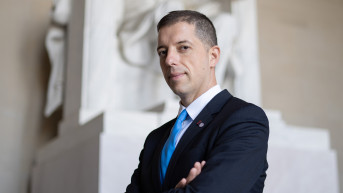
Serbia's Ambassador to the United States, Marko Djuric, emphasizes in an interview with the Jerusalem Post that Kosovo is the cradle of statehood, spirituality, culture, and identity for Serbia and that the recognition of the unilaterally declared independence of Kosovo by Israel was a significant blow to Serbian-Israeli relations.
"Recognition of the so-called Kosovo by the Government of Israel was, beyond any doubt, the most significant blow to the Serbian-Israeli relationship in 75 years," Djuric said.
He points out that Kosovo is a sacrosanct land for Serbs, constituting not only 13% of sovereign territory but it is also a cradle of Serbia's statehood, spirituality, culture, and identity.
As he reminded, Kosovo is recognized as part of Serbia by the United Nations and 110 countries around the world, with a total population of 79.8% of humanity who support Serbia's position on the status of Kosovo.
"In the past three years, 27 countries have revoked or frozen the recognition of Kosovo, to allow a solution through dialogue. Israel was the sole new recognizer. Bilateral relations did take a serious blow. But the relations between the Serbs and the Jews are so strong and well-founded that I can proudly say that we are continuing to develop our relations in so many spheres again, and I am convinced we will continue to do so at an even greater pace," Djuric emphasized.
The ambassador pointed out that Serbia viewed Israel as one of its close friends.
When asked how Hamas's attack on Israel on October 7 affected him personally, Djuric said that the horrific attack on Israel and the Jewish people that had happened on the holiday of Simchat Torah had global implications.
"Now, more than ever, the world should stand united in putting a stop to any form of violence, anywhere," he pointed out.
He states that the attack on Israel is also a very personal matter for his family.
"I have many relatives and dear friends in Israel. My cousin, Alon Ohel, a 23-year-old man, a dual Israeli/Serbian citizen with whom I share the same Jewish great-grandfather from Novi Sad, Serbia, on my mother's side, was kidnapped by the terrorists on that day. Since then, together with the entire family and good people who are prepared to help, including from the Serbian and Israeli governments, we have been working 24/7 to try and get him back. Alon is a gifted young pianist with a great talent and pure soul, known widely for helping others. According to witness accounts, he was trying to help his friends at a music festival, risking his life during the attack. He is also a brave man, and we believe he is doing the same - helping others, wherever he is. We miss him dearly and want him back right away," Djuric underlined.
On the note that relations between Jews and Serbs date back more than 1,000 years, and perhaps even longer, and the question of whether he would say that in some way his story and the story of his Israeli relative symbolize how Jewish-Serbian relations are mutually connected, Djuric pointed out that Alon's great-grandfather Zeev Ashkenazi came from Novi Sad, Serbia, where he had been active as a member of Hashomer Hatzair and other Jewish organizations.
"As a young man driven by Zionist ideals, he left Novi Sad for the Holy Land in March 1941. The rest of the family, including my grandmother Mira Schonbeger, stayed on. This happened just a month before the Nazi German invasion of Yugoslavia. He came to the Holy Land and, among many thousands of people who came from Serbia, took part in the formation of the State of Israel," he explained.
Djuric emphasized that Serbia had been a significant center of the Zionist movement, recalling that the family of Theodor Herzl originates from Zemun, Serbia. He also mentioned that Zemun was the birthplace of Rabbi Judah Ben Shlomo Hai Alkalai, today acknowledged as a precursor of the modern Zionist movement.
He also highlighted a lesser-known fact – that the Kingdom of Serbia had been the first country in the world to officially support and recognize the Balfour Declaration in 1917, thus supporting the idea of the formation of Israel more than 100 years ago.
"Moreover, under the leadership of the then Prime Minister and our current President Aleksandar Vucic, Serbia was the first European country to pass a law aimed at returning unclaimed and heirless Jewish property taken during the Holocaust, known as the 'Holocaust Heirless Property Law'. It is also worth noting that Serbs have 139 bearers of the 'Righteous Among the Nations' award, which makes the Serbs by far the most represented nation in a region in which Nazi German and Croatian Ustasha occupation committed unbelievable atrocities. Serbs and Jews were both treated as subhumans and exterminated together in the hundreds of thousands of infamous Nazi and Ustasha concentration camps, like Jasenovac. They also fought side by side in multiple antifascist movements in our region. Throughout history, Jewish and Serbian histories have been interconnected, but I also firmly believe we have many good things we can and must accomplish together in the future," Djuric emphasized.
Asked how Serbia viewed the massacre by Hamas and Israel's plan to destroy the terrorist organization, Djuric reminded that the highest Serbian officials had unequivocally condemned the terrorist attack by Hamas.
This, he underlines, is a matter of principle for Serbia.
"But let us not forget that, for the Serbs, the Jewish people also represent a friendly, even brotherly nation. In addition, Hamas is known in Serbia for sending terrorist 'volunteers' against the Serbs during the Yugoslav wars of the nineties," he pointed out.
He says that Serbia observes with great concern the rise of various forms of historic revisionism and anti-Semitism, emphasizing that Serbia differs from many European nations in the sense that anti-Semitism is not only very rare but also appears exclusively as the misbehavior of individuals.
"There is no underlying cultural bias against the Jews. On the contrary. If we can generalize, the Jews are looked upon with respect and seen as brothers and sisters in suffering", Djuric underlined.
In response to the fact that Serbia borders two Muslim-majority countries in the Balkans - Albania and Bosnia, and the question of whether Serbia faces the threat of Islamic extremism and terrorism, Djuric said that Serbia had already suffered greatly from various forms of extremism, including Islamic extremism.
As he stated, Serbia is home to a small but sprawling Muslim community, which is well-integrated into the society and treated equally.
"There are regional powers and malign actors who are constantly trying to stir Islamic fundamentalism. We are at constant risk because their funds seem endless and their commitment lasting. Some of our neighbors, however, do not have the situation fully under control, and we are seeing a sliding into extremism in many communities. Some regional capitals are literally transformed beyond recognition, with tens of thousands of new inhabitants from the Middle East, many of whom are ideological/religious missionaries and extremists. The consequences of this will be felt in the coming decades," Djuric warned.
In response to the observation that there is a significant Jewish diaspora worldwide and that Israel makes great efforts to foster strong ties with its people, and the question of whether he believes Serbia, which also has a considerable diaspora, can learn something from the Israeli model, Djuric said that in Serbia, there was a saying, "only unity shall save the Serbs."
"However, we are one of the most diverse and heterogeneous nations on earth. We have to quickly learn how to preserve our identity across time and space, and to master skills such as lobbying, mobilizing, and organizing our numerous communities across the globe. For example, there are 137 Serbian churches and more than a million Serbian/Americans in the US. If we are to survive and thrive, we have to learn from the best. And, the Jews are the best when it comes to facing many of these challenges. The Jewish state has also accomplished impressive results in this field, and we can definitely benefit a lot from the exchange," he said.
Asked whether he thinks Serbia has been fairly treated by Western media, he mentioned that during the 1990s and subsequent decades, Serbia's public image had been tarnished by an organized campaign against the Serbian people and the country.
"A decade ago, we finally started shifting the paradigm and reversing the old narrative into Serbia as the new success story, Serbia as a responsible and reliable partner, and Serbia as a stable political and economic engine that drives the entire region forward. Helmed by President Aleksandar Vucic, the entire economy of our country changed; we have kept the economic growth on the upswing and decreased the public debt and the unemployment rate, whereas Serbia alone has attracted 65% of foreign direct investments into the whole region. Our results and achievements speak for themselves; they are the best instruments and tools we could ever use in presenting and promoting Serbia in the international arena," he underlined.
Asked about Serbia's European path and its progress, as well as whether the EU is delaying the process, Djuric emphasizes that EU membership is Serbia's strategic commitment. He affirmed Serbia's full dedication to the process of European integration while continuing to implement a reform agenda in accordance with its European orientation and national interests.
"Serbia has made significant progress on its reform path, particularly in the areas of economy and the rule of law, as noted in the annual reports of the European Commission. Regrettably, I don't think that any of the EU candidate countries are pleased with the current EU accession dynamics, especially given the fact that we have been witnessing the phenomenon of 'enlargement fatigue' over the last few years. However, we remain hopeful that EU member countries will recognize Serbia's efforts and results and that, by the end of the year, we will be given the 'green light' for the opening of Cluster 3, which our country is fully prepared for," he explained.
On the question of when Serbia will move its embassy to Jerusalem, he stated that Belgrade's desire to relocate the embassy to Jerusalem, unfortunately, had been suspended when Israel had recognized Kosovo.
"Nevertheless, we went ahead and opened a Trade Office in Jerusalem in 2021, hence reaffirming our commitment to building stronger economic and business ties with Israel," he added.
Asked about the current atmosphere and protests in Serbia, Djuric pointed out that the country had been struck by unprecedented tragedies in two consecutive days in May.
"What started as protests against violence as democratic expressions of people's grief and shock by mass murders, quickly turned into political games by certain opposition parties and their abuse of people's emotions for political purposes. At the very first opposition's formal request for elections, our Government responded by acceding to demands for extraordinary elections, thus demonstrating its commitment to democratic principles and accountability to the people. I rest assured that the legitimacy of the current state leadership will be bolstered at the upcoming elections by a revived expression of people’s will and trust in the policies established by our President Vucic, developed, followed, and executed by our Government," he emphasized.
Asked about his stance on Tehran, Djuric stated that Serbia had often emphasized the importance of resolving the Iranian nuclear issue through peaceful dialogue and diplomacy while also simultaneously sharing the international community's concern about nuclear proliferation.
"Being an EU aspirant, Serbia strives to align its foreign policy to the EU positions, specifically by condemning heinous activities by Hamas and designating Hezbollah in its entirety as a terrorist organization, Serbia and Iran have many differences in culture, religion, and historical experiences, but we do appreciate Tehran's respect for Serbia's territorial sovereignty and integrity, as well as its stance on Kosovo's unilateral declaration of independence," Ambassador Djuric concluded.


0 comments