
Pristina's desire to present Serbian cultural heritage as Kosovo's does not have support in UNESCO

Serbian cultural heritage in Kosovo belongs to the Serbs, the Serbian Orthodox Church, and the state of Serbia, the interlocutors of Kosovo Online agree. They emphasize that any other interpretation is contrary to historical facts, scientifically grounded, and common sense. Furthermore, they add that this is not questioned even among UNESCO member states, on whose list Serbia's name is clearly inscribed alongside the medieval heritage in Kosovo.
They also point out the paradox of Kosovo's desire for UNESCO membership while simultaneously destroying Serbian cultural heritage. They highlight that UNESCO member countries recognize this paradox.
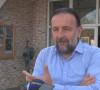
Writer and journalist Zivojin Rakocevic, in an interview with Kosovo Online, says that no one can protect Serbian cultural heritage in Kosovo except those to whom it belongs, and from the moment "the first stone was hewn", the Serbian Orthodox Church has been safeguarding it. Rakocevic adds that it represents centuries of care, work, love, prayers, art, culture, and spirit. He also emphasizes that every voice in the international community is absolutely precious, and it is urgent and necessary to "preserve, defend, witness, and maintain our heritage" in all global institutions at all times.
"Nobody can protect the Serbian cultural heritage in Kosovo and Metohija except for those to whom it belongs. Of course, scientific institutions, cultural institutions, the state of Serbia, and the institutes that have been responsible for it over the years should continue their work. There is no question of anyone taking over the Serbian cultural and spiritual heritage in Kosovo and Metohija because they lack the capacity to do so," Rakocevic stated.
Rakocevic, however, reminds us that in the eyes of the world, places like Palmyra, the National Museum in Iraq, and the Bamiyan statues in Afghanistan have disappeared.
"It is a moment of evil where everything that forms your spiritual, cultural, national, and state identity can disappear, and this entire mosaic can simply crumble. That's why it's very important to have an active, living, precise, clear, scientifically and methodologically grounded voice about what we inherit in Kosovo and Metohija in all world institutions. In addition to explaining to ourselves what Kosovo and Metohija is and what our heritage in Kosovo and Metohija is, it is urgently necessary to preserve, defend, witness, and maintain our heritage in Kosovo and Metohija at all times in all world institutions where we can do so," Rakocevic stated.
He emphasizes that it must be clear that Kosovo has three dominant cultural heritages – Serbian, Albanian, and Ottoman. It is entirely clear that the new administration in Pristina, thanks to the "idea of creating a state nation", wants to create a Kosovo cultural heritage.
"It doesn't exist. It's not there. Everything that exists and, most importantly, belongs to these groups cannot become Kosovan. The essence is the following: making a falsely unique Kosovo cultural heritage for our churches and monasteries to become the property of Kosovo institutions is inconceivable, it is a complete catastrophe because there is nothing benevolent toward them. Even this recent statement (Hajrulla Ceku's) about the need to protect Banjska and that it was illegally renovated is absolutely senseless. But deep down, in their struggle against the Serbs, the Serbian Orthodox Church, the Serbian state, and Serbian culture in Kosovo and Metohija, these important sites, the most crucial ones, visible both in UNESCO and many hundreds across the field in Kosovo and Metohija, are seen as a key danger. They are the key markers and witnesses that Pristina finds obstructive to what they believe is their full statehood and consolidation," Rakocevic said.
He reminds that similar things have happened in Montenegro and that the same laws were being prepared for Kosovo because it's part of a broader action to “change ownership“.
"We can negotiate about anything, but we cannot discuss the deepest intimacy of our culture, our people, our statehood, and our spirituality. Discussing to whom this spiritual intimacy belongs or should belong is absolutely unacceptable, and it is unequivocal that we should not invest anything in such discussions," Rakocevic said.
Rakocevic emphasizes that, because of all this, every voice in the international community is absolutely precious.
"We must explain, talk, and know that the Decani Monastery is the most beautiful Balkan church, that Gracanica was one of the most important European cultural monuments of its time at the moment of its construction, and there is no discussion about it. Only those who own them can protect them, only those who have invested centuries in them can preserve them, and their people who live organically with them, who are absolutely integrated into every stone of Gracanica and Decani, and they exist here because of Gracanica, Decani, Ljevis, Patriarchate of Peja; otherwise, there would be no people as it doesn't exist in other regions. So, this is an organic unity that we must witness at all times," Rakocevic said.
However, Rakocevic warned that processes were dynamically evolving which moved us away from this.
"Constructions are being made according to which these are some separate entities that we will visit as tourists, that it's a potential for tourism. Yes, it is, but that is only a minor secondary matter in the history of our relationships, ownership, and our future concerning these monuments," Rakocevic concluded.
President of the National Commission for Cooperation with UNESCO, Prof. Dr. Goran Milasinovic, expressed his belief that Kosovo was far from gaining membership in UNESCO, considering that most member states now recognized the paradox that Pristina sought to become a permanent member of that UN organization while, on the other hand, they were destroying and rendering inaccessible the properties on the list of world cultural heritage, such as the Decani Monastery, the Patriarchate of Peja, Our Lady of Ljevis, and Gracanica.
Milasinovic emphasizes that Serbia has jurisdiction over these cultural monuments and is expected to submit reports to the UNESCO World Heritage Committee and take care of them. However, he believes that the collaboration of the local community on this matter is also important. Nonetheless, he assesses that the local community is not making sufficient efforts to protect Serbian monasteries.
"The jurisdiction is primarily ours; we are a member state of UNESCO, and it is expected that we take care of these cultural monuments, which we are doing. However, it's impossible without the involvement of the local community. The local community must have its share, and it does have its share, but we are not satisfied with it. For example, in the case of Decani, even more so in the case of Our Lady of Ljevis, we see that the local community is not making enough effort to protect these properties. These properties would not be on the endangered list if they were adequately protected. As a result, they are inaccessible, not only to people who want to see them from Serbia, believers but also to people who want to see them from the region and around the world," Milasinovic told Kosovo Online.
The recent session of the UNESCO World Heritage Committee has concluded, and Milasinovic says that it is obligatory to submit annual reports on the status of endangered properties, among which, he notes, are four medieval Serbian cultural monuments. According to him, Serbia is obligated to submit a report every year, as it is a member of UNESCO. The Republic Institute for the Protection of Cultural Monuments of Serbia is responsible for preparing the report.
However, he also emphasized that there had been attempts by Pristina to remove Serbian monasteries from the list of endangered world heritage properties.
"The report is comprehensive every year and it shows the condition of these properties, and whether any maintenance work has been done. We must not carry out reconstructions; there are strict rules in UNESCO regarding what is allowed and what is not, to ensure they remain on the list. Our responsibility is to report, so that all interested parties know which properties are still endangered. There have been attempts by Pristina to remove them from this list because if they are not on the list, reporting happens every ten years, and a lot can change in ten years. They did not succeed in that," Milasinovic stated.
Serbia's goal, as explained by Milasinovic, is to inform all other UNESCO member states about the situation.
"Our goal is for everyone to know what is happening, but not to engage in too much discussion since we do not like to trigger status issues regarding these monasteries. As long as we report as a member state, we have jurisdiction over these monasteries," Milasinovic emphasized.
The cooperation of the local community with Serbia, which has jurisdiction over the monasteries, is not at a satisfactory level, Milasinovic noted, highlighting that Pristina was trying to marginalize the issue of protecting Serbian cultural heritage.
He reminds that UNESCO's primary mission is to protect heritage for future generations and make it accessible to every person.
"For every person on the planet to feel Our Lady of Ljevis or the Patriarchate of Peja as a part of their heritage, as a part of humanity that belongs to them and that they want to pass on to the next generation. This is not possible at the moment, and we are very disappointed with the involvement of the local community," Milasinovic said.
Speaking about Kosovo's desire to become a permanent member of UNESCO, Milasinovic reminded that it was a kind of paradox when considering Pristina's attitude toward Serbian cultural heritage.
"We hope that this will not happen soon, and we cannot even imagine such a scenario because we have seen a series of hostile actions against these monasteries. There are not only legal reasons related to Resolution 1244 but also ethical issues. It's an attempt to become a member state while simultaneously destroying cultural monuments on UNESCO's list. This is a paradox that most member states recognize today, and that's why their efforts to become permanent members have not succeeded," Milasinovic explained.
When asked to comment on the candidacy for the Executive Board and the chances of Serbia gaining membership, the President of the National Commission for Cooperation with UNESCO said that significant diplomatic efforts were being made to secure a place in that body and reminded that Serbia had been a member of the Executive Board several times before.
"However, in the past two years, we chaired the Executive Board and couldn't fully engage in all of UNESCO's activities due to our presidency. That's why we believe our desire to become a member of the Executive Board is legitimate. We hope that we have garnered enough support and have enough friends among UNESCO member states who will understand and vote for us," Milasinovic concluded.
Serbia's Ambassador to UNESCO, Tamara Rastovac Siamashvili, who presided over the UNESCO Executive Board in the past two years, assessed in a recent interview with Kosovo Online that Serbia had a great chance to be reelected to the Executive Board. She said that Serbia's official candidacy for membership in the UNESCO Executive Board had been well-received by member states.
"The elections will take place during the upcoming UNESCO General Conference. We are one of the candidates from the Eastern European region. Lobbying for our re-election is happening at all levels, both here at UNESCO and on the sidelines of major international gatherings and bilaterally. The Minister of Foreign Affairs organized a well-attended briefing for the diplomatic corps in Belgrade. What sets us apart in discussions with colleagues and representatives of UNESCO member states is that Serbia is a balancing factor in UNESCO, including the Executive Board. This means that we are a country that absolutely insists on dialogue, seeking compromise, consensus, and multilateralism. This is something that characterizes our foreign policy and is evident in our approach here at UNESCO," Rastovac Siamashvili said, among other things.
She added that she had insisted on this approach during her two-year tenure as the Chair of the Executive Board.
"Our candidacy has been very well received by the UNESCO membership, and to be completely honest, in the discussions we have, Serbia's balanced approach is recognized, as well as our strong emphasis on depoliticization and focusing on issues within UNESCO's mandate," Rastovac Siamashvili emphasized.
The Serbian Ambassador to UNESCO also reminded that one of the absolute priorities in the work of Serbia's permanent delegation in that organization was the endangerment of Serbian cultural and religious heritage in Kosovo, and added that UNESCO did not question that cultural heritage in Kosovo belongs to Serbia.
"In September, we had a regular session of the World Heritage Committee in Riyadh, where I participated with our delegation, and the decision to retain our monasteries in Kosovo and Metohija that are on UNESCO's World Heritage List in Danger was absolutely undisputed. Of course, we lobbied before the Committee's meeting and talked to all the Committee members, of which there are 21. There was absolute support for retaining our properties on the List of World Heritage in Danger. At no point did the Committee members raise the question of whose properties these are. It is very clear, and if you visit UNESCO's website and the World Heritage Centre, you will see the countries whose properties are on the list of danger, and our properties in Kosovo and Metohija are clearly listed alongside Serbia's name," Rastovac Siamashvili emphasizes

0 comments