
Yugoslavia and the world after the post-WWII consensus
Written for Kosovo Online by Srdjan Garcevic, founder of The Nutshell Times
As we are approaching the 80th anniversary of the end of WWII in Europe, it seems that the order that was built from its ashes is very much gone. While the bitter divide between the erstwhile allies, especially the UK and Russia, over how to celebrate Victory Day is the most obvious departure from the centrality of WWII in the global political psyche, there have been more important death knells to the old order in the past few years like the decreasing interest in multilateralism as well the increasing draw of national populism. On top of that, various institutional, state-sponsored) and "do it yourself" revisionisms seeped into the mainstream, and considering that most of the people who lived through the war are no longer around, the emotional impact of WWII and its sacrosanct status have greatly diminished. Ironically, the fact that almost everybody now seems to call their enemies "fascist" and compares even the most trivial global and local events to what happened in the 1930s and 1940s Europe further underscores the displacement of WWII as the central event in the international political culture.
Many are understandably uncomfortable with this turn of events, not the least because the assumption of the post-WWII order was that without it, the catastrophes of the 1940s would return and may even be "outdone" due to the advances in weapons of mass destruction. To glean into the future, it makes sense to see what happened in Yugoslavia, the country that was the one of first victims of the fractures in the post-WWII order.
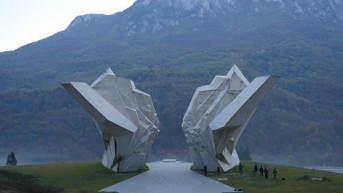
Forty years ago, the post-WWII consensus in the country was first breaking internally due to the death of Joseph Broz Tito, as there was no similarly unifying figure to succeed him and guide the country through the economic crises of the 1980s. The challenges also came externally, as Yugoslav ethnic nationalisms were getting support from abroad, both from national diasporas, as well as states who saw Yugoslavia either as a barrier to their interests as well as the ideology of muscular global liberalism, as embodied by Regan and Thatcher. The fall of the Berlin Wall and the overt support of the newly re-unified Germany to Croatia and Slovenia to unilaterally leave Yugoslavia meant that the post-WWII order in Europe had to give way to a new one in which in the name of global liberalism, revisionist nationalisms can also be tolerated, and even celebrated. That choice was repeated in Bosnia and Herzegovina and, finally, in Kosovo and Metohija. How crucial the negation of the post-WWII legacy was for the new countries was best evidenced by the widespread destruction of the most obvious symbols of the Yugoslav struggle in the war: the monuments to those fallen in the war, which Croat and Albanian forces often attacked.
While there was a push towards post-WWII revision in Serbia during the 1980s and 1990s, mainly in the nationalist opposition to Milošević, the most accepted view within the country was and is that Serbia tried to preserve Yugoslavia's delicate ethnic balance and keep the memory of the bloody struggle against the Axis and its collaborators. Yugoslavia suffered some of the highest casualties in the world, both in total and per capita terms, and this memory was especially cherished by Serbs due to their systemic persecution in the German-controlled areas, done either directly or through Croat, Bosniak, and Albanian collaborators, which made them the third most affected group proportionally in Yugoslavia, just after the Jews and Roma. This difference in attitude towards World War II continues to this day, further bolstered by the perception in Serbia that the institutions of the post-WWII order, especially the UN, are key in preserving the sovereignty in Kosovo and Metohija. Similarly, there is affection towards the countries that are keeping most of the post-WWII narrative and who are (at least nominally) supporting the multilateralism of the post-war era.
While Yugoslavia's small size and negligent power mean that lessons from abandoning WWII consensus cannot be realistically scaled to the whole world, it does offer many clues as to what we can expect. The most obvious lesson is internal. Everywhere, but especially in Yugoslavia, the post-war consensus hinged on the elevation of what happened during the war to the almost religious level, which provided a strong unifying narrative that managed to keep various ethnic interests in check. With that gone, not only does ethnonationalism make a comeback, but also the institutions that preached post-war universalism - in media, academia, and the arts - become obsolete, and their functions are fractured according to political interest. While those processes are well underway in the West, what is more interesting is the dynamic between the states, which are no longer tied by the previous consensus.
While the relationships between the Yugoslav successor states have been greatly influenced by the needs of external powers as the world "caught up" with our political reality, we can still see that states broadly pursue two different paths. In the absence of the old order, some seek to organize around shared interests with respect towards each others' views. This option is best demonstrated in the emergence of multilateral projects such as the Open Balkan initiative, but also in the resolution of old tense relationships, such as the one between Serbia and Hungary.
The other option is much less harmonious one, pursued by governments that are willing to sacrifice their own development and even sovereignty to get larger powers to fight their local battles, no matter how destabilizing it may be.
What sort of order emerges after the end of the current one is currently anybody's guess, but the sooner we come to a new consensus, the better. This time around, I hope we will be wise enough to get to it without a similarly catastrophic global conflagration.


0 comments