
Vucurevic: Trucks are the most expensive when they are stationary, the Open Balkans is the future
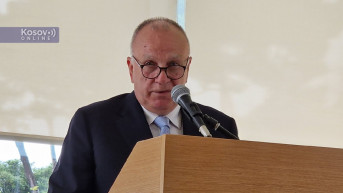
The Open Balkans brings with it many solutions - reduction of costs and logistical problems, shorter detention of goods at the borders, easier certification, and therefore better product prices and higher profits, Bosko Vucurevic, president of the Chamber of Commerce of Vojvodina, pointed out today for Kosovo Online.
Vucurevic, who is participating in the meeting "Strategic Economic Talks" organized by the Southeast European Business Development Network (SEEBDN) from Vienna, notes that, although many compare the Open Balkans with the Berlin process, this initiative contains all the elements, but provides more efficient functioning, which has been proven through practice.
"Today, we have a 'one stop' on the Serbian-Macedonian border, the certification is valid until the place of destination, and this significantly speeds up the process," said Vucurevic at the meeting in Savudrija.
He backs up his position with data, and they say that one day of waiting at the border affects one percent of the price reduction of a certain product, adding that this proportion is even bigger in agriculture.
"If it's sensitive food products, one day of waiting has almost a seven percent effect on the price change in a negative sense," noted Vucurevic.
That is why he sees the Open Balkans as the future of cooperation in the region, and calls on all other countries to join and make it a transitional period before an entry into the European Union.
"There is no politics here, this is a practice that has shown good results," underlined Vucurevic.
As he says, as soon as the flow of goods accelerates, the benefit cannot be absent.
"Imagine how much a truck costs for a day, how much waiting at the borders, driver's wages... The truck is the most expensive when it is stationary. We have the example of Bosnia and Herzegovina, which is our number four market with almost 3.5 billion euros of turnover, and when the drivers need to drive goods, they won't leave on Wednesday, because they know they won't cross the border before Monday... And we're talking about a neighboring country ", points out Vucurevic.
Open Balkans makes all that much simpler.
"It's different now, we connect as much as possible, it's all about pure economy, in the last resort, profit and earnings," Vucurevic concluded.


0 comments