
Adem Demaci – the "armed prophet" of the Albanian national movement in Kosovo (1)
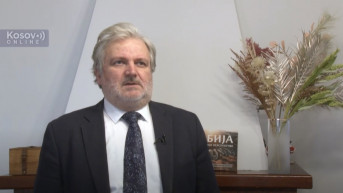
Writing for Kosovo Online: Dragan Bisenic, journalist
Opponent of the emigration of Albanians to Turkey
When, on December 11, 1991, the President of the European Parliament, Enrique Baron Crespo, presented Adem Demaci with the European "Andrei Sakharov" Prize, named after the renowned Russian physicist and dissident, it was the highest recognition given to a political prisoner with the longest prison term in Europe. He had been convicted three times and had spent a total of 28 years in prison. Demaci surpassed all Irish, Italian, and German terrorists who were considered the greatest and most dangerous opponents of British, Italian, or German authorities at the end of the last century. In this regard, Adem Demaci was rightfully compared to the South African leader of the black majority, Nelson Mandela. At the ceremony, which lasted only about 15 minutes, Crespo and Demaci delivered short speeches. Demaci spoke extensively about the importance of free speech and freedom of expression for democratic life, while the Spanish politician briefly introduced Demaci's life and his qualifications for this prestigious award.
Demaci, however, was not just a man who fought with the power of free speech and democracy. He was the founder of the ideology of armed rebellion and the struggle of the Albanians in Serbia and Yugoslavia, making him a precursor to the creation of the Kosovo Liberation Army (KLA), which operated in Kosovo since 1997. Niccolo Machiavelli wrote about one of his heroes, Girolamo Savonarola, that he was a "prophet without a sword" and that because of this, he would never succeed in political struggle. Demaci was the "armed prophet", but neither that nor prestigious European awards would help him strengthen his position sufficiently among the Albanians in Kosovo, especially those outside Kosovo, or attain leadership positions in the national movement of Kosovo Albanians. Leadership remained in the hands of Ibrahim Rugova, whom Demaci never accepted as the true leader of Kosovo Albanians. The political parties he organized were not successful in elections, and he never wanted to join any of the dominant parties among the Albanians. In this sense, Demaci remained an unrealized potential and a "prophet without a sword" in the struggle for power. There are several reasons for this, but we will discuss them later. It is enough to say that there are very few works about Demaci in Kosovo, and the only book written about him, an unauthorized biography by Shkelzen Gashi, was published in 2010.
In a general sense, Demaci was a part of the milieu of communist dissidents who did fit into the pattern described by Aleksa Djilas. Djilas described dissidents as a group that wholeheartedly supported democracy, considering it the most advanced in the West, but dissidents did not see Western countries as models to be copied – neither all of them together nor any of them individually.
If they had any role models at all, it would be the Scandinavian countries because they were the ones where the state was most committed to social welfare and caring for the general well-being. Thus, of all Western democratic countries, the dissidents preferred those with a stronger socialist element.
Literally, not a single dissident supported liberal capitalism with minimal taxes and almost no state or social control.
Demaci's goal, of course, was an "ethnic Albania" that would unite all Albanian territories in the Balkans, but unlike many other organizations, Demaci was much more flexible and allowed various transitional and compromise forms of state arrangements, including Kosovo as a part of Serbia and Montenegro as a part of a confederal solution.
Demaci did not hide his disappointment with the internal life in Kosovo after 1999 and openly stated that it was not the Kosovo he had fought for and aspired to. That's why he withdrew from active political life, but that doesn't mean that Demaci's strength and charismatic personality have not had a powerful influence on today's political and ideological currents in Kosovo.
Kosovo Prime Minister Albin Kurti is the most persistent follower and heir of Demaci's defiant attitude, combative revolutionary spirit, and, to some extent, stubborn stance in politics. He came into Demaci's sight and earned his respect in the mid-1990s when he led a student protest movement.
Adem Demaci was born in August 1935 in Pristina, in the Kingdom of Yugoslavia, as one of seven children, of whom three survived. Uncertain if he would survive, his parents did not even register his birth until six months later, on February 26, 1936.
Demaci began primary school in Pristina during the Italian occupation from 1941 to 1943, continued under German rule in 1944, and completed it in 1946, now in communist Yugoslavia. From 1946 to 1953, he finished eight years of secondary school in Pristina.
As a high school student, at the age of 17, Demaci published some of his short stories in the newspaper "Rilindja" and magazines "Jeta e re" and "Zeri i Rinise". After completing high school, Demaci enrolled in World Literature at the University of Belgrade. However, by the end of his fifth semester, Demaci's mother fell seriously ill, forcing him to stop his studies and return to Pristina. There, he started working as the editor of literature at the leading newspaper in Kosovo and Metohija, "Rilindja".
From 1953 to 1958, Demaci solidified his reputation as a short story writer. "Kthimi" ("The Return"), one of his most famous stories from that period, condemned the deportation of Kosovo Albanians to Turkey.
In the first half of 1958, he published his first novel, "The Snakes of the Blood", which was the first novel in the Albanian language published in Kosovo and Metohija. In it, Demaci criticized the tradition of blood feuds, summarizing his ideas in the dedication, "not to those who are brave enough to commit a crime but to those who bravely extend a hand in reconciliation".
During that time, Demaci made intellectual strides. As a student, under the special guidance of his professor Idriz Ajeti and poet Esad Mekuli, he published stories in the newspaper "Rilindja" ("Rebirth") and magazines like "Jeta e re" ("New Life") and "Zani i Rinis" ("Voice of Youth"). Later, between 1953 and 1958, as a student of world literature at the University of Belgrade and a scholarship recipient from the "Rilindja" newspaper, he established himself by writing short stories that boldly opposed the challenging socioeconomic situation, particularly the deportation of Albanians to Turkey.
During his studies, Demaci attended lectures by renowned Belgrade professors on world literature and read works by famous world writers such as Balzac, Hemingway, Kafka, Camus, Maupassant, Chekhov, Dostoevsky, Tolstoy, and others.
Even then, Demaci spoke that his ideas were shaped by two key events. The first turning point occurred while Demaci was attending an eight-year gymnasium in Pristina. Partisans executed those they considered quislings and those perceived as such at a place that is still known today as "Streliste". Activists of the Albanian National Democratic Movement, a nationalist anti-communist resistance movement, were executed there. Demaci mentioned how he would wake up to the sounds of gunfire and shots at night.
The second pivotal moment was the year 1953. In that year, Tito made a "gentleman's agreement" with the Turkish Foreign Minister Mehmet Koprulu to facilitate the emigration of the Albanians from Yugoslavia to Turkey.
This involved a series of meetings and agreements that Yugoslavia had with the Western NATO military alliance while the Balkan Pact, signed at Bled between Yugoslavia, Greece, and Turkey, was still in effect. Albanians spread rumors that on February 28, 1953, Koca Popovic and Turkish Minister Hulusi Kaynani reached a secret agreement in Skopje for the relocation of Albanians with numerous facilities to be provided by Macedonia and the Turkish consulate. However, the real agreement was the so-called Tito-Koprulu gentleman's agreement concluded in Split in 1953, prepared by the Turkish Minister Mehmet Koprulu. This agreement stated that families considered Turks could freely move to Turkey, which was a significant privilege for a country that was still largely closed to the outside world in the standard communist manner. According to Kosovo Albanian sources, around 40,000 to 50,000 people emigrated in 1953-1954. Fadil Hoxha, the decades-long leader of Kosovo Albanians in the post-war period, wrote in his memoirs about his meeting with Aleksandar Rankovic, wanting to explain to him that the identification of Albanians with Turks was a cultural legacy, not an ethnic denomination. He was concerned about discussing this issue with Rankovic, who had started stating that Albanians should not leave Yugoslavia, only the Turks should. This clearly referred to "free migrants" who voluntarily left for Turkey and, in accordance with Turkish immigration law, ethnically and identity-wise identified as Turks - which the law itself did not define clearly. The law favored Turkish-speaking communities, such as Bosniaks, Pomaks, Circassians, Albanians, and Tatars.
Tomorrow: Albanian unification through armed means

0 comments