
Escalation on the ground against Brussels' "normalization"
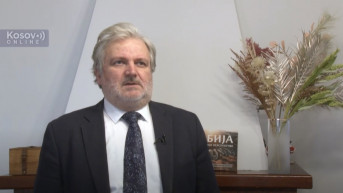
Writing for Kosovo Online: Dragan Bisenic, journalist
Last week, Belgrade was the destination of intense diplomatic activities. First, David O'Sullivan, the European special representative for the implementation of sanctions against Russia, was in Belgrade, followed by USAID administrator Samantha Power, and finally, the European representative for dialogue between Pristina and Belgrade, Miroslav Lajcak, visited Pristina and Belgrade.
Although not all of them had the same program, it seems that their task was identical - further progress in the talks between Belgrade and Pristina. The Minister of Foreign Affairs of Serbia, Ivica Dacic, described these visits as part of "constant pressures".
"We are under constant pressure. When this happens for a long time, you get used to it. I don't know what the international representatives would do if they didn't put pressure on them. That's their job, they have to justify their salary. The special enforcement representative of EU sanctions, David O’Sullivan is coming today," Dacic commented.
German special envoy Manuel Sarrazin compared the state of the current dialogue to "Schrodinger's cat". It is a complex concept from quantum physics, but its basic message is that a cat can be both alive and dead, that is, that there can be things that conflict with common sense. European representative Miroslav Lajcak, after his visit to Pristina, announced his view of that paradox by stating that there could be escalation or normalization, but both could not exist at the same time. And this is exactly the state of the Brussels dialogue - "normalization" is being constructed in Brussels, while "escalation" is continuing on the ground. By this, it is meant various incidents that do not go in line with normalization, and especially the development of events in the north, after the elections that did not bring a useful outcome. Lajcak announced that he had been "concerned" by what he had heard in the north.
"What I heard worried me. We have to avoid any possibility of escalation and focus entirely on normalization," Lajcak said.
What could have worried Miroslav Lajcak? Certainly, these are various unilateral moves, among which is the decision to dissolve the Management Team and a series of moves that are contrary to previous agreements. The further creation of local authorities in four municipalities in the north with a majority Serb population, in which the Serbs did not participate, is another source of Lajcak's concern. He said that the EU had assessed the election process as "legal", but that it did not "provide answers to questions and certainly does not represent a political and long-term solution". The Serbian representatives specifically pointed to the actions of armed formations and the confiscation of land from Serbian peasants.
Samantha Power's stay in the region had a wider significance than the area of USAID activities. It had political, economic, and security aspects, which the guest clearly demonstrated. After all, she has behind her a career in the National Security Council, but also a deep knowledge of the region where, as a twenty-year-old journalist without a permanent arrangement, she was one of the key witnesses of the brutal Balkan conflict. Since then, her meteoric rise followed, primarily due to the affirmation and support of American military interventionism, up to the position of the American ambassador to the UN and, naturally, a candidate for the position of Secretary of State, to her dramatic fall and break with President Obama, due to her disagreement with Obama's withdrawal from military interventions in Syria. Biden's victory put her back into orbit, where it was speculated that she could occupy some of the key positions, from secretary of state, national security adviser, to director of the World Bank. She became the first person of no less important development agency USAID with an annual budget of 70 billion dollars. In the event of a new Biden victory, the options we have already mentioned will be more convincingly opened to her. She strongly supported the process of normalization in Belgrade and Pristina. In Belgrade, she said that progress in the process of normalizing relations between Serbia and Kosovo would improve the investment climate and help both economies, as well as the entire region.
"As normalization progresses, we will be in a position to help both sides release even more of their economic potential. At a basic level, normalization will become a symbol for global markets to overcome challenges. It will facilitate the private sector by creating a climate for investment, and the entire region to become strong ".
Samantha Power promised Kosovo that she would help it "take its place in the North Atlantic community" and pointed out that the US fully supported the normalization of relations between Kosovo and Serbia and that the establishment of the Community of Serb-majority Municipalities would help that process. "Establishing the CSM will help normalize relations and economic development," Power said.
The main reason for David O'Sullivan's visit to Belgrade is the European Union's intention to change and extend the application of sanctions against Russia to third countries that deliberately avoid European Union sanctions. It is known that Serbia has not introduced a single sanction against Moscow since the beginning of the conflict, and on May 9, the European Parliament again requested their introduction. It seems that, in this sense, a certain modus vivendi has been reached between the European demands for the introduction of sanctions and Serbia's reasons for not introducing them. After the conversation with O'Sullivan, Serbian President Aleksandar Vucic and Prime Minister Ana Brnabic announced that Serbia would not be a platform for circumventing sanctions. In this sense, Serbia was very careful when it came to its attitude towards persons on the list of EU and US sanctions and did not enable their activities in Serbia.
An additional concession is that Serbia, as it seems, will not spoil the atmosphere at the Council of Europe Summit, which starts tomorrow in Reykjavik.
It will not vote against the proposed resolution, which confirms and highlights the territorial integrity and sovereignty of Ukraine and Moldova, without taking into account the other European countries, as stated in Serbia's amendment. Serbia would, therefore, abstain from voting because it did not oppose the territorial integrity of Ukraine and Moldova, with a reduced level of representation, which did not necessarily have an important impact on the country's behavior at international gatherings. Essentially, regardless of his level in the hierarchy, the head of the delegation representing the country at an international meeting has the same working rights as the head of state. Therefore, he could speak freely and express his country's views.
It is interesting that a European meeting with leaders from another crisis region, the Caucasus, is planned for these days, but it will be held at a much higher level than the one that is usual for dialogue between Belgrade and Pristina. In addition to the presidents of Azerbaijan and Armenia, the president of the European Council, Charles Michel, will be there, and the president of France, Emmanuel Macron, and the German chancellor, Olaf Scholz, will join this dialogue on June 1 in Chisinau. It is clear that Armenia and Azerbaijan are not candidates for joining the EU, like the countries of the Western Balkans, but that they are much closer to Russia as the center of current interest of the European Union. For the same reason, it is announced that this trilateral format will continue in Brussels "as often as necessary in order to deal with ongoing developments on the ground and permanent items on the agenda of the Brussels meetings". It is clear that neither of these two countries has imposed sanctions on Russia and that the European Union does not even think of formulating something like that as a request.
Nevertheless, a huge gap between the importance of the issue being discussed between Belgrade and Pristina, and let's remind you, it is about the attitude towards respecting the integrity of the state territory in the European framework and the level at which the European Union is considering it, creates the impression that European officials would like to at least a noticeable and conspicuous way, without much fanfare, to remove this "pebble in the shoe".
In the Caucasus, that is, in Azerbaijan, this issue was resolved in a completely different way. Azerbaijan returned the territories occupied by Armenia by military force, and at the same time significantly reduced the territory under Armenian control in Nagorno-Karabakh. Diplomacy likes discretion, but greater respect and appreciation of the Brussels diplomatic process of Belgrade and Pristina cannot hinder it, but only help it.
0 comments