
Kosovo in the Council of Europe: A process with high stakes and lasting consequences
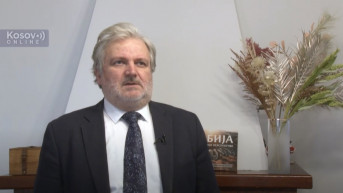
Writing for Kosovo online: Dragan Bisenic, journalist
The Council of Europe has wandered into unknown territory, which can easily become a jungle for it. This is not a question of human rights but of statehood. For many, Kosovo's potential membership in the CoE has absolutely nothing to do with the noble pursuit of human rights standards. Never in the history of the Council of Europe, of more than 70 years of existence, has the application of a disputed territory been considered, let alone that it has been approved for membership in the Council of Europe. In the case of Kosovo, there seems to be exactly that precedent. The Vatican, for example, never recognizes disputed states. Because of this, the Vatican did not recognize the Independent State of Croatia either, so the Vatican does not recognize today's Kosovo either.
There are at least three possible arguments against Kosovo's membership in the Council of Europe at the moment: 1) territorial integrity and the existence of Resolution 1244 (1999) of the UN Security Council, 2) prejudicing the ongoing negotiations, and 3) the risk of creating a precedent.
The candidacy, and then the possible admission of Kosovo, represents a threat to the territorial integrity of Serbia, a member state of the Council of Europe since 2003. This would be the first step in the effective state destruction of Serbia in the European framework, where the mechanism of minority protection turns into a mechanism of state destruction for the first time.
The accession of Kosovo would necessarily result in a definitive change of the map of Serbia, which would be considered a violation of the fundamental principles of international law. UN Security Council Resolution 1244 states the validity of the sovereignty and territorial integrity of the Federal Republic of Yugoslavia and other states in the region, as stated in the Helsinki Final Act, and as resolutions adopted by the Security Council acting in accordance with Chapter VII of the Charter, they are considered binding in accordance with Article 25 of the UN Charter, any violation of the territorial integrity of Serbia would represent a further violation of international law.
All those willing to ignore this argue that the Committee of Ministers should not be limited by Resolution 1244, which they say leaves the door open to all possibilities, including Kosovo's statehood. But it is clear that the procedure for admission to the Council of Europe is inextricably linked to Kosovo's status and has very little to do with the original purpose of the Council of Europe. Apart from this, they do not ask the question of what the UN Security Council does when it reviews the situation in Kosovo every 6 months. Most importantly, they violate the Statute of the Council of Europe, which clearly speaks of states as members of the Council of Europe. Kosovo, no matter how someone wants it, is not a country now.
Another normative argument is that this process prejudices and undermines the dialogue on the normalization of relations between Belgrade and Pristina. At the same time, it brings conflict to the Council of Europe and its bodies, and the Council of Europe itself has been told many times that it is not an organization that can resolve conflicts. The example of the conflict in Georgia, which has been on the weekly agenda of the Committee of Ministers since 2009 with little tangible effect, illustrates this.
The third argument I will mention is the risk of precedent. The Kosovo case, if successful, will certainly be a precedent, as it was in the use of NATO for the destruction of other countries by military force or a unilateral decision to declare independence. It would no longer be taboo for disputed territories to see a path to membership, no matter how remote that possibility is. The idea, however, is to confirm that Kosovo is a "sui generis" case, to demonstrate that Russia cannot use it as a precedent in its relations with Ukraine, Donbas, and Crimea.
The outcome of the vote in the Committee of Ministers, where the six countries that do not recognize Kosovo abstained, is a desperate attempt to avoid a major crisis in the Council of Europe, which would inevitably arise if all the member states that do not recognize Kosovo vote against, plus Hungary. It would be 33 countries that are in favor of Kosovo in the Council of Europe, and 13 against, which is a relationship that is extremely unfavorable for the further functioning of the Council of Europe and that would inevitably lead to very sharp discussions, arguments, disputes, which the political and legal apparatus of this organization, and especially its General Secretariat, would not be able to defend. This, by the way, is the minimum majority needed to accept the application, just two votes more than the necessary 31. Even now, with 7 states against it, the problem is not small. Hungary, Romania, Cyprus, Spain, Azerbaijan, Georgia, and Serbia represent the largest number of countries that have ever opposed the admission of a candidate country to the Council of Europe. It is clear that the abstention from voting by Bosnia and Herzegovina, Greece, Slovakia, Moldova, and Ukraine is an unprincipled position. All these countries have the problem of maintaining their own territorial integrity, some do not control part of their territory, and some have significant minorities in their population, and we should not even mention the decades-long dispute between Greece and Macedonia. It would be incredibly difficult to choose the rapporteurs, and if they were not among them, they would oppose the admission of Kosovo. In this way, abstaining states, which do not recognize Kosovo, can be ideal candidates who will offer "credibility" and "objectivity" in the admission of Kosovo to the Council of Europe and thus try to overcome all violations of the Statute of the Council of Europe and procedural deficiencies in this process. The role of abstention states is therefore not at all technical in nature. It is essential for minimizing the possibility of blocking Kosovo's membership in the CoE.
All these countries announce with this gesture that they are ready to recognize Kosovo, but each of them represents a case for itself.
Essentially, the real and biggest unpleasant surprise is Greece. All Greek officials, from the President of the State, through the Prime Minister to the Minister of Foreign Affairs, have promised that Greece will not change its position on Kosovo. Just one month before the vote, the Minister of Foreign Affairs, Nikos Dendias, was in Belgrade, and in December of last year, he even privately visited President Vucic's house. At the end of the March visit this year, he said, "Greece is a reliable interlocutor, a historical friend of Serbia, an interlocutor that has a role with a very limited but very important agenda - stability and security on the Balkan Peninsula."
It is interesting that in the background of the "case of Kosovo in the Council of Europe", great changes are taking place, even in those countries that are the bearers of the idea of Kosovo in the Council of Europe, such as Germany. This shows how reluctantly they engage in this risky operation. A German memorandum sent to the members of the Parliamentary Assembly of the Council of Europe (PACE) in April 2022 and disclosed by the collaborators of the European Stability Initiative, suggests that Kosovo cannot even formally apply for membership; that it should be invited only based on the consensus of all members; that such a consensus was unthinkable due to Serbian opposition; and that Kosovo should be better offered - in consultation ("Abstimmung") with Serbia - alternatives to membership.
One of the alternatives, presented in the April memorandum, was for Kosovo to be admitted as an associate member "as the Saarland".
This is an interesting comparison. Between 1950 and 1957, the Saarland was a French protectorate. Pro-German parties (such as the CDU) are banned from participating in elections. It was never a sovereign state. In 1957, Saarland was annexed to the Federal Republic of Germany as Saarland.
It was only when the Bundestag MP Knut Abraham asked whether Germany supported Kosovo's membership in the Council of Europe, sent on May 4, that the State Secretary in the Ministry of Foreign Affairs, Andreas Michaelis, clearly said that "The Federal Government supports the membership of the Republic of Kosovo in the Council of Europe."
Kosovo's request for membership in the Council of Europe is an undertaking with very high stakes, which presents significant risks and opportunities for all parties, including the Council of Europe itself. Whatever the outcome, it will have dramatic and lasting legal and political implications. The intensity of opposing arguments will be great. The likelihood of a prolonged and divisive political debate seems almost certain, and the law of unintended consequences is one that all parties must keep in mind. The possibility that the request finds itself in political or administrative limbo cannot be ruled out. It depends a lot on Serbia's attitude.
The accepted application of the Council of Europe for Serbia also has one very good side - it enables the reopening of the international discussion on the issue of Kosovo's independence, which will be raised in a completely new context, in the context of the breaking up of states in the Middle East, the role of the Islamic State in all of this, Ukraine, Taiwan, and other possible cases. This process of nominating and confirming the status of Kosovo in the Council of Europe can become very unpleasant for all its main protagonists.

0 comments