
The EU and the Berlin Process should dismiss hypocritical policies towards the Western Balkans
Writing for Kosovo Online: Zeljko Sain, Politika's special correspondent from Skopje
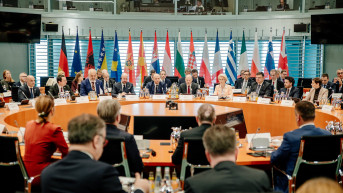
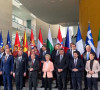
The Berlin Process Summit is being held today in Tirana, hosted by Albanian Prime Minister Edi Rama, with the aim of highlighting the perspective of the Western Balkan countries, which share a unique orientation towards EU accession. Newly formed states emerging from the breakup of the former Yugoslavia, as well as Albania, have been focused on achieving this strategic goal for over thirty years and through more than 72 initiatives. Chancellor Scholz represents the German initiative, while the European Union will be represented by Ursula von der Leyen, President of the European Commission, and Charles Michel, President of the European Council.
After the shaken security and political atmosphere facing the world due to conflicts in Ukraine and Israel, as well as armed conflicts in Kosovo and Metohija, it seems that the EU has become aware of the significance of gaining the trust of the Western Balkan countries and fulfilling promises. This is to prevent this region from facing the consequences of Western hypocrisy and changing its strategic orientation. The "Open Balkan" initiative sent a strong message that, through its pragmatic results, it managed to preserve peace in the region by strengthening economic relationships, whose concrete benefits have been felt by the citizens of the countries participating in this initiative.
Whether this is enough to change Germany's stance, which openly opposed this initiative, even though it originated from the Berlin Process, remains to be seen. It's not excluded that the essence of this country's opposition to the "Open Balkan" Initiative is the fact that the United States has generously supported this regional initiative, and the response was through Kosovo and Albin Kurti, precisely over the territory recognized as an independent state by both Germany and the United States. Let's also recall that both countries, the United States and Germany, along with seventeen other NATO members, violated all standards by using military force and disregarding the UN Charter on respecting territorial integrity and sovereignty during the bombing of Yugoslavia. It's important to note that in 1945, Germany, as decided by the victorious powers of the war, became demilitarized and committed, through the Basic Law of Germany, to conduct its security policy without an army. Nevertheless, preparations were made for Germany's NATO accession after the Paris Conference, introducing Article 87a into Germany's constitution, which foresaw the establishment of armed forces that went abroad for the first time to bomb the Federal Republic of Yugoslavia.
Even though the Summit is being held in Albania, the actual host is Scholz, who has full autonomy to dominate the Western Balkans through this initiative, which could potentially turn into a contemporary form of neo-colonialism. The question is whether the EU can channel this presence with the highest representatives of the community. Charles Michel tried to set a date for the accession of Western Balkan countries in 2030, but French President Macron and Ursula von der Leyen disagreed with his words, as he had spoken them without consultation. Of course, Macron has a very close relationship with Germany because it is a never-ending source of income for France, and Ursula von der Leyen is the protege of former Chancellor Angela Merkel. It is a fact that the Berlin Initiative, established as a regional project by the German Government under the patronage of then-German Chancellor Angela Merkel, with a budget of 30 billion euros, quickly stagnated, much like the Minsk Agreements, which were never implemented and were confirmed to have been designed to prepare Ukraine for war with Russia.
After undisclosed military and political results from the Ukrainian war, as a part of the global division of the world based on economic foundations, the Berlin Process was swiftly revived to expedite the integration path of Western Balkan countries. This is to prevent the Balkans from gaining preferential EU accession status, as proposed for Ukraine. The cost of this for Ukraine will likely remain a military and historical secret, serving the compromise of the conquered parties.
It is now the responsibility of the EU and the Berlin Process to dismiss hypocritical policies and adopt realistic proposals to resolve the Belgrade-Pristina relationship. In North Macedonia, they should start fulfilling their commitments, beginning with the Prespa Agreement, and now imposing a new constitutional change to introduce Bulgarians as a constituent element into the highest state act. The hypocrisy of European policy in North Macedonia has led to the destruction of the country's internal relations due to the support of distorted historical facts by Bulgarians, such as the premise that Bulgarians did not have a fascist role in Macedonia and the Balkans. Furthermore, the EU has also shown neglect for Bosnia and Herzegovina, where Christian Schmidt's legitimacy is in question. On all these issues, the United States, the EU, and Germany have different approaches, but they are all positioning themselves as the managers of the Balkans, excluding Greece and Turkey.
At the end of the Berlin Process in Tirana, a working session will discuss "Integration of the Region into a Single Market and Improving Convergence with the EU", where the heads of states and governments will participate, and the discussion will also cover the experience of the "Open Balkan" Initiative. In addition to the previous achievements, the signing of a regional agreement on mutual recognition of professional qualifications is expected.
Therefore, after the Berlin Process Summit in Tirana, it is expected that the European Union will sober up and realize that by continuing its hypocritical policy, which it has shown countless times towards the Western Balkan countries, it may soon be in dire straits. It is clear that the accession of Western Balkan countries to the EU is a mutual benefit and a key to preventing new armed conflicts in Europe.
0 comments