
How and why London celebrated "Kossovo Day" in 1916
Written for Kosovo Online by Srdjan Garcevic, founder of The Nutshell Times
One of the most lavish celebrations of the Serbian national day - Vidovdan (St Vitus day) - happened in 1916. Both the timing and the location were improbable, especially looking back from 2023.
Back then, the Kingdom of Serbia seemed defeated by Austo-Hungarian forces, who managed to force a torturous withdrawal of its army all the way to Corfu and proceeded to loot whatever they wanted from the country and exacted terrible retributions against anyone who opposed them. The location of the celebration was the capital of an Empire whose relations with Serbia were often strained due to its support of the Ottomans through the better part of the 19th century.
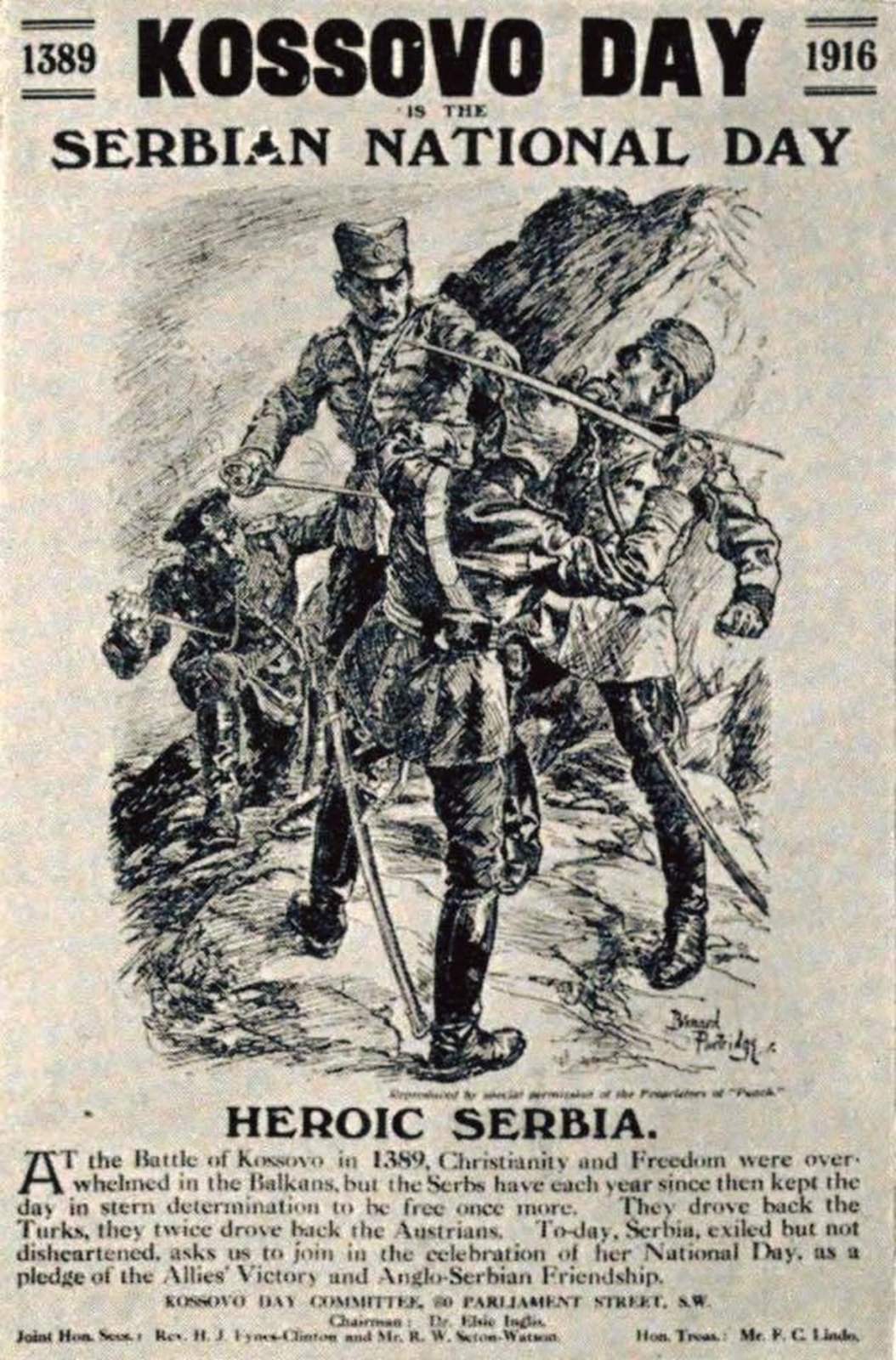
However, that 28th June, London was where the "Kossovo day" – as Vidovdan was rebranded for the British audience - was celebrated most spectacularly.
G.K. Chesterton, one of the foremost intellectuals of the era, penned a rousing essay for the Daily News called "The Thing Called a Nation," in which he extolled the 1389 Battle of Kosovo and the Serbian nation's persistence despite historical difficulties. On the same day, those who read the Daily News would hear the Oxford-educated Serbian Orthodox Vladika (Bishop) Nikolaj Velimirović address the crowd at St Paul's Cathedral, a historic first for a non-Anglican cleric. In his sermon, delivered due to an invitation from the Archbishop of Canterbury, he reminded Londoners of how Serbs sacrificed themselves for Europe and asked Europe to reciprocate by supporting Serbia's struggle against the "Central Powers" in that hour of need.
The celebration of "Kossovo Day" was, in many ways, a masterpiece of war propaganda.
Ahead of the Great War, and especially during it, the Serbs were depicted as valiant medieval knights and heroes akin to those who filled "Arts and Crafts" children's books read by British school-children of the era. One of the most creative Serbian diplomats of all time, Čedomilj Mijatović and his British wife, Elodie Lawton Mijatović, promoted Serbian folk tales to anglophone audiences and even created a beautiful tome of children's stories complete with stunning woodcuts made by British artists, which could transport a typical British public school pupil to feasts made by Prince Lazar and Princess Milica.
Another propagandistic coup happened in 1915 when the Kosovo battle and mythos were presented to London's elites through a stunning exhibition of works that Ivan Meštrović, a Croatian sculptor, made for the Serbian pavilion at the 1911 international art exhibition in Rome. The exhibition included the impressive torso of Banović Strahinja, which still stands next to Rodin's works in the V&A, as well as the model of the Vidovdan temple, an enormous structure which was supposed to be built on the spot on to celebrate Serbian (and general South Slavic) struggle for freedom.
The obsession with Serbia and the "Kosovo Day" spread from the UK to the US, where the Serbian flag was allegedly flown from the White House in 1918. It returned in WWII, when Hollywood, the primary propaganda vehicle of the time, made "Chetniks", a film about Serbian royalist guerrillas fighting the Axis.
It is impossible not to see the parallels with how the Priština government is depicted for the UK and the US audience.
While at the turn of the 20th century, the way to persuade Brits and Americans to support a war effort was by depicting an ally as knightly, virile and very Christian, the way to do it now is by focusing on democracy, multiculturalism and diversity. Both, of course, required a lot of embellishments.
For example, the way Serbs approach(ed) their Orthodox faith – through ritual and communal celebration rather than deep knowledge of the Bible and regular church attendance – had to be airbrushed to present them as pious knights. While presenting Priština as "the region's only democracy" and "multicultural state" requires a lot more work and lying - given that it is attacking, detaining and torturing Serbian civilians almost daily – it is not that dissimilar in intent. You need to get Londoners and New Yorkers to feel that they would feel at home with their Allies if you want them to give money and support.
However, cynicism and the difference in quantity and propaganda techniques aside, 1916 "Kossovo day" and 2023 fantasies of "democratic Kosovo" are also fundamentally different. What made Chesterton resonate with Prince Lazar's struggle at the Battle of Kosovo is the absurdity of it, not the benefit it brings. Looking rationally - as many BalkanExperts™ regularly urge Serbs to do - there is no point in celebrating the destruction of their own state and centuries-long enslavement of their own people. Cut your losses, make a deal, and live with it. Analogously, there would be no point for the British to send thousands upon thousands of their sons to the Somme, as they did just a few days after that "Kosovo day". However, without the Somme, Britain would not be what it is now.
As Chesterton keenly observed in his essay, there is something more to fighting than just attaining victory because we all know that we will eventually lose. That magnificent ability to find meaning and greatness in imminent tragedy is what also drew Meštrović to turn his back on the wealthy patrons of Vienna and craft his magnificent statues for the puny Kingdom of Serbia.
On the other hand, the empty talk of „democracy" and „multiculturalism", where there so obviously there is not any, does not resonate with anything inside us, apart from the childish wish to deceive and "fake it 'till you make it"- the central tenet of the modern, progressive world.
The belief that lies will eventually lead one to win and protect one from the ravages of reality, however, does not help one nearly as much as the hope that despite everything, one's suffering has a purpose. As Christopher Lasch, the great critic of the belief in "progress", once put it:
"The worst is always what the hopeful are prepared for. Their trust in life would not be worth much if it had not survived disappointments in the past, while the knowledge that the future holds further disappointments demonstrates the continuing need for hope. Believers in progress, on the other hand, though they like to think of themselves as the party of hope, actually have little need of hope since they have history on their side. But their lack of it incapacitates them for intelligent action. Improvidence, a blind faith that things will somehow work out for the best, furnishes a poor substitute for the disposition to see things through even when they don't."
This was true in 1389 Kosovo, in 1916 Somme and is valid every day for all of us trying to fight for what we think is right.

0 comments