
How long will the "take it or leave it" tactic be effective?
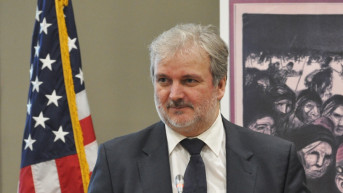
Writes for Kosovo Online: Dragan Bisenic, journalist
The long-announced Franco-German document on the normalization of relations between Serbia and Pristina was accepted on February 27 in Brussels, but it seems that fate did not grant it historical achievements, since it is very possible that it lasted only one day, just long enough for the high representative, Josep Borrell, to hold a press conference of routine ambitions and the European Union to put the agreement on its website.
When the curtains were closed, the question was asked what had Serbia and Pristina accepted in Brussels, what did that acceptance really mean and what were the consequences of acceptance?
As soon as the lights in the modest negotiation room were turned off, the negotiating parties returned to their positions that existed even before the acceptance of the agreement - Belgrade disputed the possibility of Kosovo becoming a member of the UN, and Albin Kurti that the Community of Serb-majority Municipalities would be formed.
At first, it was believed that the paper should be signed, but an explanation came from the European Union that the signing was not even planned, but that it was a matter of verbal acceptance of the document that will be implemented through supplementary annexes. This does not give the agreement the character of a legal act, but it is certainly a political act, which, if it produces consequences, becomes part of the legal system, and essentially has legal significance and legal force, so it cannot be exempted from the legal system and parliamentary debates. There, both participants have, as they understand their own positions in negotiations, their own limitations for the issues that are most important for negotiation.
Serbia is expected to accept Article 4, which leads Kosovo to the UN, which is impossible for the Serbian negotiator, the President of Serbia, Aleksandar Vucic because he is the guardian and guarantor of Serbia's territorial integrity, not its destroyer. The Kosovo Prime Minister, Albin Kurti, also finds the barrier to the creation of the CSM in the Kosovo Constitution and the decisions of the Constitutional Court. Therefore, both negotiators have their own limits, which, according to the exchange of their own positions, they cannot overcome. In addition, Serbia had a precondition without which it did not even want to enter into these negotiations – that the obligations from the Brussels Agreement of 2013 on the creation of the Community of Serb-majority Municipalities would be fulfilled.
The EU, apparently by design, tolerated Pristina's explanation of the constitutional conflict until it was time for the normalization of relations because several years ago there was an interpretation that Serbia would get the CSM on the condition that it accepted Kosovo into the UN, which is the construction very similar to what we have on the table now, that excuse, however, cannot satisfy Serbia, nor does it benefit the negotiations. If Kosovo can stand in the way of the Constitutional Court in front of the agreement that it has signed, then there should be no doubt that, if the agreement results at the end of this process - it will be subject to full legal and political consideration in Serbia.
This is about the fact that the CSM became part of the negotiation process on the Franco-German proposal and that it had accepted it again, and that the CSM has neither been created nor is there any guarantee that it will be created. With this state of affairs, the negotiations on the Franci-German paper should never have started, and it will not be a surprise if they do not continue. It is not only that the EU has not confirmed its credibility in 10 years, but that Serbia has no reason to pay once again for what was not delivered to it at all.
This development will not be unexpected. It is in the very nature of the "take it or leave it" negotiation procedure that the EU has chosen in its dialogue with the dialogue parties. It is possible to partially understand the European frustration with the procrastination and occasional unsuccessful meetings of the Serbian and Pristina delegations, but the chosen model is more a consequence of the urgency that the EU imposed on itself in the new circumstances, the most important of which is the practical and legal connection between the events in Ukraine in 2022 and Serbia in 1999, and 2008.
Believing that it is possible to correct the original deviations, the Ukrainian events became an opportunity to eliminate previous violations and abuses of the international system through Serbia's consent, which Russia now takes as a precedent and justification for its actions. But one would say that things are only getting worse, not better. The allegation of anti-Russian motivation opens the door wide for Russia to legitimize the same “take it or leave it” method with Ukraine since it has essentially already applied it, but it will come in handy as an explanation for why there is no concession for Ukraine.
There are several peculiarities of this tactic. It is already hostile towards the parties in the negotiations and it is clear that both parties will welcome it with repulsion. The “Take it or leave it” tactics are effectively applied when conditions are equal everywhere and neither side has a choice to change the conditions. For example, the price of water in Belgrade is the same everywhere, and whoever wants water can only accept it or not. In politics, it refers to attitudes that are supported by legitimacy, which in the case of Kosovo is the most glaring deficiency. Kosovo's independence is not supported by UN Security Council Resolution 1244, other documents and regulations, published policies, or common practices, and the European Union is stepping outside the mandate entrusted to it by the UN General Assembly Resolution.
Common diplomatic experience indicates that negotiating parties are more willing to accept the “take it or leave it” later in negotiations than earlier. Timing is important to reduce hostility. This was not the case in the discussions about this German proposal, where it was started from the beginning. And apparently, the sequel will not be different either.
In the continuation of the negotiations, it is planned to work on the implementation of the accepted document. The first meeting is scheduled for March 18 in Ohrid. Since there are no signs that negotiating teams are being created to develop and agree on one or more annexes, nor are there any signs that anyone knows what might be in them, it is assumed that Borrell and Lajcak want to continue with the same "take it or leave it" style which brought them their first result.
Finally, whoever uses 'take it or leave it' as a negotiating tactic must remember that it can lead to 'dead ends’. For now, both sides are trying to be cooperative and not be a "killjoy", but in this game, for sure, sooner or later someone will get up and leave the table. European and American mediators should take into account that the "take it or leave it" approach is the shortest path to the termination of negotiations and the step called "walk away" in diplomacy. When your interlocutor does not give you or your side any opportunity for concessions, then you can simply stand up and walk away. Whoever organizes the negotiations, if he really wanted or needed to reach an agreement, would have to know how to reopen the negotiations in the event of an 'impasse'. It would not be said that the EU had a "plan B" for this situation, although a longer period of at least five months of intense talks was ahead.
It seems as if the US is aware of the problems that may arise further and the slight impression is that they are already distancing themselves from what is to come next. Thus, the American ambassador in Pristina, Jeffrey Hovenier, stated that "it is difficult to say what exactly awaits us in their continuation", and that the US supported the negotiations, "but these are negotiations led by the EU, and it is up to the special representative Lajcak to determine the pace and scope those negotiations".
Ambassador Hill showed a bit more confidence when it came to American participation and enthusiasm for the creation of the CSM, although he also believed that he did not expect quick results. The long process was also announced by the American envoy Gabriel Escobar.
The rapporteur for Kosovo in the European Parliament, Viola von Cramon, seems to be looking at the advantages and disadvantages of the agreement reached. She estimated that the European proposal on the normalization of relations between Belgrade and Pristina could convince the EU countries that had not recognized Kosovo to do so. "Political pressure is good, but we also need what we call "ownership", so that at some point they themselves say that they want to sign this agreement," Von Cramon concluded. And the “take it or leave it” approach did not offer much prospect for this outcome.
0 comments