
If Kosovo follows the example of North Macedonia, then the way is to change the Constitution
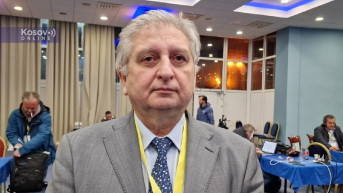
Writing for Kosovo Online: Zeljko Sain, Politika's special correspondent from Skopje
After a decade since the signing of the Brussels Agreement on the normalization of relations between Belgrade and Pristina, and the verbal acceptance of the Annex to the Brussels Agreement in Ohrid, on March 18, 2023, the summit in Brussels showed that it is necessary to first eliminate political mistakes, and only then to approach the solution of legal dilemmas and, finally, a step forward in the implementation of agreed solutions.
After the fall of the Berlin Wall and the end of the Cold War, the geographical map of the world changed politically and ideologically. Europe no longer exudes communist single-mindedness in countries that were socialist and leftist. Democracy remained in the monarchies and Western powers, expanding to the land of the former military alliance - the Warsaw Pact. Many countries became members of the North Atlantic Alliance, and some of them felt that they could act armed and create new states, regardless of the decision of the United Nations Security Council. The issue of the status of Kosovo also showed a divergence in the views of EU and UN members.
Despite the internal disagreement of the members, either in internal or in foreign policy, the EU is the patron of the Brussels agreement on the normalization of relations between Belgrade and Pristina. The countries that have not recognized Kosovo permanently emphasize that their support will always be directed to the solution created by Belgrade and Pristina, which is why Spain is determined not to recognize Kosovo even if Serbia recognizes its statehood. Of course, no institution of the Republic of Serbia can do that, no matter who is at its head. Nevertheless, despite Belgrade's clear position on not recognizing Kosovo's independence, the highest acts will have to be harmonized with the compromises in the political decisions of Belgrade and Pristina.
We learned such a lesson from the example of the neighboring brotherly state that separated from SFR Yugoslavia and became an independent state. To recall, the Republic of Macedonia separated from the SFR Yugoslavia and declared its independence on September 8, 1991, it was accepted by the UN, but under the name of the Former Yugoslav Republic of Macedonia (FYROM). However, for thirty years this newly formed country had a dispute with Greece because its southern neighbor believed that the Republic of Macedonia threatened its integrity and the country's security. A solution was offered - the Prespa Agreement.
We are witnessing the pressures on the Macedonian state and the compromises it had to make in order to achieve strategic goals, although some of them, and the most important ones, are still on a long stick. Let us remind you that, in order to join the North Atlantic Alliance and the European Union, this country changed the Constitution and the name of the country overnight and under very strange circumstances in the Assembly.
However, it did become the 30th member of NATO, but for admission to the EU new conditions are imposed on it again and again. The EU not only failed to fulfill the promise made to the Macedonian people but also set before them a new condition for admission to the European family - the re-change of the Constitution, at the request of its member Bulgaria, in order to include the Bulgarians as a constitutive element in the highest state act of the Republic of Macedonia. Based on experience, it is not certain that even this concession by North Macedonia will bring this country under the auspices of the EU.
North Macedonia recently hosted the "President of Kosovo" Vjosa Osmani with full state and military honors, who emphasized in the Assembly that North Macedonia would serve as an example for reaching an agreement with Belgrade and that Kurti would be very constructive in the negotiations with Vucic in Brussels. However, his constructiveness was reflected in the non-acceptance of the EU proposal on the formation of the CSM. Kurti explained this position by the fact that the Constitutional Court did not allow the formation of the CSM due to the Constitution.
It is obvious that the President of the quasi-state of Kosovo and its prime minister are not aligned in their statements, since he does not rely on the example of North Macedonia. If he were to follow its example, as Osmani announced, he would have in mind the political legislative path to change the Constitution and its harmonization with the Constitution of the Republic of Serbia in the article where Belgrade and Pristina would take care of the Serbs. Let us emphasize that it is necessary to add to the highest state act in order to remove obstacles to the formation of the CSM, which was verbally but bindingly agreed upon in Ohrid because it is a bridge to the normalization of relations between Belgrade and Pristina.
Until this political solution, which was proposed by EU leaders, is fulfilled and Pristina does not institutionally verify the formation and functioning of the CSM in its acts, the normalization of relations between Belgrade and Pristina will remain a long shot, and the people will face the announced sanctions.

0 comments