
What are the effects of Vjosa Osmani's visit to North Macedonia?
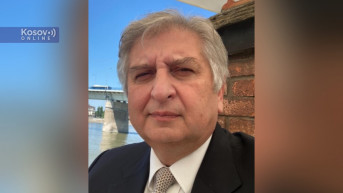
Writing for Kosovo Online: Zeljko Sain, Politika's special correspondent from Skopje
Vjosa Osmani, for the majority of UN members the president of the unrecognized state of Kosovo, and to a smaller part of the UN members the president of Kosovo, was on a two-day visit to North Macedonia, where the host Stevo Pendarovski, the president of this country, welcomed her with the highest state and military honors. In the Macedonian capital, Osmani spoke with Prime Minister, Dimitar Kovacevski, his deputy, Artan Grubi, Speaker of the Sobranie Talat Xhaferi, President of the DUI party, Ali Ahmeti, President of VMRO-DPMNE Hristijan Mickoski, as well as the leader of the Alliance for Albanians, Arben Taravari. The talks were aimed at improving bilateral relations between the two countries.
North Macedonia recognized Kosovo's independence, and a few days ago it voted for Kosovo's admission to the Council of Europe. Deputy Prime Minister Grubi emphasized on his Twitter that he would support Osmani on the path of mutual recognition with Serbia.
Serbia and North Macedonia have traditionally strong good neighborly relations. This move by its neighbor certainly did not make Serbia happy. Of course, from that move arises the question of whether North Macedonia was forced to take this step. Namely, we are witnessing its efforts to become a part of the European Union, but the achievement of that goal is constantly eluding it and it is repeatedly faced with new conditions that, as it is promised for the umpteenth time, will ensure its passage towards European integration. After the signing of the Prespa Agreement, North Macedonia became the thirtieth member of the North Atlantic Alliance, but in order to be completely sure of preserving its statehood, it is necessary to gain membership in the EU.
This country also adheres firmly to the course of the "Open Balkan", a regional initiative formed on economic principles that strengthens its members, currently Serbia, North Macedonia, and Albania, on the way to Europe. The difference between the Berlin process and the "Open Balkan" initiative is precisely that in the former the countries of the Western Balkans have a tutor, while in the "Open Balkan", these countries build their own perspective, without outsiders.
But political compromise is very important to North Macedonia and its citizens. Although it changed the Constitution and the name of the state, it is again being asked to change the Constitution and introduce the Bulgarians as a constitutive element in the highest Macedonian state act. Certainly, the Albanians also used this opportunity to demand their "rights". The public is divided, as are the political parties. Of course, no one readily accepts the move that is being asked of it, but they are aware that it is the only way to raise a new obstacle on the European integration path. This is how we can observe this support for the president of the quasi-state of Kosovo.
Vjosa Osmani also visited Tetovo, the second largest city by the number of Albanians in North Macedonia, where she was greeted by welcoming billboards in the Albanian language. Because of this kind of welcome to Mrs. Osmani, the following question was asked on the "Nova Makedonija" portal: "Whose president is being welcomed by the mayor of Tetovo?"
To tell the truth, the colleagues from "Nova Makedonija" have the right, because the question comes to the surface of whose or which country the mayor of Tetovo welcomes the president - the country to which the Albanians also belong, for example, Albania, because the official language there is only Albanian, or some future countries where the official language will be only Albanian. These are insinuations, since the welcome, understandable only for Albanian citizens, was written on the order of Bilal Kasami, the mayor of the town under Sar - Tetovo.
By the way, the Constitution of North Macedonia states that the official language of the state is Macedonian, and Albanian in areas where more than twenty percent of the Albanian population lives. Albanians from Macedonia won this with the Ohrid framework agreement, which was signed with the former government in Tito's villa in Ohrid, where both Vucic and Kurti orally accepted the Annex on the implementation of the Brussels Agreement for the normalization of relations between Belgrade and Pristina on March 18.
North Macedonia should not forget the wholehearted help of Serbia and its president Aleksandar Vucic during the crisis caused by covid-19, and due to the economic and energy crisis. As is known, the help from Serbia arrived at a time when no other neighbor, not even the EU, sent help to the Macedonians, regardless of nationality.
The President of North Macedonia, Stevo Pendarovski, assessed that the visit of the President of Kosovo, Vjosa Osmani, was a confirmation of the joint effort to improve overall bilateral relations and cooperation. Deputy Prime Minister, Artan Grubi, as he wrote on his Twitter account, supported Osmani on the path of mutual recognition of Serbia and Kosovo. Isn't Macedonian "support" for Serbia comparable to Bulgaria's "good neighborly" behavior towards North Macedonia?
Osmani left North Macedonia for Pristina with the key to the city of Tetovo. She rounded off her visit to North Macedonia by not missing the slightest opportunity to criticize Serbia and its state leadership, which, as she emphasized, was obstructing the Brussels agreement, unlike Kurti, who, as she announced, would be very constructive on May 2 in Brussels.
0 comments