
A new jump of the Albanian "cougar"
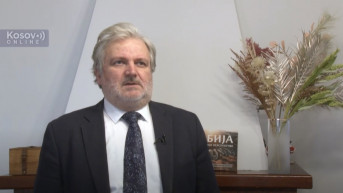
Writing for Kosovo Online: Dragan Bisenic, journalist
Ahead of the start of the vote-counting process in the recent local elections in Albania, the Albanian Prime Minister and leader of the ruling Socialist Party, Edi Rama, released his pictorial forecast of the election results. In a Facebook post, Rama predicted that his Socialist Party would win in more than 50 municipalities, while the opposition would win in between 0 and 11 municipalities. What could be particularly noticed in Rama's post, the opposition is represented by a turtle, the result is written in blue pencil, and the result of his party is written in red, while it is symbolized by a black cougar.
The result, however, was even better than the one predicted by Rama, because his party achieved a truly huge victory in as many as 57 cities, while the opposition won only in four. A total of 3,650,550 eligible voters could vote in the local elections at 5,211 polling stations. Forty-eight political parties with 23,788 candidates participated in the local elections. Out of the total number, 144 candidates aspire to be presidents of municipalities, among which 15 are women. The elections were monitored by 324 international OSCE/ODIHR observers.
Officially, the election campaign started in mid-April 2023, but in fact, it started a long time ago, and political parties have already been conducting promotional activities for their candidates in various cities for months. In 44 cities there were two candidates each; in 14, 3 candidates each; and only in one city there were 4 candidates.
Like any capital, Tirana plays a particularly important role. Tirana has a population of 863,694 and the average age is 36.6 years. Tirana has an educated population, and in the district of Tirana, 66.3 percent of the total numbers of employees were in the service sector, 26.3 percent in the manufacturing sector, and only 7.3 percent in agriculture. The capital city accounts for more than 50 percent of Albania's GDP. That is why there were as many as 6 candidates in Tirana. For the third time, the socialist candidate, Erion Veliaj, who began his term as mayor in 2015, won.
What is worrying is the very low voter turnout of 38 percent, but this is more than the previous elections in 2019, where 22 percent of voters voted and the opposition boycotted them. The current result, in truth, is similar to the outcome when the opposition boycotted. Before these elections, by judicial scams, after the split in the Democratic Party, no party was given the right to inherit its name, so the opposition, whose main pillars were two veterans of Albanian politics and former presidents, Sali Berisha and Ilir Meta, participated under the slogan " Together we win". The Democratic Party, as a party of the Euro-Atlantic compass, for the first time in its history, is developing a national election campaign without Sali Berisha at the center. In what they call the "Albanian plural right", they oppose their founder and historical leader, regardless of how badly they fared in these elections, where the party was led by Enkelejd Alibeaj and where in many cities they did not even have their own candidates, let alone the chance of them winning.
During the campaign, Rama insisted that citizens should not vote for the opposition coalition because its main leader, former Prime Minister, and former President Berisha, was declared "persona non grata" by the US due to his alleged involvement in significant corruption. For the same, of course, the opposition accused Rama, also attributing to him the alleged connection with the drug cartels in the country.
The results of these elections go beyond the character and significance of local elections, as they can be considered a kind of test for the upcoming parliamentary elections in two years. According to their outcome, the opposition did not manage to make any more convincing progress, but one gets the impression that it worsened its chances of doing something significant in those elections. If he wins, it will be Edi Rama's fourth term at the head of the Albanian government, and that puts him among the European and Balkan leaders with the longest tenure as Prime Minister. During that time, he himself, and then the European officials, highlighted as his special achievement the establishment and nurturing of good relations with his neighbors, which is unprecedented in Albanian history. Edi Rama included Albania in the "Open Balkan" initiative, which is a regional platform whose goal is to encourage trade and economic cooperation in the region but also to raise the level of political relations, in which, so far, he has undeniably succeeded.
Albania received the status of a candidate for EU membership in September 2014, and negotiations on joining the EU began at the end of 2022. Everyone points out that Albania's progress is impressive. Foreign diplomats like to use the phrase "Albania is on the right path, but they still have a long way to go." The list of issues that Albania needs to address includes judicial reform, the fight against crime and corruption, the lack of independent media, the depoliticization of institutions, increasing efficiency, as well as establishing a more dynamic dialogue between the government and the opposition with the goal of making reforms more comprehensive and faster. Albania, however, is burdened by a difficult historical legacy and a toxic political life, as well as dissatisfaction with the fact that Albania is still at the back of European development, despite its membership in NATO and its loyal alliance with the US and the EU.
A museum called "BunkArt" has been opened in Tirana, which is short for "Bunker Art", for which Enver Hoxha’s Albania was known. Its aim is to present the history of his dictatorship in an underground space of 20 rooms. The writer and former journalist, Fatos Lubonja, believes that the museum should be opened in places where there were "real places of suffering", that is, where prisons really were. The London "Economist" states that the past "poisons today's politics". Most of those who suffered or were persecuted under Hoxha's regime identify with the main opposition Democratic Party of former president Sali Berisha. Writing about Rama, "The Economist" draws attention to the lack of civilized behavior in the politics of Albania. All sides accuse each other of being gangsters, even murderers, "which in some cases is true," notes a prominent London weekly. The relationship between politics and the media is particularly problematic. Rama explains that all this comes from the era of Enver Hoxha when the slightest disagreement meant a ban, imprisonment, or shooting. If he succeeds in changing that, Rama estimates that it will be "the greatest legacy". But perhaps another generation is needed for that, concludes "Economist".
0 comments