
The last chance of lost patience
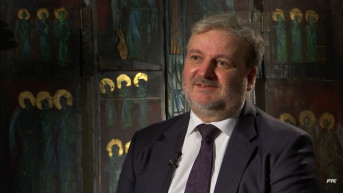
Writing for Kosovo Online: Dragan Bisenic, journalist
Josep Borrell's call for Serbian President Aleksandar Vucic and Kosovo Prime Minister Albin Kurti to meet next week for an "urgent meeting" to calm the situation in the north of Kosovo comes in completely new circumstances when incidents are multiplying daily, so the European representative himself called it a meeting for "crisis management". Borrell and Kurti entered into a public controversy in the letters that they sent to each other regarding the way out of the current crisis. The office of the High Representative also assessed that "meaningful steps" towards "de-escalation" were missing on the ground.
No one seems to be in the mood for this gathering. Kurti procrastinated with his answer, while the President of Serbia, at the press conference, where he listed all the incidents, arrests, and mistreatment of Kosovo Serbs, assessed that it was pointless to talk to Albin Kurti and that he would not talk to him until he released the Serbs and until the mayors and Police Forces withdrew, but he left open the possibility of participating in the meeting called by Borrell.
The ongoing crisis in Kosovo is already in its fourth week, and there are no indications so far that it will be resolved favorably. Let's remember that in its three-point plan, the European Union demanded that mayors withdraw from municipal buildings, that the Police leave the north of Kosovo, and that new elections be organized as soon as possible. Immediately after the stay of the American and European envoys in Pristina, it seemed that primarily under strong American pressure, the fire would be extinguished quickly. But that moment was missed when Washington abandoned its original 48-hour deadline for the Kosovo Prime Minister to comment on his proposals.
Kurti immediately seized the opportunity to regain the initiative and to extricate himself from the inferior position in which he had been placed. It does not necessarily mean that he believes that the number five brings him luck, but this time, as well as several times before, he proposed to the ambassadors of the "five" five principles that should end the crisis in the north of Kosovo, as well as that he sent the proposal to the High Representative of the European Union, Josep Borell.
The five-point plan, as Kurti said, should begin with the rule of law in the north. Admitting that "turnout was low and legitimacy far from perfect," he said he was "ready for de-escalation in the north" if "the rule of law is established" in the north. If it came to that, then he would make a "generous offer that the four mayors" in the north would not have to finish their mandates and that new elections would be held.
"I will not hand over the democratic republic to fascist police, violent extremists, and criminal gangs," Kurti is determined. The second point is the "immediate withdrawal of violent groups and the stopping of criminal activities", the third is that according to the proposal of the Government of Kosovo, the Kosovo Police, KFOR or EULEX conduct joint security assessments every 15 days. The fourth point is the calling of early elections, while the last point is a "high-level meeting", that is, a meeting with Vucic.
The High EU Representative responded to Kurti's proposals the same evening with numerous reservations. With gratitude for the letter sent, Borrell told Albin Kurti, also in a letter, that through the presented plan he noticed that the Prime Minister of Kosovo was not dealing with "some key elements that caused the current crisis and that must be resolved in order to restore peace in the north of Kosovo". Then, as he emphasized, he repeated to him the elements for de-escalation, which, he once again emphasized, had been put in place by the 27 EU member states and the US. Borrell promised that only after that he would support what Kurti was asking for in point 3, which was "a more detailed discussion about security arrangements with KFOR/EULEX in the four municipalities".
He told Kurti that he was ready to convene a high-level meeting, but on the condition that he took the necessary steps to first calm the situation and pave the way for new local elections.
Having consolidated his position with this initiative, Kurti judged that the moment was also to gain an advantage, so he started the attack through his advisors. One of them stated that the ambassadors of foreign countries in Pristina were "insolent" and "talk incoherently", as well as that they followed the policy of the EU Envoy for dialogue, Miroslav Lajcak, which "gives the north of Kosovo to Serbia", the statements of the German ambassador, Jorn Rohde, were assessed as being so "impertinent" that they considered Albanians to be "fools".
With these few moves, Kurti provided himself with enough room for maneuvering, so he has time to participate in the Prespa forum, express his opinion on the issue of archival material and receive the Saudi minister. At the same time, rallies in support of Kosovo and condemnation of Serbia are being held in Vienna, Tirana, and other European cities. However, one should not think that such intense activity has moved international representatives.
Kurti rejected Borrell's suggestions that a new dialogue meeting could not be organized before Kosovo took steps to de-escalate the situation and reiterated that the presence of the Kosovo Police in the north would be reduced only when “the criminal groups leave” that part, that Kosovo was a "democratic republic", that police operations were not a matter of "any European official" and that he would not make "any compromises at the expense of constitutionality and legality". The Prime Minister of Kosovo once again criticized Miroslav Lajcak for his way of working and seeking the "arithmetic mean" of the texts and drafts of the CSM.
The cabinet of the European Representative for Foreign and Security Policy, Josep Borrell, has prepared a package of "consequences" aimed at the Government of Kosovo and Prime Minister Albin Kurti for refusing to calm the situation in the north, while at the same time planning a new meeting. The measures are mostly of a protocol and representative nature and refer to participation in meetings and public events, but they can grow to the suspension of funds for projects from the Investment Fund for the Western Balkans. The High Representative assessed that EU-Kosovo relations had reached their lowest level and stated that these measures would be ended only when Prime Minister Albin Kurti took the "credible" steps required of him.
It can be assumed with certainty that the meeting called by Borrell will take place, but it is not clear what it will lead to. The previous meetings, it turned out, did not prevent the constant eruption of crises, hence the dangerous endurance of international officials for the permanent resolution of daily and continuous crises that break the atmosphere of any possible agreed solution. Kurti is doing everything in order to convince the European and American representatives that a new agreement on the CSM is needed, that is, an agreement "on principles" that would cancel the Brussels agreement previously signed in 2013. It would be said that this time it would not be possible to discuss it, but only about three points of the European-American proposal to calm the situation.
From the point of view of the EU and the US, the best outcome of the talks would be to return everything to the previous state and fulfill their demands as soon as possible. Within that framework, the crisis with the arrested Kosovo policemen would be resolved relatively quickly and favorably, but not quite unconditionally. It can be expected that the Serbian side will demand the release of the Serbs who have been imprisoned in the meantime.
If an urgent agreement is not reached, it will seem that patience will wear out on all sides and that everything is ready to resort to more radical measures in which the main role will be assigned to NATO. Hence the increasingly frequent reminders from NATO of the role played by KFOR and NATO based on the almost forgotten Resolution 1244 for security in Kosovo.
0 comments