
Only dialogue opens the door to peace
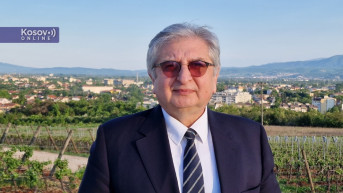
Writing for Kosovo online: Zeljko Sain, Politika's special correspondent from Skopje
When, five years ago, I knocked on the door of the Vatican and asked for its sovereign to speak for "Politika", I did not believe that I would get a positive answer. The interview was completed and it is the first interview that the Holy Father gave to a media outlet in the Balkans. H. E. Nuncio Luciano Suriani, who was in Belgrade at the time, informed me about the realization of the interview with the following words, "To the one who knocks, the door will be opened." The Vatican opened the door to "Politika", and "Politika" with the words of Pope Francis and Vatican Secretary of State Pietro Parolin, which echoed in the world through our paper.
Today, four years later, I cannot believe how true the words of Vatican Secretary of State Pietro Parolin, which he shared with the readers of Politika, have come true. On May 5, 2019, in an interview for Politika, Pietro Parolin, the Vatican's second man, stated the following, "I would say that after the Cold War, we are still far from achieving a new, positive, and sustainable international order." If it is true that history has always known hostile opposing positions and conflicts, the new scenarios that have opened before our eyes in recent years are confusing. Starting in 2001, the overall international situation worsened. The scandal of the existence of hunger in the world, the violation of human dignity, the systematic destruction of the civilian population, the new mechanisms by which the world powers exercise their dominance, the disruption of the international economy, the return of increasingly brutal terrorism by fanatics who refer to Islam, the exploitation of the work of the many for the sake of the well-being of the few, the drama of migrants who massively leave their own country because of war or extreme poverty, who are denied a future and hope - these are facts that cannot leave us uninterested. I will use an expression that Pope Francis often uses - it is a 'third world war in parts'."
Isn't it almost a prophetic quote? Today we are witnessing the war situation in Ukraine. On one side we have thirty NATO member countries along with Ukraine, and on the other side, we have the Russian Federation. Isn't the third world war in front of our eyes, but also at the door?
Pontifical diplomacy is considered the oldest in the world. A significant contribution to its development was made by Emperor Constantine, born in Nis, the founder of Constantinople - Istanbul. With the Edict of Milan (313) and, after it, the Edict of Thessalonica (380), which was proclaimed by Emperor Theodosius the Great, Christianity became the official religion of the Roman Empire. The Church acquired an important role and the Pope began to actively participate in international relations by sending the so-called apocrisiaries to the rulers of that era. The quality of Vatican diplomacy is reflected in the patient observation of things and events and undertaking solutions based on centuries of experience.
The Vatican and Serbia have a centuries-old tradition of diplomatic relations, on the occasion of the centenary of which all the interviews given to "Politika" from the Vatican were published in a special edition entitled "Centenary of the Representation of the Holy See in Belgrade". In this centuries-old diplomatic cooperation, the Vatican has never recognized either the Independent State of Croatia or Kosovo. Nuncio Suriani told our newspaper, "Honestly, it does not seem to me that Serbia and the Holy See found themselves on opposite sides, even though diplomatic relations were broken during the Socialist Federal Republic of Yugoslavia, from December 1952 to June 1966", emphasizing that from the very beginning of the Kosovo problem, the Holy See had tried to encourage and help the involved parties, so that through an open, honest and constructive dialogue they could reach a just solution that would benefit everyone. However, there is no tangible progress in the implementation of the Brussels agreement regarding the normalization of relations between Belgrade and Pristina, and the door behind which there is a peaceful compromise has not been found yet.
Pope Francis, on November 1, 2020, when the century of representation of the Holy See in Belgrade was marked, in an interview for "Politika" hinted at the only effective tool for solving social, political, economic, cultural, and religious conflicts – dialogue, "Conflicts are not solved by forgetting, ignorance or erasing everything and starting from the beginning, but by dialogue, which implies the recognition of the other and the joyful acceptance that we are called to broaden our view in order to recognize the good from which we will all benefit. No one matures or reaches their fullness by closing in on themselves and their beliefs. It is important to remember that healthy openness never compromises identity.”
And where are we today? Where is the most powerful weapon of diplomacy? Why dialogue is locked somewhere while gunfire and hatred consume everything in front of it? Which door should we knock on for peace to open for us?
Accidentally or intentionally, the Vatican and the Pope decided that Belgrade would be the center from which the world would be warned about the suffering and from where a solution would be offered. The Belgrade "Politika", which lives from Brussels to Tokyo and reliably and objectively informs its readers about events not only in the country but also in the region and the world, always strives to contribute to peace and will never give up on that direction. We will not stop looking for the door behind which there is dialogue and peace.
0 comments