
Two decades since the Thessaloniki Declaration, a time of broken promises
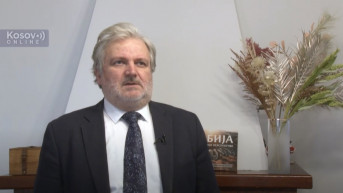
Dragan Bisenic, a journalist, writes for Kosovo Online
These weeks, in various places, two decades of the "Thessaloniki Process", the first comprehensive European strategy towards the Balkans formulated by Greece at the beginning of its presidency of the European Union in 2003, will be marked. Greek Prime Minister Kyriakos Mitsotakis is also gathering the Balkan leaders today and tomorrow on this occasion. It will certainly be an opportunity to summarize the European path of the Balkan countries towards the European Union, but it is already clear that in two decades we have not moved far, and that the region is in a far more complicated position than it has ever been, perhaps even since the time when the "Thessaloniki initiative" was emerging.
There may not be many reasons to celebrate the jubilee, but one should not be a complete pessimist and say that these two decades from a European perspective were wasted time, although that would not be completely wrong, especially if those who were the authors and direct promoters of that concept say that today. There is still some gain because it is better to have the Thessaloniki initiative than if it didn't exist at all.
Thus, on October 11, 2022, the Parliamentary Assembly of the Council of Europe (PACE) adopted a resolution calling on the EU to give new impetus to the process of enlargement to the Western Balkans, based on the report of the Greek member of the PACE and the former Prime Minister of Greece and Minister of Foreign Affairs of Greece, George Papandreou.
The resolution seeks to find an answer to the slow progress in the enlargement process since the EU-Western Balkans summit in Thessaloniki in 2003 when the EU pledged to work on enlargement to include the countries of the Western Balkans. Since then, Croatia has joined the EU, but other Western Balkan countries (Albania, Bosnia and Herzegovina, Kosovo, Montenegro, North Macedonia, and Serbia) remain in various stages of the accession process.
On the whole, such a long period without results could not be evaluated otherwise than as a failure or, as the document says, "a failure to adequately reward progress" which "reduced the political momentum and public enthusiasm" in these countries for joining the EU.
The resolution states that it is important not to lose focus on the Western Balkans, even if in the meantime the need to support the European aspirations of other countries, such as Ukraine, has arisen. At the same time, the countries of the Western Balkans were called upon to address issues including the polarized political climate and issues of the rule of law and governance, and to refrain from inflammatory discourse.
Then the President of the European Commission, Romano Prodi, and the Greek Minister of Foreign Affairs, George Papandreou, launched the first comprehensive initiative for the accession of the Balkans to the European Union. Prodi and Papandreou belonged to the milieu of European left-wing politicians who intimately did not like what NATO was doing, but they did not have the opportunity to do much about it, even though they held high positions in their countries and at the time of the bombing of the then FRY in 1999, Prodi was the President of the Italian Government, while Papandreou only two months earlier took office as Minister of Foreign Affairs.
I saw both of them relatively often during those years and published several interviews with both of them in our media in which they showed some kind of guilty conscience. German Chancellor Gerhard Schroder should be added as the third European socialist in power at the time, who was behind these ideas, but due to Germany's prominent role during the bombing in 1999, he could not appear among the public bearers of Balkan initiatives.
In addition, since the Dayton Agreement, the approach has been adopted that Greece and Italy appear as the immediate bearers of the European and US plans towards the Balkans.
Just three months earlier, the Serbian Prime Minister Zoran Djindjic was killed, which for the listed European politicians was an act whose causes they saw in the unclear status of Serbia's European perspective and a shocking act because of which they wanted to show that the European Union is the solution to all the internal contradictions of the Balkan societies.
Prodi is the first European politician who introduced into European circles the idea of the "incompleteness" of the European Union without the Balkans, while Greece was in the broad momentum of its own rise and self-confidence, which was based on the successful bid to hold the Olympic Games in Athens in 2004, which was formulated and led exactly by Papandreou as a Minister in the Government of his father in 1996, Andreas Papandreou.
Prodi's firm belief was that "without the Balkans, the European Union will not be complete", emphasizing that the European Commission, which he chaired in recent years, strongly supported the countries of the Western Balkans in their approach to Europe.
Of course, much remained to be done, but we should not forget where we had started. The EU was now the first neighbor of Serbia and Montenegro. For Serbia and Montenegro, Prodi spoke - the doors of Europe were open. It was up to you to do what it took to get in that door. What we needed was a strong pro-European consensus of all democratic political leaders to take key issues into their own hands. This referred to political and economic reforms, but also to compliance with international obligations, including cooperation with The Hague, which was a field in which, unfortunately, too little had been done so far, Prodi believed.
Connecting several motives, from its self-affirmation on the international level to the desire to be the leading country of the region, Greece then created a comprehensive regional strategy, which was then presented as the "Total Balkan Approach", that is, a regional approach to democracy, security, and prosperity. Its goal was to bring the sources of conflict under control and to create preconditions for political and financial development, with the ultimate goal being regional integration into European institutions.
In describing that strategy, Papandreou emphasized that it was based on the principles of respect for sovereignty and territorial integrity, respect for existing borders, and deterrence from separatist tendencies and divisive ideologies, while at the same time actively promoting the establishment of democratic procedures, as well as the protection of human and minority rights.
Back then, in 2003, the idea of recognizing the independence of Kosovo and changing the borders in the Balkans was not even close. It was even a kind of heresy, which European politicians refused to even talk about.
Speaking about Kosovo, Prodi, for example, strongly insisted on its multi-ethnicity, arguing that European action was necessary for further progress toward a safe, democratic, multi-ethnic, and prosperous Kosovo and urged that the Government of Kosovo should take into account the interests of all ethnic communities, because "the community of the Kosovo Serbs is an integral part of multi-ethnic Kosovo".
Then the dominant discussed concept was "standards before status". This meant that all European standards related to the protection of other ethnic communities, primarily the Serbs, must first be met in Kosovo so that only after that the form in which Kosovo would exist, could be discussed.
In the Thessaloniki Declaration, European leaders adopted that peaceful conflict resolution and regional cooperation are principles of the greatest importance, and "fragmentation and division along ethnic lines should be incompatible with the European perspective, which should act as a catalyst for solving problems in the region and promotes regional cooperation".
But the creators of this document did not stick to this either. How important it was can be seen from the fact that it has been discussed for the last 10 years without any result. It is, of course, about the part of the Brussels Agreements from 2013 that refers to the Community of Serb-majority Municipalities and other issues in which it is necessary to achieve European standards in order to talk about the European or Euro-Atlantic perspectives of Kosovo. Then, however, that policy was easily abandoned, which was a sign that the USA was moving in the direction of unilateral recognition of Kosovo's independence. Today, when the issue of Donbas and Crimea is raised in an armed way, it is clear to the majority of people how wrong the policy towards Kosovo was at that time.
The same indecision that has existed for two decades in the European Union regarding the enlargement of the Balkans seems to be codified as an official European strategy towards the region. This means that major progress and developments will be rare or non-existent, stifled or left unrewarded by the EU. As the years passed, this spiral of inertia gripped the accession process. From democratic practice to conflict resolution to economic progress and transparency, much is still missing. And economic stagnation led to the migration of the youngest and most talented in the region. This cycle of inertia has gradually turned into a worrying pattern of finger-pointing. The EU member states often shift the responsibility to the candidate countries for not reforming quickly and not being able to resolve long-standing conflicts, while those in the Western Balkans point to the lack of genuine will and mood of the member states for further enlargement, which has undermined the political will and genuine efforts for change in candidate countries.
It is necessary to emphasize the true merits of Prodi and Papandreou. We can believe that with them the fate of the Balkans would be different and probably already in the European Union. But, further, two decades since the Thessaloniki Declaration, it can be an occasion to take inventory of missed opportunities and the time of broken promises.
0 comments