
Two pictures of the Albanian world - Edi Rama and Albin Kurti (7): The coming clash of the romantic revolutionary and the innovative rebel
Writing for Kosovo Online: Dragan Bisenic, journalist
Like everyone else from the "Tirana Group", Enis Sulstarova is strongly against the Community of Serb-majority Municipalities. He, therefore, tells the citizens of Kosovo that "Croatia abolished the Serbian community with the war", and that, on that basis, Kosovo should not establish the Community of Serb-majority Municipalities in peace.
"As a reminder, Croatia abolished the Community of Municipalities with a Serbian majority during the war. Therefore, it should not be done now in Kosovo in peace," Sulstarova stated in a written statement.
This, as well as other identical opinions of "Self-Determination" officials who are against the formation of the Community of Serb-majority Municipalities, were "charged" by the joint call of the adviser in the State Department, Derek Chollet, and the American Special Envoy for the Western Balkans, Gabriel Escobar, to the Kosovo government to form the Community of Serb-majority municipalities.
"The community is not accepted by "Self-determination", Kurti's government, the parliamentary majority, the people in general, the sectors and organizations of the Civil Society. If there are those who love it in Kosovo, let Escobar find out who they are," Sulstarova wrote on Facebook.
"Eskobar said that Kosovo had an obligation to form a Community of Serb-majority Municipalities. So let him find those who love it," Sulstarova repeated.
For the entire "Tirana group", the natural candidates for "love for the CSM" are the "arch-enemies" from the Democratic League of Kosovo and its president Lumir Abdixhiku. Elvis Hoxha accused Abdixhiku of being an "alternative partner" to Escobar, who is determined to achieve the Community of Serb-majority Municipalities, and scathingly stated that "for Lumir, the fragmentation of Kosovo and the Community represent the strategic interest of Kosovo" and replied, "We, the enemy 'Tirana group', we oppose both."
Then he announced again that he did not understand why "Lumir is upset", since this "alternative partner is determined to implement the Community in the circumstances of the Belgrade barricades", wishing "Mr. Abdixhiku health and success".
The nominal leader of the group in Tirana, Boyken Abazi, promises, "We stopped the Community in 2015, we will stop it now." In August 2015, Kosovo and Serbia signed an agreement in Brussels that provided for the establishment of the Community of Serb-majority Municipalities. The Government of Kosovo formed a team to draft the Statute of the Community in July 2016. However, it failed to complete its mission due to the political crisis in the Kosovo Parliament caused by Albin Kurti with his "Self-Determination". It is not an ordinary crisis, but a whole guerilla operation in which the main argument was "tear gas" thrown into the parliament building to prevent its sitting and the adoption of the CSM Statute.
"Our government very much wants to resurrect the CSM, which we are against. They intend to establish an autonomous territorial administrative community, very similar to the Republika Srpska in Bosnia, which will result in a kind of 'Bosnianization' of Kosovo," Kurti explained at the time.
He pointed out that the Community of Serb-majority Municipalities was not a consequence of Ahtisaari's plan, but that the international community "shows understanding towards Serbia, which does not recognize Kosovo and Serbia did not accept Ahtisaari's plan, because it wanted more than that". The EU, on the one hand, recognizes Serbia, but not Kosovo, and will be a mediator. On the other hand, the EU has access to Kosovo through EULEX, and there is nothing similar when it comes to Serbia. A certain asymmetry was created there, and as a result, the CSM emerged, Kurti explained.
He specified that he wanted "Kosovo to gain full independence", which, in his opinion, "means the right to join Albania", and noted that he did not receive help from outside for advocating such an idea. "Article 1.3 of our constitution does not allow us to join another country. We want to join Albania in a peaceful and democratic way, but this is not possible because of our own constitution, which was more or less written by international powers. The biggest difference is that Serbia gives 500 million euros to its paramilitary structures, which tell them that Kosovo is Serbia and that it is the heart of Serbia. I don't get a single euro from Tirana to advocate for unification. In fact, I'm the only one who sometimes tries to convince them that things in Kosovo are not as good as it looks," Kurti said.
Kurti sees the disproportion in the fact that "the Serbs in Kosovo make up only six percent of the population", so the Albanians do not feel threatened by the Serbs, but "Belgrade intends to control a quarter of Kosovo through the Community of Serb-majority Municipalities".
Commenting on the negotiations with Serbia, Sulstarova states that before the victory of "Self-determination," the philosophy of the negotiations was that "we have to give something to Serbia". According to him, now is the time for Serbia to give, including recognition and as a minimum, an apology.
"Serbia has nothing more to take from Kosovo; the time has come to give!" Acknowledgment is the minimum that Serbia should do, together with an apology for the suffering it has caused to the Albanians," Sulstarova wrote, among other things.
After Kurti was elected as Prime Minister, he said in the TV Report studio that the new Government of Kosovo would follow the principle of reciprocity in relations with Serbia. He announced that Kosovo and Serbia would have more open and direct relations with Kurti in the dialogue, stating that what Serbia did not do for Kosovo, Kosovo would not do for Serbia.
"For the first time, direct and open relations between Serbia and Kosovo will be established on the principle of reciprocity. What Serbia does not do for Kosovo, Kosovo will not do for Serbia," Sulstarova said.
When it comes to the "Balkan Schengen", Sulstarova asked that Kurti, as Prime Minister, not participate in regional meetings related to it without revising its format. "Mini Schengen was created to abolish 100 percent of the tax imposed on Serbia. But without the recognition of Kosovo, Kurti will not accept it," Kurti's "professor" explained.
Sulstarova believed that the demarcation with Montenegro had caused damage to Kosovo and that "Albin Kurti would never have approved the demarcation, even by order of Europe."
When it comes to cooperation with Albania, Sulstarova starts from the fact that "Kurti's government is open to strengthening and improving relations between the two countries, but it also depends on the official Tirana whether it wants to go at the same pace".
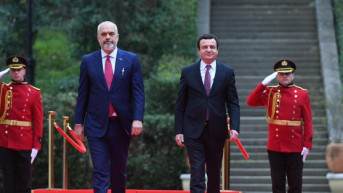
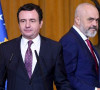
The Kosovo portal "Nacionale" sees the tightening of relations on the Kurti-Rama line as a need for the Kosovo Prime Minister. The opening of the political battle between the two majorities in Tirana and Pristina occurs because Kurti is interested in a new space to fight, for his politics, in the moment of isolation. Kosovo is already divided - those who are with Albin Kurti hate Edi Rama, and those who are against him support Rama more and more. Albin Kurti especially wants this battle, and he is deviating from the main issues of the Kosovo agenda, looking for a nationalist way out, according to "Nacionale".
Even Rama himself has not entered the fray yet. His strong relations with Hashim Thaci, who is still Kurti's main enemy today, and meetings with Hashim's family in Drenica, had a significant impact on the Kosovo opposition, which after the arrest of former KLA leaders seems to have been suppressed.
In all likelihood, we are seeing only a small prelude to a battle that will, in all likelihood, intensify, provoked by both sides. As things stand now, the conflict will occur precisely because of the agreement that Kurti refuses to implement, the one he himself signed in Ohrid, "Nacionale" announces. However, the winner is not in sight yet.
The great turmoil in the Albanian national movement gave birth to two unconventional politicians with strong individuality, similar ambitions, different priorities, and contrasting characters. If we look at the Albanian national movement from a historical perspective, we will see personalities that transcend their time and circumstances. Only the ignorant will lightly disqualify Enver Hoxha.
Today, Edi Rama and Albin Kurti continue the line of the Albanian national movement, which seeks its affirmation in the new European framework, and perhaps in the new all-Albanian state. Kurti admits that he is a "romantic", but that he is not nostalgic. The difference is fundamental. "There is no revolution with nostalgia," Kurti is clear. The entire 19th and 20th centuries are full of romantic revolutionaries. The only question is, is our 21st century the same?
The answer to that question will shed more light on where and to what extent Kurti's place is, in contrast to Kurti's still unrealized potential, Rama, after the recent complete triumph in the local elections and a likely repeated victory in the next parliamentary elections, will continue the path to the desired historical legacy of his rule - Albania in the EU.
The end

0 comments