
Albanian post: New model for the CSM establishment does not contradict the Kosovo’s Constitution
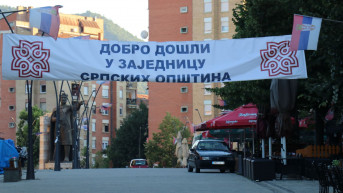
The Community of Serb-majority Municipalities is a Kosovo’s legal obligation from the First Brussels Agreement of 2013 and a constant request of the international community, but as claimed by Prime Minister Albin Kurti, it cannot be established on a national basis, while the President Vjosa Osmani claims that it cannot even be established as a non-governmental organization, the Albanian Post reports.
Albanian post claims to have obtained an exclusive nine-page document entitled "Advisory Concept (Advisory Note)" prepared by international legal experts, detailing how the CSM could be established.
In the document, in which the authors in one part even make fun of the excuses of the Kosovo Prime Minister and the President, a model was proposed according to which the CSM is not formed by the Kosovo Government, but by the Parliament.
The idea is to pass a new law, which currently does not exist in Kosovo, through which municipalities could form communities for cooperation and inter-municipal coordination.
The law would apply to all municipalities equally, not only to those with a Serbian majority. All necessary for the establishment of the Community would be the will of the municipalities to become part of it.
The law would also be used by municipalities with a Serbian majority for the CSM formation. Other municipalities could use the same, because they want to be included in the Association.
The proposed law, in a certain way, avoids the mono-ethnicity of community formation, which is one of the main objections of the Constitutional Court, because in principle it is not determined for one nationality, but for all municipalities.
It is understandable that the Serb-majority municipalities will use the ethnic element to form a community, but it is not the case that the law mandates that criterion, the Albanian Post writes.
In the following text, the term "advisory concept" is explained.
Often, when asked about the CSM, it is said that Kosovo already has a community and that is the Association of Kosovo Municipalities.
International experts express surprise that the Prime Minister's legal team never reacted to the legal nonsense that the comparison represents.
"In addition to the observations of the Constitutional Court, the Kosovo authorities have often emphasized that the legal capacity of the Community should be identical to the existing one, which is the Association of Kosovo Municipalities, which is currently registered and operates as an NGO. The legal teams advising the Kosovo authorities should highlight the abbreviated legal structure of the Association of Kosovo Municipalities. Unfortunately, even the Constitutional Court did not point out that truncated legal structure," the introduction of the document states.
Legal defects of the current Association of Kosovo Municipalities
The authorities of Kosovo, including the President, claim that the legal construction of the existing Association of Kosovo Municipalities originates from the Law on Local Self-Government.
Article 31 of this law states that "Municipalities, in order to protect and promote common interests, form and participate in associations that function in accordance with the law."
The Kosovo authorities say that the "law" refers to the Law on Freedom of Association in Non-Governmental Organizations, since the existing Association of Kosovo Municipalities exists according to the provisions and procedures of that law.
But, experts explain, the Kosovo authorities, including the Constitutional Court, ignored the fact that the Law on Freedom of Association in Non-Governmental Organizations derives from Article 44 of the Constitution.
And why is this important?
Because Article 44 (Freedom of Association) does not apply to municipalities, but to individuals.
"We have to remind the parties that Article 44 of the Constitution refers to freedom of association as one of the rights and basic freedoms guaranteed by the Constitution of Kosovo. It is a basic right and freedom that is given to individuals and only individuals. So that is also reflected in the law," experts explain.
According to that law, associations are formed by free citizens.
"Article 16 of the Law on Freedom of Association in Non-Governmental Organizations states that 'An association is a membership organization, grouped by the free will of persons with a common interest, for the purpose of achieving legal goals in the public interest or of common interest' and the next point specifies that 'The association is founded by three (3) or more persons'", the text states.
Even the current Association of Kosovo Municipalities was founded precisely by that legal line.
According to official data, the existing Association of Kosovo Municipalities (Abbreviation AKM, NGO Association, with registry number 5101800-1) is an organization that was not founded by the municipalities, but by three individuals in the capacity of private persons.
The founders are Mr. Faruk Spahija, Mr. Lutfi Haziri and Mr. Sali Gashi.
"How an organization founded by three private individuals can represent Kosovo's municipalities is a legal mystery", surprise is expressed in the expert's document obtained by the Albanian Post.
The same Law on Freedom of Association in Non-Governmental Organizations, in Article 13, item 1, states that "NGOs perform their activities independently of public institutions", on the other hand, the legal definition of a municipality, widely accepted, reads: "A municipality is a political division of the state within which a municipal corporation was established to provide general local administration, focused on a specific population and concentrated in a specific area".
"Every legal/political expert would be surprised, because as municipalities are an integral part of state institutions, how can the organization they establish be independent of the state," the authors of the document ask.
As stated, as an integral part of the general management structure, municipalities do not enjoy the freedom of association granted to individuals by the Constitution.
"Any idea that municipalities can establish non-governmental organizations and then be represented through them is legal nonsense", the authors of the document point out.
They propose that the "Kosovo authorities immediately cancel the registration of the Association of Kosovo Municipalities, because its existence, as a non-governmental organization, represents a "flagrant violation of the law and a mockery of the basic democratic principles of governance".
Second page "Advisory notes" (Concept of organizations established by municipalities)
Experts explain that by the Constitution of Kosovo, municipalities have the right to inter-municipal cooperation through Article 124, item 4. There is even a Law on Inter-municipal Cooperation (Law No. 04/L-010).
But the problem - as they explained - is that the law should include the right of municipalities to associate, as emphasized in Chapter V (5) of the Law on Local Self-Government, which is currently not the case.
However, they write, Chapter V (Inter-Municipal Cooperation and Intra-Municipal Arrangements) of the 2008 Law on Local Self-Government lays the groundwork for exploring that right.
So, since the room exists, they also have a proposal as a solution.
"For such a great need for legal adequacy, the best way is to draft a new law called the 'Law on Inter-Municipal Cooperation and Coordination', which also covers the right of municipalities to associate, and effectively repeals Law No. 04/L-010," it is suggested.
Article 81 of the Constitution, the document states, regulates that such a law would fall under the vital interest law that requires a double majority rule.
"The double majority rule dictates the necessity of the active participation of Kosovo Serb deputies in the legislative process", experts added.
Through this new law, which is proposed to be called the "Law on Inter-Municipal Cooperation and Coordination," a "general framework for the organizational structure, goals, legal acts of the government, procedures for establishment and cancellation, relationship with the central government, budget, legal capacity and other organizational aspects established by municipalities for cooperation and inter-municipal coordination" wpuld be provided.
"Practical thinking (common sense) and the remarks of the Constitutional Court would guide the legislators in the drafting process", experts advise and suggest that the Law be passed by the Ministry of Administration for Local Self-Government as a management structure for supervision.


comments