
Ambassadors at the UN Security Council: Dialogue key, concern over pressure on Serbs in Kosovo

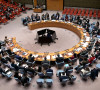
At the session of the United Nations Security Council on the UNMIK report regarding the situation in Kosovo, it was emphasized that dialogue is key and that the agreements reached so far must be implemented. With a few exceptions, there was also broad support for UNMIK and the continuation of its mandate.
The representative of France underlined that there is no alternative to normalization of relations and that the status of Serbian structures must be resolved through the establishment of the Community of Serb-Majority Municipalities (CSM).
He welcomed the holding of the first round of local elections in Kosovo, stating that France particularly welcomes the participation of Serbs in the electoral process and called for a peaceful transfer of power in the northern municipalities.
He stressed that there is no alternative to normalization of relations and that within the EU-facilitated dialogue it is possible to reach an agreement.
“To achieve normalization, both sides must respect the obligations undertaken under the Brussels and Ohrid Agreements,” he said.
France, he added, regrets the closure of Serbian structures and the consequences for the daily life of the Serbian community.
“The status of these structures must be resolved through the establishment of the Community of Serb-Majority Municipalities within the mediation efforts of the European Union. France also encourages the renewed active participation of Serbs in local governance, in maintaining public order, and in the judicial system in northern Kosovo,” he added.
He also emphasized that it is unacceptable that the perpetrators of the Banjska attack remain at large more than two years after the incident, and that it is crucial that all those responsible be brought to justice.
Regarding UNMIK’s mandate, France believes that it should be extended for as long as necessary.
The representative of China stated that it is essential to preserve social stability, noting that the authorities in Pristina forcibly closed several institutions established by the Serbian community, conducted violent searches, intimidation and coercion against Serbs, and built and opened a bridge over the Ibar River by force.
“These actions violate the legitimate rights and interests of Serbs and cause panic and tension. China expresses deep concern over these developments. We call on the Kosovo authorities to stop escalating unilateral actions, to sincerely protect the safety and legitimate rights and interests of the Serbian community, and to preserve peace and stability in the north,” said the Chinese representative.
He pointed out the need for ethnic reconciliation, support for EU-led dialogue, and the important role of the United Nations.
The representative of Russia and President of the UN Security Council, Vassily Nebenzya, stated that the UNMIK report clearly reflects a trend of significant deterioration of the situation in Kosovo, and that the main causes remain unchanged, including Pristina’s policy of hatred toward the Serbian community and its desire to impose complete control over the north of the province, in collusion with a number of Western countries.
He recalled a new round of raids by Pristina, allegedly aimed at eliminating Serbian structures in the province, as well as the usurpation of public utility companies, social service facilities, and cultural and sports institutions.
“There are indications that preparations are underway to seize educational institutions and hospitals. The mass expulsion of Serbs from social housing in northern Kosovo is ongoing. Plans for the expropriation of Serbian churches and monasteries include attempts to establish their own ‘Orthodox’ churches. The pace of erasing boundaries around densely populated Serbian areas in the north of the province has increased,” Nebenzya said.
He emphasized that Kosovo Security Forces freely move in armored vehicles in northern municipalities, intimidating the local population, and pointed out that two new bridges across the Ibar River were built without the consent of Serbs, adding that the Pristina government’s plans include officially declaring Kosovo Serbs as foreigners.
“As a result, people who have lived on their land for centuries, where the graves of many generations of their ancestors lie, will have to apply for temporary residence documents,” he said.
According to him, Pristina is trying to force Serbs to register for ‘local pseudo-citizenship’.
Nebenzya underlined that Pristina has shown no progress in implementing its obligations under the Brussels Agreement, including the establishment of the CSM.
“Brussels continues to demonstrate to the whole world its inadequacy in foreign policy. There has been no progress in the investigation of the attack on UNMIK staff member Mikhail Krasnashchukov on May 28, 2019, nor has any explanation been given regarding the illegitimate statement by mission staff member Andrey Antonov on December 31, 2021,” he added.
He assessed that Pristina is receiving assistance in building its own army.
“It is well known that if Albin Kurti remains in power, he intends to increase military expenditures to create a joint military unit with Albania, launch an ammunition production plan, and conduct large-scale training of volunteer reservists to arm them in the event of mobilization. The threat such plans pose to regional security is evident,” Nebenzya concluded.
The representative of the European Union at the UN, Stavros Lambrinidis, said that progress in dialogue between Belgrade and Pristina is key to their European path.
“We welcome the fact that Serbia and Kosovo remain engaged in the dialogue led by High Representative (for Foreign Affairs and Security Policy) Kaja Kallas, with the support of Special Representative Peter Sørensen,” he added.
He stressed the importance of implementing the Agreement on the Path to Normalization of 2023, as well as all previously agreed obligations. In this context, he called on Pristina to enable the reintegration of judges, prosecutors, police officers, and other personnel who left institutions in 2022.
He particularly emphasized the need for functional cooperation between municipal and central authorities in accordance with the law, previous agreements, and the interests of local communities.
He also stated that the European Union is “deeply concerned” about the security situation in northern Kosovo.
The EU welcomed the municipal elections held on October 12, describing them as “pluralistic and peaceful”, with full participation of all communities.
The representative of the United States at the UN once again called for the withdrawal of UNMIK, stating that there is no security crisis in Kosovo and that UNMIK no longer has a role in governance.
“We acknowledge UNMIK’s efforts to promote dialogue and legal reforms in Kosovo. That is useful. But the reality is that UNMIK is an oversized peace mission without peacekeepers, where 81 percent of the budget goes to staff salaries, performing functions that should be carried out by other organizations. It is time to begin transferring these functions from UNMIK to agencies better suited for this task, as we start the process of gradually closing the mission,” said the U.S. diplomat.
The representative of the United Kingdom called for UNMIK reform and added that her country continues to firmly support Kosovo’s democratic development and Euro-Atlantic path.
She encouraged rapid progress toward the formation of a government in Pristina with a clear parliamentary mandate and welcomed the peaceful conduct of recent municipal elections.
She expressed concern over recent statements that could undermine key institutions, including the Constitutional Court.
She welcomed the return of Serbian mayors to majority-Serb municipalities and called on all parties to ensure that the transition is carried out with full respect for the rule of law.
“Two years after the Banjska attack, the United Kingdom once again calls on Serbia to take its role in reducing tensions and bringing those responsible to justice, including Milan Radoičić,” she said.
The Greek representative stressed that her country fully supports normalization of relations within the framework of dialogue.
She underlined that it is imperative for both sides to constructively work toward a legally binding agreement that would benefit the entire region.
She also stressed the need to implement the Brussels and Ohrid Agreements.
“The future of Serbia and Kosovo lies in the EU. Since the Thessaloniki Declaration, Greece has continuously supported both sides in fulfilling the necessary conditions,” she emphasized.
She pointed out that the rights of Kosovo Serbs must be respected and implemented, including their participation in local government, police, and the judiciary.
“Kosovo’s multiethnic character must be preserved. The situation in the north remains fragile. We call for avoiding unilateral measures, particularly the closure of institutions. The establishment of the CSM without preconditions remains essential for stability and prosperity in northern Kosovo. It is a key element of the agreement that must be implemented,” she stressed.
She also emphasized that the perpetrators of the Banjska attack must be brought to justice.
Regarding UNMIK, she underlined that it is linked to Resolution 1244, which provides the legal framework for a final settlement, and that Greece supports UNMIK’s important role and the continuation of its mandate for as long as necessary.
The representative of Slovenia at the UN Security Council called on Belgrade and Pristina to engage in dialogue, refrain from unilateral actions and harmful rhetoric, and demonstrate the political will to fully and unconditionally implement the EU-mediated Brussels Agreement and the Ohrid Annex.
“As for UNMIK, reflecting on the past should inform our view of the future. Much has changed in Kosovo since the end of the conflict,” he said, noting that the situation in Kosovo has evolved over the past 26 years and that UNMIK needs to adapt accordingly.
“The security situation in Kosovo remains stable. We welcome the recent formation of the Kosovo Assembly as an important step toward resolving institutional uncertainty. We are encouraged by the successful conduct of local elections with the participation of Kosovo Serbs. This represents one of the key steps toward inclusive, citizen-oriented local governance, essential for long-term stability,” he said.
He added that fair representation of non-majority communities in public institutions, especially in the judiciary, police, and local administration, is vital for building trust in governance.
0 comments