
Analysts: Comparing Crimea and Kosovo makes sense as territorial integrity is being relativized globally
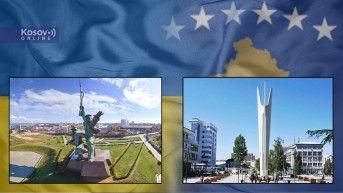
The comparison between Crimea and Kosovo, raised by the President of Serbia Aleksandar Vucic in talks with Western officials, makes sense because the European Union is preparing to admit Ukraine and Moldova within their full internationally recognized borders, even though they do not control Crimea and the Donbas, or Transnistria, analysts say.
Vucic said that “when he speaks with the French, Germans and others, they always tell him the same sentence regarding Kosovo: ‘Aleksandar, why do you still look to the past? Turn to the future,’” adding that he then asks them: “Are you ready to go to Ukraine and tell my friend Volodymyr Zelenskyy: ‘Listen, do not think about the past, what happened with Crimea in 2014 happened, but who cares?’”
Diplomat Zoran Milivojevic told Blic that comparing Kosovo and Crimea makes sense given that “the issue of territorial integrity is currently being relativized globally, starting with Donald Trump and Greenland.”
“It is entirely appropriate in such circumstances to remind others of our case and Kosovo and Metohija, where Serbia’s territorial integrity is being violated outside all standards and norms of international law. Vucic compared Kosovo and Metohija with Crimea, but he could also have taken the example of Northern Cyprus, especially since a few days ago the entire EU leadership was in Cyprus, which the EU recognizes within internationally recognized borders even though it does not control a third or nearly half of its territory,” Milivojevic said.
According to him, Vucic chose Crimea because the EU is advancing Ukraine’s accession.
“The EU wants to admit Ukraine with its full territory and within internationally recognized borders, even though it is highly uncertain whether Ukraine will regain parts of its territory after the war with Russia, especially Crimea, which Russia effectively annexed without a single shot,” Milivojevic said.
He added that a similar situation exists with Moldova.
“The EU also wants to admit Moldova within its internationally recognized borders, even though that country does not control its eastern part, namely Transnistria. The same applies to Georgia, which effectively has no authority in Abkhazia and South Ossetia. In Brussels, no one questions the territorial integrity of Cyprus, Ukraine, Moldova, or Georgia. Cyprus is a striking example of the EU’s double standards, since it has been a member state for decades. This is a matter of principle,” Milivojevic said.
He added that Serbia should continue to point to the Kosovo case because international law is regaining importance in the context of the wars in Ukraine and the Middle East, even though it is currently not being respected, since once the wars end someone will have to invoke “international law.” At the same time, he said, Serbia is sending a message to the EU to treat Kosovo in the same way as Cyprus, Ukraine, and Moldova.
Historian Milovan Pisari, speaking on the program “Morning on Blic” on Blic TV, assessed that both the Kosovo and Crimea cases confirm “a rule that has existed as long as international law itself.”
“That is that great powers always decide what will happen and what the future of other countries will look like. We have seen this constantly, especially in the 20th century, after the First World War and after the Second World War. Ultimately, the United Nations Security Council is made up of the great powers that won World War II. So I would say that what is happening now and what President Vucic said is a very pragmatic observation,” Pisari said.
As he noted, this is the de facto situation.
“De facto, Crimea has belonged to Russia for 12 years, just as Kosovo functions de facto as an independent country. That is the reality on the ground. Political ambitions and aspirations are something else, but this is what is happening in practice. There are other similar situations as well. For example, in Moldova there has been an eastern region since 1992 that functions completely independently from the rest of the country. These are realities on the ground for which there are no other pragmatic solutions. In that sense, I think the comparison between Crimea and what happened in Kosovo is valid because there are similarities,” Pisari said.
He added that the similarity lies in the fact that “great powers decided what would happen in those territories.”
“The US, NATO and other major Western powers decided what would happen in Kosovo, while Russia decided what would happen in Crimea. The situation is more complex when it comes to Donbas in Ukraine, but I am afraid that even in that case those territories will not return to Ukraine, and that the situation on the ground will simply be confirmed. The question is how far Russia will go and what its real ambitions are. But that is the reality. The power of states is much stronger and more important than international law in such situations, unfortunately,” Pisari concluded.
0 comments