
Analysts: Pristina's refusal to form the CSM is a risk to the security of the region
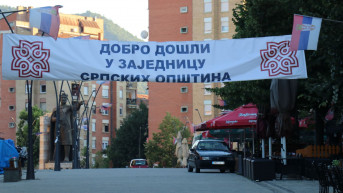
Pristina's stubborn refusal to form the Community of Serb-majority Municipalities (CSM) in accordance with the accepted agreement represents a potential risk to the security of the entire region, according to Demostat's analysis of the situation in northern Kosovo, with the statement that the CSM could now be the key to peace, but also to new conflicts, while the international community holds the border where the dialogue ends and conflicts begin.
In the text, which states that yesterday's meeting of the main negotiators of Belgrade and Pristina in Brussels, which was focused on the implementation of the Agreement on Normalization of Relations and its Annex, ended without any results, it is also stated that additional efforts of the international community, especially the US, are needed, to start the process of implementing the Agreement.
Demostat researcher, Milomir Mandic, believes that the current situation could destabilize the entire region and that additional efforts by the US are needed to delay the process of implementing the agreement, especially when it comes to Pristina and the formation of the CSM.
"I expect that, if Pristina fulfills its obligation, we can expect the return of the Serbs to the institutions and the faster implementation of their obligations by Belgrade. So, with all the current obstructions and delays, I am optimistic that we are moving towards a solution," Mandic said.
He underlines that, if some kind of self-government for the Serbs is not achieved, as well as the protection of churches and monasteries, it will be difficult to ensure normalization, which is the goal of the Brussels-Ohrid agreement.
Journalist, Milivoje Mihajlovic, says that Pristina's refusal to form the CSM can generate additional dissatisfaction among the Serbs, that there are more objective risks of conflict in the north, and that it is most important that the international community monitors the situation and urges, as well as that the two leaders, Aleksandar Vucic and Albin Kurti, are aware that any incident could turn into something serious.
"If the newly elected government in the north, which has no legitimacy since the Serbs did not take part in the local elections, would start practicing strictness, it could, along with eternal ethnic animosities, cause the Serb dissatisfaction and conflicts," Mihajlovic says.
He adds that official Belgrade, which financially helps the Serbs, can influence their mood and direct their actions.
Mihajlovic also reminds that the police in the north, where there are Albanians, carries out considerable repression in Serbian areas, which can also be a trigger for riots.
Stating that Pristina has five new police bases in the north and patrols at every step, Mihajlovic says that there are also forces among the Albanians who are comfortable with some kind of conflict or limited riots in order to show that they are in control of the situation.
"Perhaps a mini-conflict would suit them in order to show their strength," Mihajlovic says and reminds that the Serbs are not in the institutions, in the police and judiciary.
Speaking about the CSM, Mihajlovic states that the essence is what kind of powers they will have since the Albanians and Serbs have two opposing views that do not match in anything, not even in name.
"Pristina wants the Community to be at the level of the fishermen's association, Belgrade wants a serious institution that would manage the north of Kosovo and the municipalities in which the Serbs represent the majority," he says.
In addition, Mihajlovic reminds that Kurti won the elections on the maxim that the Community would not pass and, regardless of the pressures, if he allows it, he would lose part of the electorate, which can also be one of the causes of the conflict.
"A random incident can turn into a wave of violence," Mihajlovic said.
He states that it would be a defeat for Belgrade to agree to a CSM with lesser powers than those agreed upon in 2013 and 2015 because the expectations of the Serbs in Kosovo and Metohija would be disappointed, and he adds that the international community has never taken the story of the Community seriously, because if it has, it wouldn't sit in a drawer for ten years.
Political analyst, Dusan Janjic, points out that there are many risks in Kosovo, but that the main reason for apprehension is the fact that there is no political will to reach an agreement, to begin with, on the return of the Serbs to Kosovo's institutions, which would reduce the security vacuum.
"There is no political work, there is no political will, and I am also concerned that the Quint is acting extremely relaxed, although we have now seen some first signs of concern with Lajcak. The Americans kept promising that it would be resolved, however, I see that they have also accepted some measures that encourage insecurity and increase the risk of increased conflicts, such as local elections," he said.
Janjic points out that there is a security vacuum in Kosovo because most Serbs have left the police, while in the north there are a large number of special units with Albanians, which is a risk in itself.
One of the approaches is that the Balkans should still be kept unstable and used as a side stage, which is not only what the Russians, who are working intensively on this, want, but also individuals from the political structures of Germany, Italy, and Hungary, Janjic concludes.
He adds that, on the other hand, the US has a special interest in not only normalizing relations with Kosovo but also in stabilizing the situation and somehow including Serbia in the security system.



0 comments