
Analysts from Tirana: Open Balkan brought positive effects; Berlin Process takes precedence
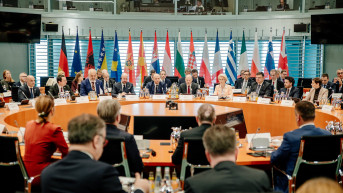
Albania will host the Berlin Process Summit tomorrow, an initiative aimed at improving cooperation and providing assistance to countries in the region for faster integration into the European Union. Comparing this initiative to the Open Balkan, analysts from Tirana tell Kosovo Online that the Open Balkan sent a message that politicians in the region can collaborate when they want to, while they see the fact that the EU provides funding as an advantage of the Berlin Process.
Ardian Hackaj, Research Director and Tirana Connectivity Forum Coordinator, believes that the Open Balkan has had positive effects on regional cooperation and its enhancement, but that the Berlin Process is more secure and stable.
"As you know, the Prime Minister of Albania publicly stated a few months ago that the Open Balkan would cease to exist, that it had fulfilled its mission. This was interpreted as if this process no longer exists. However, we are informed that there are still activities within the Open Balkan. I think the Open Balkan has brought positive effects, with a focus on regional cooperation and its improvement. This initiative has sent a message that our politicians can collaborate when they want to," Hackaj said to Kosovo Online.
He points out that international initiatives require time, personnel, and good preparation.
"This is the other side of the coin because the idea is good, but a lot of work needs to be done. The Open Balkan was more of an idea. We define it as a vision because there was no structure for its implementation and no clear action plan. Unlike the Berlin Process, there were no working groups for preparing agreements. It's more of a memorandum of understanding between heads of states. For example, just for three signed agreements within the Berlin Process, there were 27 preparatory meetings, while for the Open Balkan, there were very few such meetings. However, as long as all areas of the Open Balkan are covered by the Berlin Process, which is more detailed and has secure funding, the Western Balkans will give way to technical agreements prepared by the Regional Cooperation Council and CEFTA," Hackaj says.
The return of attention to the Berlin Process is a good and positive step for the Western Balkan countries, according to an Albanian journalist from A2 Television, Merita Haklaj. She told Kosovo Online that the Open Balkan, formed by only three countries, could not function as it was.
"When the Berlin Process was declared an initiative by then-Chancellor Angela Merkel, its focus was on good neighborly relations and good economic relations, as well as support for the Western Balkans' integration into the EU. The result we saw was that not only did our countries not make progress in their reforms, but they also failed to see a distant vision. They remained hostages of the past in their views. The responsibility lies with the EU itself as well as the US, which did not pay attention to the Western Balkans," Haklaj says.
She believes that within the Berlin Process, the countries in the region can use the European Union funds, while within the Open Balkan, they were directed towards mutual reciprocal agreements and their own funds.
"The value of the European Union in this case, within the Berlin Process and the common regional market, is the fact that the EU has made funds available to our countries, and it was up to them to compete in projects, develop them, and use them for the benefit of the region to make it ready for integration into the EU. The countries that established the Open Balkan were certainly supported by both the EU and the US, but it was evident that many agreements were not implemented, even though there were no obstacles to their application. In this case, Chancellor Scholz's initiative, as well as the open acceptance by Albanian Prime Minister Edi Rama, to reactivate the Berlin Process as a project that brings together all countries that have some kind of obligation to talk to the EU, are not obstacles to the implementation of bilateral agreements. For example, we had many signed agreements with Kosovo, but some were implemented, and some were not. So where the EU is, the implementation of major agreements is more fruitful. It is always up to our countries to create projects, compete, and implement them," Haklaj says.
Albanian analyst and journalist Frrok Cupi assesses for Kosovo Online that the upcoming meeting within the Berlin Process is very important for the region, but the Open Balkan is also a part of that process.
"The Open Balkan is the best initiative of this time to open our borders and unify the Balkans. This meeting within the Berlin Process this time has several particularities and greater significance. The main particularity is what is happening in northern Kosovo and southern Albania. In northern Kosovo, there is a conflict, there is a frozen zone that can lead to conflict from time to time. Second, there is a problem that can escalate in Himare because Greece is trying in every way to revive it. Of course, Greece has more reasons due to its financial situation in recent years, and other problems, ethnic problems, the migrant issue in Greece, and its constant problems with Turkey, it seems to be trying to stir up a conflict in Himare. These are some of the most important topics that will be at the summit," Cupi believes.
At the Berlin Process Summit in Tirana, as announced by the hosts, discussions will focus on regional cooperation, energy transition, and the situation in Kosovo. Albania is the first Western Balkan country to host a meeting since the establishment of the Open Balkan initiative in 2016.


comments